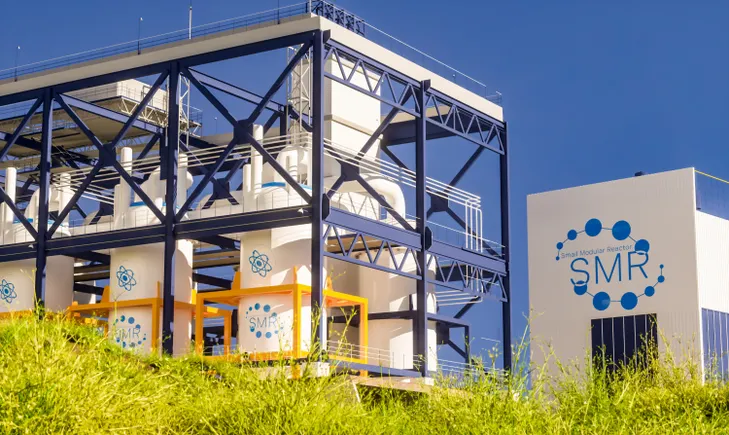
While nuclear power is gaining renewed attention, particularly small modular reactors (SMRs), significant challenges remain for widespread adoption in the U.S. High costs, lengthy regulatory processes, and the lack of a coordinated government strategy across various agencies impede SMR development, despite interest from data centers and potential for upstream and downstream impacts; a cohesive, bipartisan approach is needed to address technological, market, regulatory, and political risks across the entire development cycle to achieve price parity with fossil fuels.
Nuclear power, particularly Small Modular Reactors (SMRs), is experiencing renewed interest, driven by potential demand from data centers and backing from the Department ofEnergy, offering the prospect of clean and reliable energy. However, the sector faces substantial headwinds. Traditional large reactors are largely uncompetitive in the U.S. due to excessive costs, protracted construction timelines as seen with the Vogtle plant, and significant regulatory delays through the Nuclear Regulatory Commission (NRC) and local environmental reviews. While SMRs, with capacities ranging from 1 MW to 300 MW, promise modularity and potential cost reductions of 10-15% with each doubling of production via factory fabrication, their development is laden with significant risks for investors. These include technological uncertainties with novel designs and persistent competition from other energy sources like solar and gas; market risks tied to the materialization of projected energy demand, fuel availability, and achieving on-time, on-budget construction; unpredictable regulatory approval pathways despite ongoing NRC reforms; and political risks requiring sustained, bipartisan government support over decadal development periods. The exceptionally long development cycle, illustrated by TerraPower which was founded in 2006 but is not expected to operate its first commercial reactor at scale until the mid-2030s, amplifies these challenges across all four crucial stages of technological progression: research, the underfunded 'valley of death' development phase, initial deployment, and market scaleup. A critical deficiency is the current absence of a coherent, inter-agency U.S. federal strategy to guide SMRs from research to commercial viability and price parity with fossil fuels, with key agencies operating in isolated silos. The realization of SMR potential heavily depends on establishing a coordinated, bipartisan national strategy that streamlines regulation and ensures consistent support throughout the entire development lifecycle.
AI-powered research, real-time alerts, and portfolio analytics for institutional investors.
Request DemoOverall Sentiment
mixed
Sentiment Score
0.10
