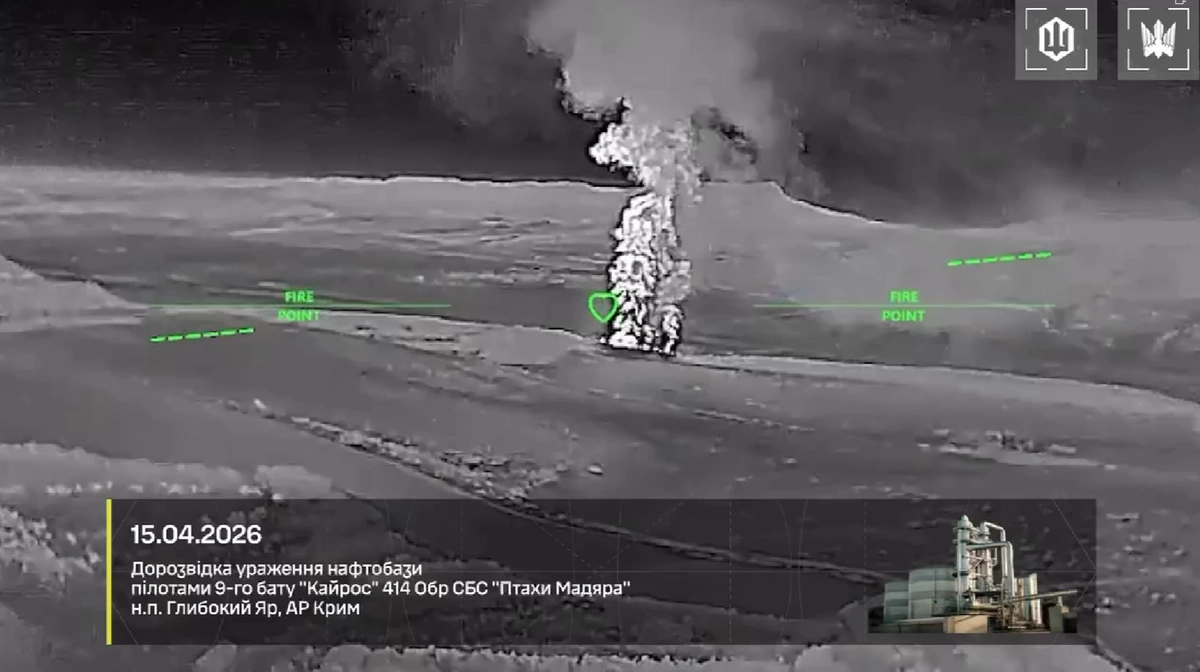
Ukrainian drones reportedly hit 16 Russian military assets on the night of 15-16 April, including three air defense systems, two Iskander bases, two oil depots, and logistics/deployment facilities in Crimea, Donetsk, and Zaporizhzhia. The strikes included a Pantsir system, an Osa-AK, a Buk-M1, and an ammunition depot linked to Russia's Black Sea Fleet. The event underscores ongoing escalation in the war and may add modest near-term risk premium to regional defense and energy infrastructure.
The immediate market signal is not just tactical damage to Russian hardware; it is a marginal increase in the cost of operating layered air defense and rear-area logistics in occupied territory. That matters because every additional interception layer forces Russia to disperse assets further from the front, increasing transit times, fuel burn, and maintenance burden while reducing the density of protection around higher-value launchers and depots. The second-order effect is a widening gap between nominal inventory and usable operational tempo.
For energy, the more relevant channel is outage-risk pricing rather than direct supply loss. Crimea and adjacent logistics nodes are structurally important for military throughput, so repeated strikes raise the probability of precautionary shutdowns, local insurance repricing, and temporary bottlenecks in regional fuel distribution. That can create short-lived spikes in nearby refined-product differentials even if the global crude balance barely moves.
The contrarian point is that this is bullish for Ukrainian operational flexibility only if it can be sustained weekly; one-off strikes are usually absorbed by redundancy. If Russia adapts by hardening depots, shifting to smaller dispersed storage, or expanding decoy usage, the headline damage will remain high while the strategic payoff decays. So the tradeable edge is in the persistence signal, not the event itself.
The cleaner market implication is a modest long-vol / event-driven posture rather than a directional macro bet. This kind of asymmetric war escalation tends to support defense-prime cash flows and energy infrastructure names with exposed logistics choke points, while leaving broad market beta mostly unchanged. The risk is a rapid tactical de-escalation or a diplomatic headline that compresses the geopolitical premium within days.
AI-powered research, real-time alerts, and portfolio analytics for institutional investors.
Request DemoOverall Sentiment
mildly negative
Sentiment Score
-0.15
