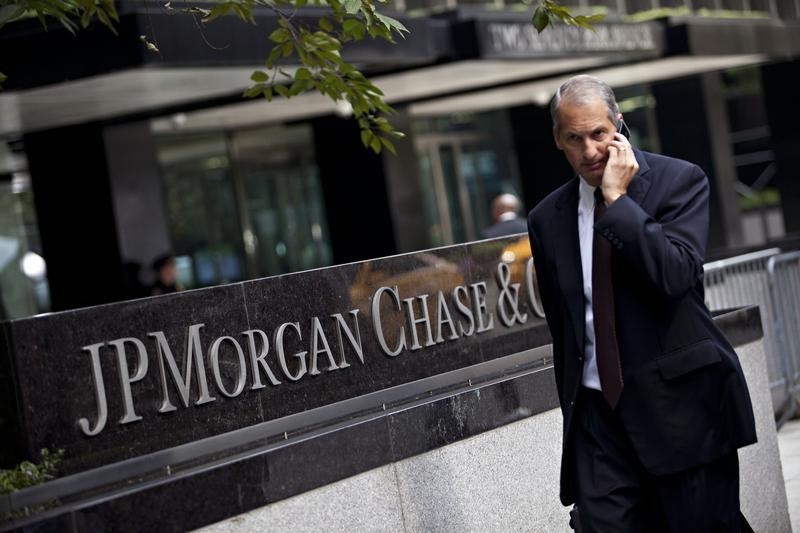
JPMorgan warns the $2.0 trillion private credit market is in a "volatile transition" but has sizeable backstops, including record "opportunistic" dry powder in secondary funds and the re-emergence of the U.S. dollar as a hedge; publicly traded BDCs have fallen ~16% over the past year. Wall Street banks are reassessing collateral haircuts and JPM has marked down software-heavy loan portfolios, driving a bifurcated, K-shaped recovery even as direct lending interest coverage stabilizes around ~2.0x and institutional investors comprise ~80% of the base. JPMorgan views rising redemptions versus tighter bank liquidity as the primary tail risk but judges a systemic 2008-style failure unlikely given current buffers.
The existence of meaningful secondary “dry powder” is a genuine liquidity buffer, but it is not a one-for-one NAV backstop for closed-end private funds; secondary purchases redistribute risk from heavily leveraged boutiques to opportunistic balance sheets and create a two-step realization: immediate seller relief followed by a multi-quarter holding period for buyers to realize mark-to-market gains. That mechanism reduces near-term forced selling risk but amplifies selection effects — managers that can underwrite repeatable coverage metrics (EBIT interest coverage >2x, diversified covenant packages) will see bid support, while niche, software-heavy credits face permanent repricing rather than temporary illiquidity discounts.
Bank-led haircut increases are the accelerant here: a 10–20% hike in facility haircuts for certain sectors does not just pull forward margin calls, it shrinks leverage economics on whole pools and makes previously financeable holdco structures uneconomic within weeks. Expect a bifurcation over 1–6 months where top-tier platforms (scale, sponsor alignment, diversified sponsor pipelines) maintain distribution and fee cadence, and smaller direct lenders either gate or are forced into secondary sales at double-digit discounts.
Off-exchange price discovery via non-bank venues and a stronger dollar are subtly compressive to the historic illiquidity premium — quicker trades and continuous FX hedging reduce the compensation required for being “locked up” but also shorten the timeframe for repricing shocks to reach public markets. Over 6–18 months, this points to tighter spreads for broadly syndicated private credit versus last cycle, but materially higher realized loss rates for concentrated, low-coverage credits; the asymmetric outcome favors scale, fee-bearing allocators and liquid secondary desks over boutique balance-sheet lenders.
AI-powered research, real-time alerts, and portfolio analytics for institutional investors.
Request DemoOverall Sentiment
mildly negative
Sentiment Score
-0.15
Ticker Sentiment
