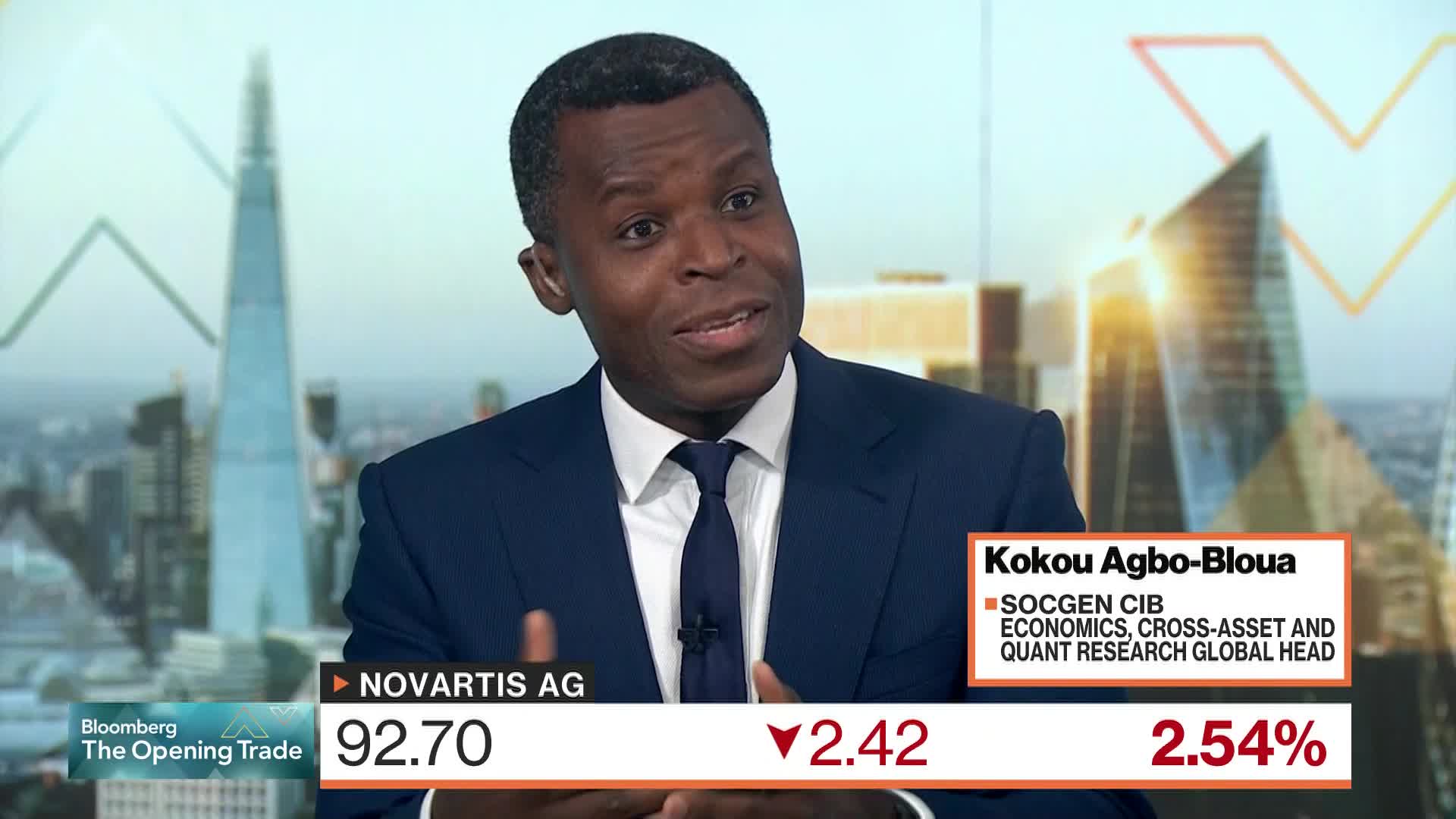
Societe Generale's global head of economics and cross asset, Kokou Agbo-Bloua, advises investors to hold "no position" or "reduced positions" in global financial markets. This recommendation reflects the significant uncertainty driven by ongoing trade tensions, signaling a prevailing cautious sentiment among strategists.
A senior strategist at Societe Generale, Kokou Agbo-Bloua, has articulated a highly cautious investment stance driven by uncertainty from ongoing trade tensions. The recommendation to hold "no position" or a "reduced position" signals a significant level of risk aversion, suggesting that the potential for negative market shocks from tariff policy outweighs the perceived opportunities for gains. This perspective, flagged with a moderately negative sentiment score of -0.6, implies that capital preservation is being prioritized over return generation. The core issue highlighted is that policy-driven volatility makes it challenging to accurately price risk, leading to advice that favors de-risking portfolios and reducing overall market exposure until the geopolitical landscape offers greater clarity.
AI-powered research, real-time alerts, and portfolio analytics for institutional investors.
Request DemoOverall Sentiment
moderately negative
Sentiment Score
-0.60
