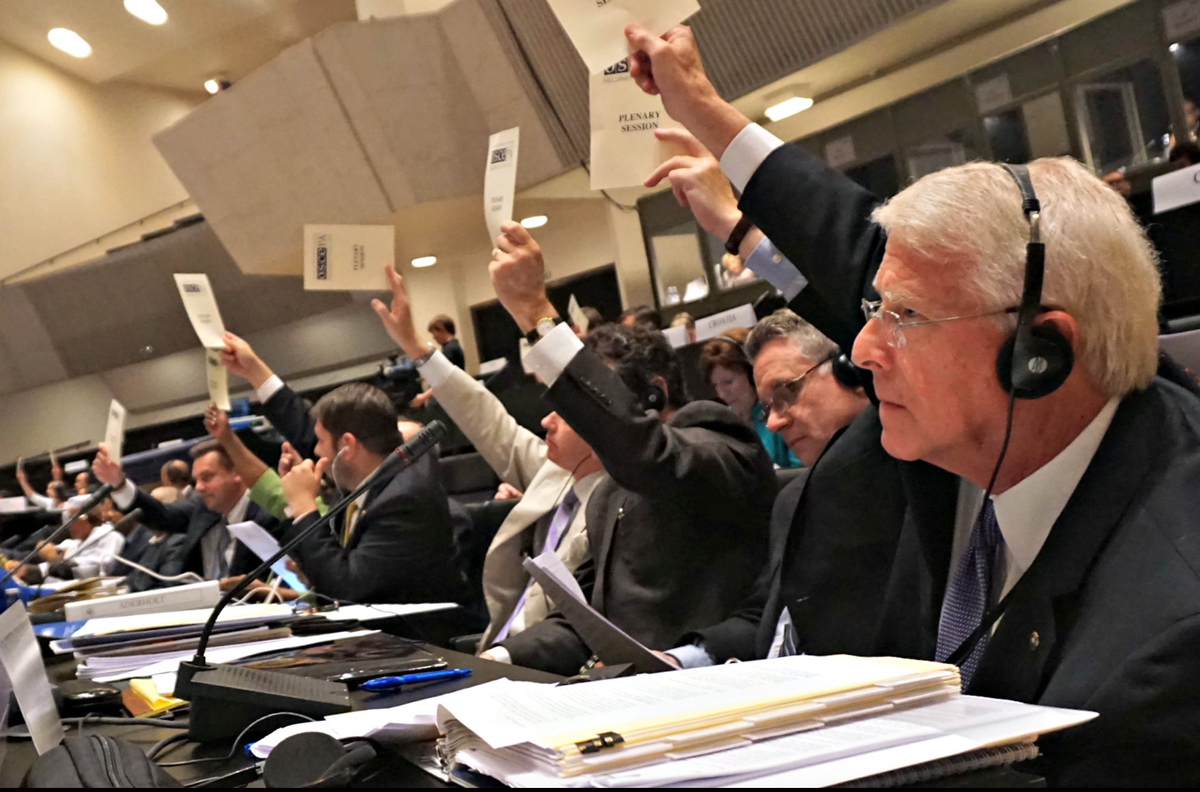
A bipartisan US Senate resolution, commemorating the 50th anniversary of the Helsinki Final Act, directly condemns the Russian Federation for "clear, gross, and uncorrected violations" of its principles through the occupation of Ukrainian, Moldovan, and Georgian territories. This legislative action signals a unified and firm US stance, reinforcing international norms and indicating sustained geopolitical pressure on Russia amidst escalating global tensions.
A bipartisan US Senate resolution commemorating the 50th anniversary of the Helsinki Final Act serves as a formal and unified condemnation of Russia's foreign policy, indicating a durable and hawkish stance from Washington. The resolution, sponsored by a cross-party coalition, explicitly accuses the Russian Federation of a "clear, gross, and uncorrected violation of all 10 principles" of the act, citing its occupation of territories in Ukraine, Moldova, and Georgia. This legislative action is significant not as a new market catalyst but as a codification of sustained geopolitical pressure, reinforcing the political foundation for ongoing and future sanctions. The unified support suggests this policy is insulated from domestic political shifts, solidifying the long-term risk profile of the Russia-West confrontation. This environment underpins the strategic realignment of global trade, as seen in developments like India shifting oil imports away from Russia, a trend that this formal US position is likely to accelerate.
AI-powered research, real-time alerts, and portfolio analytics for institutional investors.
Request DemoOverall Sentiment
moderately negative
Sentiment Score
-0.50
