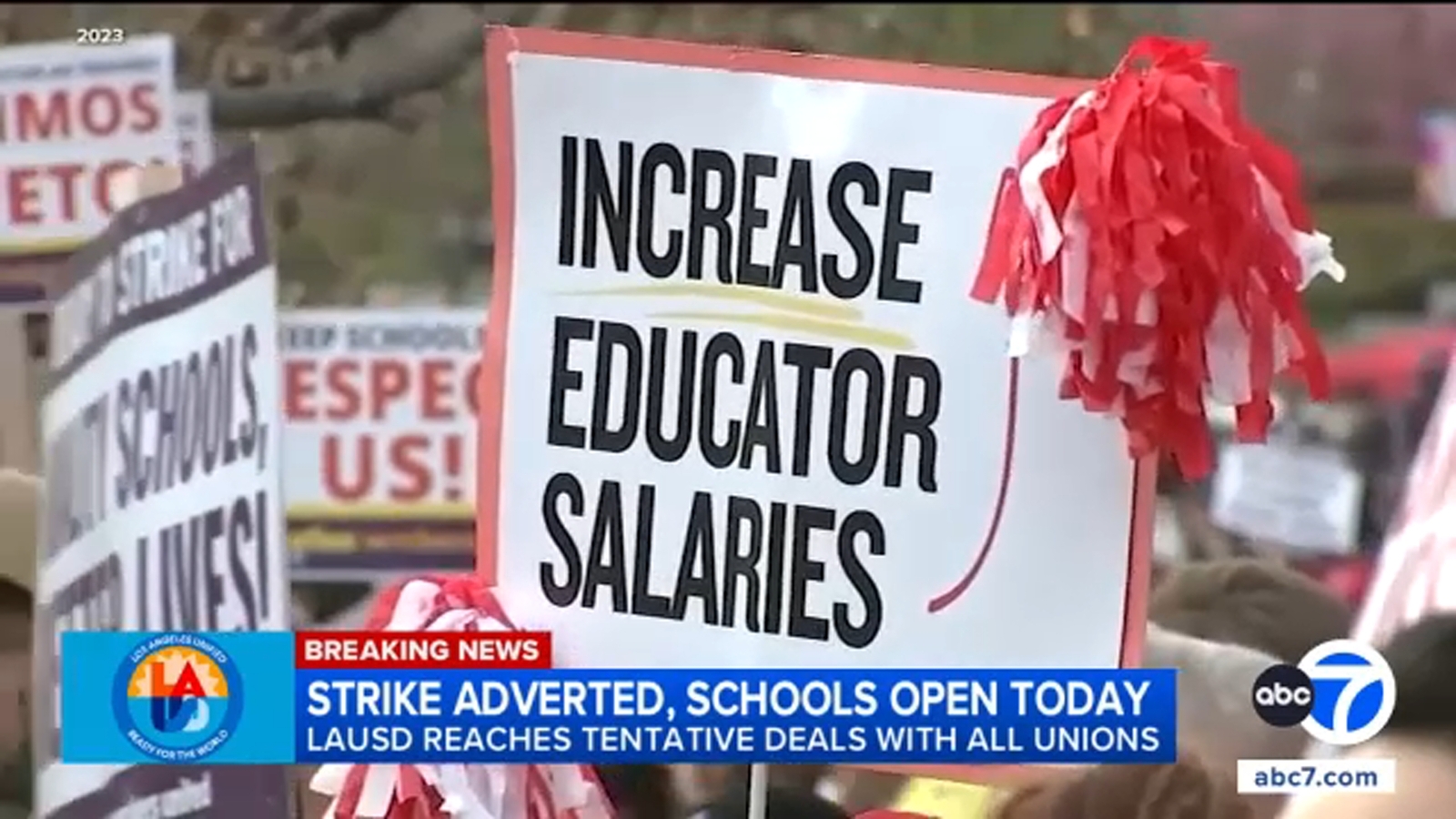
LAUSD averted a strike after reaching a tentative agreement with SEIU Local 99 around 2 a.m., keeping schools open Tuesday. The deal covers custodians, food workers, special education assistants and bus drivers, following tentative agreements with teacher and administrator unions over the weekend. The news is operationally important for the district but is unlikely to have broad market impact.
The immediate market read is relief, but the more important signal is that a labor disruption was close enough to force a negotiated settlement overnight. That lowers near-term risk for local transportation, food service, and school support providers, but it also highlights how fragile district operations are when multiple bargaining units can coordinate pressure at once. The second-order effect is less about today’s opening and more about whether this sets a precedent for wage resets in other large urban districts with similar staffing constraints.
For consumer demand, the avoided strike removes a short-duration disruption to working parents’ schedules and after-school logistics, so any fear of a sudden hit to local retail foot traffic, childcare spend, or commuter friction should unwind quickly. The bigger medium-term issue is cost inflation for districts: even if budgets absorb this in the near term, higher labor settlements tend to show up later via vendor renegotiations, outsourced service pricing, and incremental levy pressure. That is a slow-burn fiscal risk rather than an immediate equity catalyst.
The contrarian angle is that the rally in “strike risk premium” may be overdone in the other direction now that the event is defused. Labor peace is usually temporary when underlying staffing shortages persist, so any optimism should fade unless the district can demonstrate improved retention and scheduling stability over the next one to two quarters. If not, the same operational bottlenecks can reappear into the next budgeting cycle, especially if inflation re-accelerates in food, transport, and benefits costs.
AI-powered research, real-time alerts, and portfolio analytics for institutional investors.
Overall Sentiment
neutral
Sentiment Score
0.10
