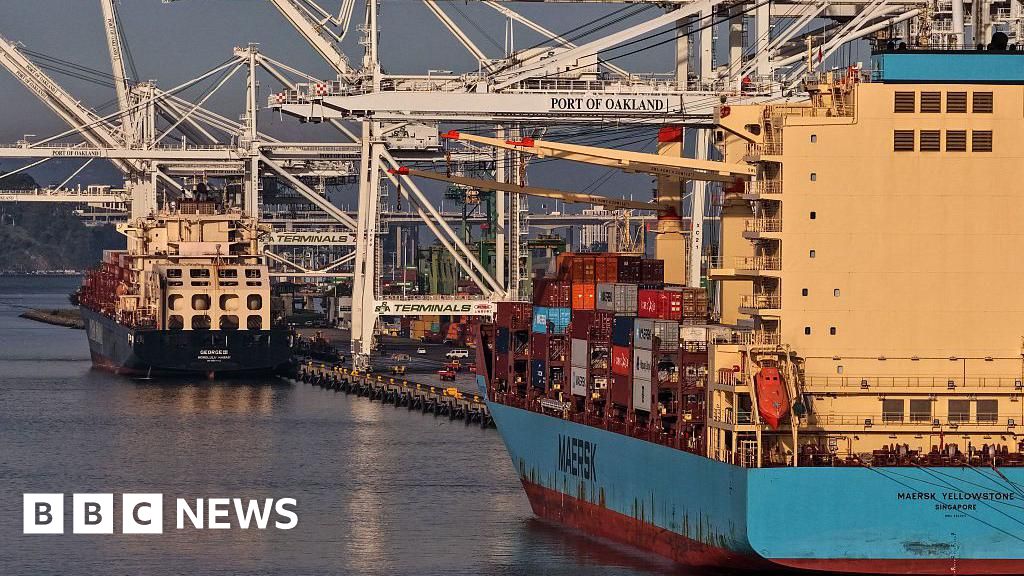
The U.S. Court of International Trade ordered Customs and Border Protection to issue refunds for tariffs imposed under the IEEPA after the Supreme Court struck those duties down, with Judge Richard Eaton saying all importers subject to IEEPA duties are entitled to relief though the payment process remains unclear. The administration had collected an estimated $130bn from those tariffs; Treasury Secretary Scott Bessent signaled a likely replacement 15% global tariff (up from 10%), while companies including FedEx and small-business coalitions press for full refunds, creating fiscal and policy uncertainty for markets and affected sectors.
Market structure: The court order is a direct positive for importers and logistics firms that paid IEEPA duties — expect margin relief for import-heavy retailers and shippers (FedEx, ATMU) if refunds are distributed. Domestic producers that benefited from tariff protection (steel, specialty manufacturing) lose pricing leverage; estimate potential margin compression of 100–300bp for exposed US incumbents if tariffs are rescinded or replaced by a lower global duty. Cross-asset: a $130bn refund liability is fiscally material — bond yields could rise +10–30bp if refunds are recognized as reduced receipts; USD may weaken modestly and import-linked commodity demand could normalize over 3–12 months.
Risk assessment: Tail risks include a protracted legal appeal by the administration, unilateral implementation of a 15% global tariff (Treasury signal) or administrative delays that push refunds >6–12 months. Time horizons: immediate (days) — volatility around headlines and CBP guidance; short-term (weeks–months) — refund processing, Treasury tariff rulemaking; long-term (quarters) — supply-chain re-shoring reversals may slow. Hidden dependencies: many importers rerouted sourcing in 2023–24; refund receipt may not translate into reversion of higher-cost contracts or inventory write-downs.
Trade implications: Tactical longs: small-cap ATMU (1–2% portfolio) as binary legal upside within 6–12 months; core long FDX (2–4%) via 3–6 month call spreads to capture cashflow and volume normalization, target +15–30%. Hedge by shorting tariff-beneficiary exposure (e.g., XME ETF, 1–2%) and buy 6-month puts on that ETF as protection. Options: buy FDX 3–6 month 1:1 call spreads and buy OTM puts on XME to keep capital efficient.
Contrarian angles: The market assumes full, fast automatic refunds — likely underdone; administrative frictions mean staged/partial refunds, creating dispersion. Historical parallels (post-tariff rollbacks) show incumbents often face multi-quarter margin erosion despite headline relief; unintended consequence — higher bond yields from fiscal hit could hurt leverage-sensitive logistics and retail names, so size positions modestly and use event-triggered scale-ups.
AI-powered research, real-time alerts, and portfolio analytics for institutional investors.
Request TrialOverall Sentiment
mildly negative
Sentiment Score
-0.25
Ticker Sentiment
