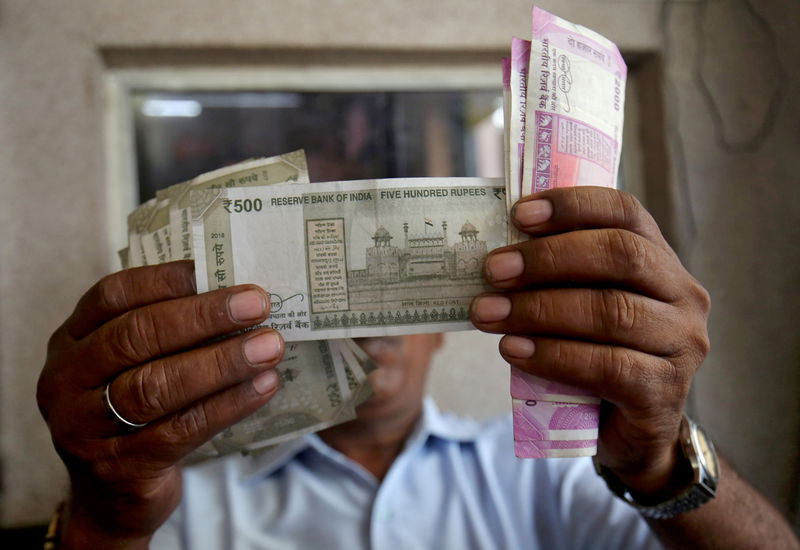
Asian currencies steadied after prior losses, with the dollar strengthening following a US-EU trade framework agreement that includes a 15% tariff on EU goods. However, market caution persists ahead of President Trump's August 1 tariff deadline and despite resumed US-China trade talks. Investors also await central bank decisions from the Federal Reserve and Bank of Japan this week, both anticipated to hold rates steady, with focus on forward guidance.
Asian markets are exhibiting a cautious tone as positive developments in trade are being overshadowed by geopolitical and monetary policy uncertainty. A new U.S.-EU trade framework, which includes a 15% tariff on EU goods (down from a proposed 30%), has been interpreted as favorable to the U.S., leading to a stronger dollar. The US Dollar Index rose 0.1% after a 1% climb, exerting pressure on regional currencies; the USD/KRW pair rose 0.3%, the USD/SGD gained 0.1%, and the USD/INR pair is on track for its ninth consecutive loss. Despite resumed U.S.-China trade negotiations, this dollar strength and an impending August 1 U.S. tariff deadline are keeping risk sentiment fragile. Investor focus is now shifting to central bank meetings, with both the U.S. Federal Reserve and the Bank of Japan expected to hold rates steady. Markets will scrutinize the Fed's forward guidance for signals on future rate cuts, while the BOJ's decision-making is constrained by a mix of recent trade deal relief and domestic political instability in Japan.
AI-powered research, real-time alerts, and portfolio analytics for institutional investors.
Request DemoOverall Sentiment
moderately negative
Sentiment Score
-0.35
Ticker Sentiment
