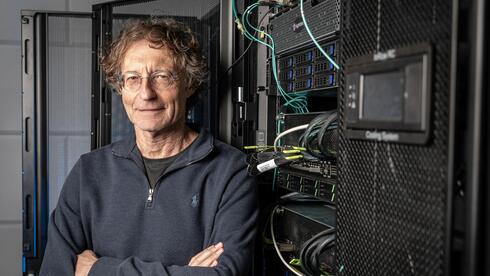
DustPhotonics is being acquired by Credo Technology Group in a deal worth up to about $1.3 billion, including $750 million in cash, $123 million in shares, and a performance-based earnout. The transaction highlights continued investor appetite for silicon photonics and AI infrastructure components, while reinforcing Avigdor Willenz’s track record of early bets on semiconductor bottlenecks. The article also points to his next AI-focused venture, Element Labs, which raised $50 million last year.
This is less about one M&A print and more about a durable capital-allocation signal for the AI infrastructure stack: the market is still paying up for companies that sit at the narrowest bandwidth/energy bottlenecks. That favors the “picks-and-shovels” layer over model/application names, because optical interconnect and inference silicon are two of the few segments where unit economics can improve as AI scale rises rather than compress. The second-order effect is that the most valuable private assets in this space are now likely to be strategic targets rather than standalone IPO stories, which should keep late-stage venture multiples supported for another 6-12 months. For public comps, the read-through is asymmetrical. Credo is the most direct beneficiary because this validates the acquisition logic around interconnect adjacency and gives it a stronger currency for follow-on M&A; Marvell and Broadcom-style infrastructure franchises also benefit from a rising strategic premium for anything that reduces power-per-bit. Conversely, the risk is that investors extrapolate this deal multiple too far into sub-scale photonics names: the market may reward “AI optics” broadly, but only a handful of platforms will have the manufacturing discipline and customer concentration to actually monetize demand. The more interesting contrarian point is that the next leg of value creation may shift from networking to inference at the edge. If smaller localized data centers really take share, hyperscaler capex growth could decelerate at the margin while demand for deployment-oriented silicon accelerates; that is a subtle negative for the most crowded training-exposed names and a positive for companies that monetize distributed inference, packaging, and power management. The timeline is months to years, not days: near-term trading is driven by the acquisition multiple, but the structural re-rate depends on whether AI cluster economics keep forcing optical and inference optimization. The main tail risk is execution and customer concentration: photonics supply chains are still brittle, and any product slip or qualification delay can quickly turn a strategic asset into a capital sink. If broader AI capex pauses for even one quarter, the market will punish the most speculative optical beneficiaries first, while the diversified infrastructure incumbents should hold up better.
AI-powered research, real-time alerts, and portfolio analytics for institutional investors.
Request DemoOverall Sentiment
moderately positive
Sentiment Score
0.62
Ticker Sentiment
