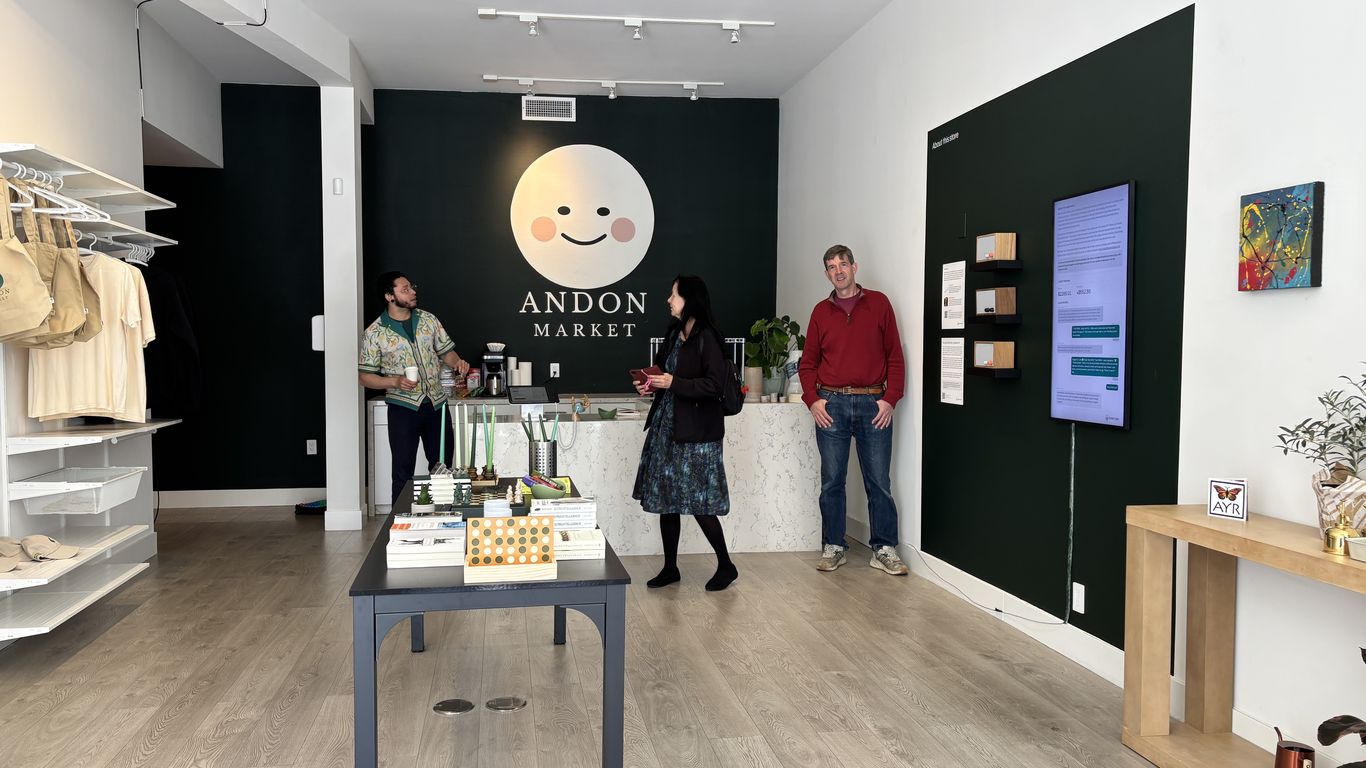
Anthropic-backed Andon Market is testing whether an AI agent named Luna can run a retail store, handling hiring, inventory, pricing, customer engagement and vendor relationships. The experiment includes three years of rent and operating support from Anthropic and Andon Labs, reducing near-term profit pressure while the store gathers operating data. The article is largely anecdotal and unlikely to move markets, but it highlights continued experimentation with AI in consumer retail.
This is less a retail story than a pricing-labor-software stress test. The first-order takeaway is not that AI can ring up sales; it is that AI can increasingly intermediate low-stakes commercial decisions that were historically handled by junior staff, which compresses the value of basic merchandising, associate labor, and simple category management. If this model works even imperfectly, the next adoption wedge is not fully autonomous stores but “AI front office + human back office” in small retail, hospitality, and service businesses.
The second-order effect is on incumbents selling the scaffolding around commerce. Big e-commerce players benefit if AI agents normalize machine-to-machine shopping, because product discovery and checkout become more API-like and less brand-loyal. That favors companies with deep catalog breadth, fast fulfillment, and clean product data; it hurts merchants whose edge is opaque pricing, impulse conversion, or premium markups. Over 6-18 months, the key question is whether AI agents reduce customer acquisition costs enough to offset the margin leakage from price transparency.
The contrarian risk is that this remains a novelty with weak unit economics: higher labor intensity than advertised, reputational downside from weird customer interactions, and limited ability to scale beyond affluent, curiosity-driven foot traffic. If consumers treat AI-run retail as an entertainment venue rather than a shopping channel, the experiment becomes an expensive marketing stunt, not a template. Watch for replication in lower-income neighborhoods or higher-ticket categories; failure there would be a strong signal that the model is constrained to brand theater rather than operational advantage.
AI-powered research, real-time alerts, and portfolio analytics for institutional investors.
Overall Sentiment
mildly positive
Sentiment Score
0.15
Ticker Sentiment
