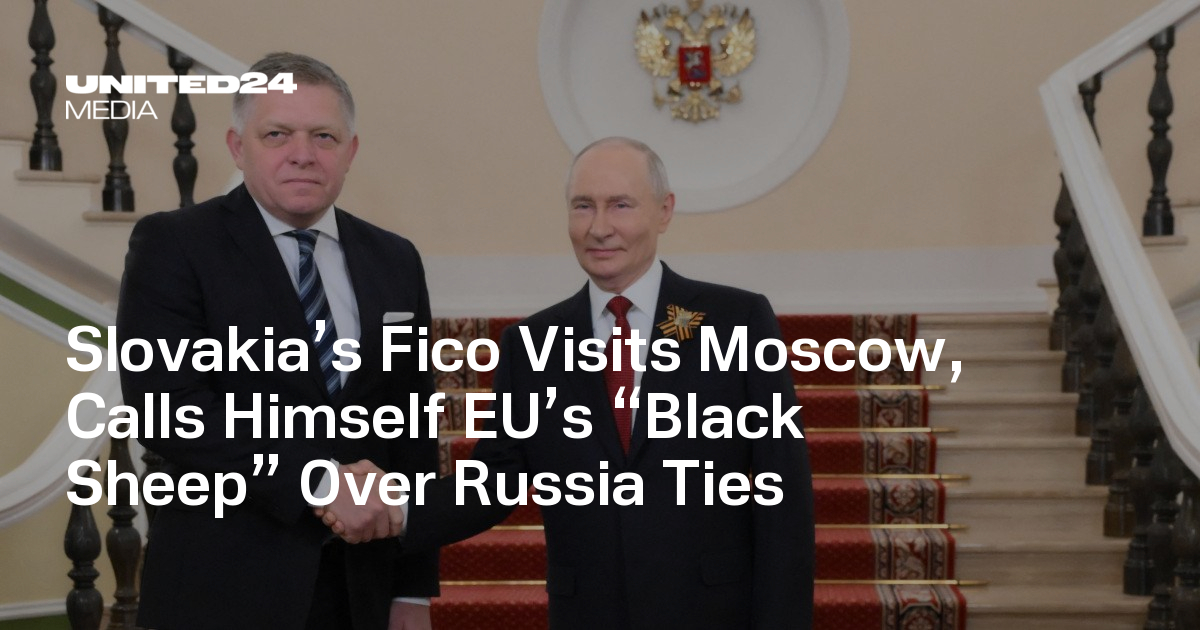
Slovak Prime Minister Robert Fico visited Moscow ahead of Russia’s May 9 Victory Day events, laid a wreath at the Tomb of the Unknown Soldier, and said he supports dialogue and ceasefire efforts while calling himself the EU’s “black sheep” over Russia ties. The trip underscores ongoing political friction between Slovakia and EU partners on Russia policy, but it does not present a direct market-moving economic or corporate catalyst.
This is less about Slovakia and more about the EU’s tolerance for internal policy drift at a time when cohesion is already being stress-tested by defense spending, energy security, and Ukraine financing. The immediate market impact is muted, but the second-order effect is that a visible member-state outlier gives cover to other fringe governments to soften sanctions rhetoric without formally breaking ranks. That matters because sanctions fatigue tends to show up first in implementation quality, not headline policy, and that leakage usually widens over a 3-6 month horizon.
The more important signal is to Russian assets and commodities: symbolic diplomatic outreach from an EU leader does not change the macro war premium, but it marginally lowers the perceived probability of a unified escalation path on sanctions. That can cap downside in select Europe-facing cyclicals if investors were positioning for harsher restrictions, while leaving defense and energy names structurally supported because the underlying conflict is clearly not resolving. The market should treat this as a governance event, not an investment regime change.
The contrarian read is that consensus may overestimate the near-term policy consequence and underestimate the longer-term political contagion inside Europe. A single high-profile dissenting trip does not meaningfully reopen Russian trade flows, but it can normalize transactional diplomacy among populist governments and create episodic headline risk for EU policy votes. The key catalyst is not Moscow itself; it is whether this turns into a repeatable pattern before the next EU budget/sanctions renewal cycle, which would matter far more for spreads than today’s optics.
AI-powered research, real-time alerts, and portfolio analytics for institutional investors.
Request DemoOverall Sentiment
neutral
Sentiment Score
-0.05
