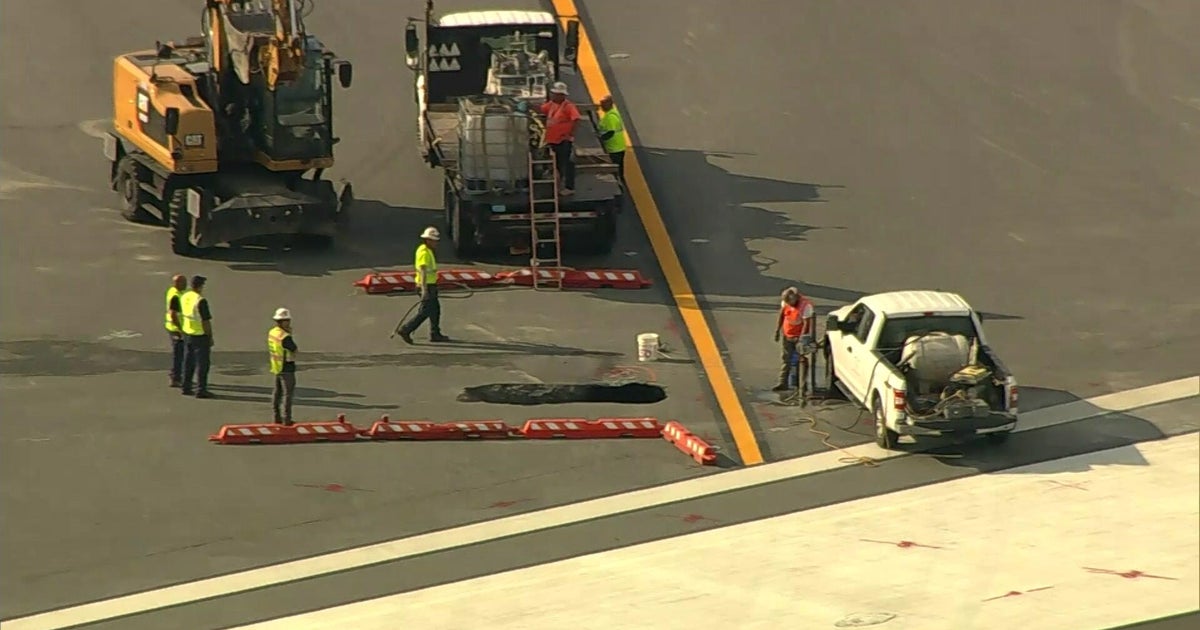
LaGuardia Airport’s Runway 4/22 remains closed after a sinkhole was discovered Wednesday, and reopening has been delayed from Thursday to Friday. The closure is causing delays and cancellations during the Memorial Day travel rush, with the Port Authority warning of continued disruptions throughout the day. The cause of the sinkhole is still unknown.
This is a near-term disruption trade, not a structural aviation thesis. The first-order hit is on LGA-dependent capacity, but the more interesting second-order effect is network spillover: when one major slot-constrained airport loses a runway, airlines don’t just absorb delays, they re-optimize aircraft and crew rotations across the entire Northeast corridor. That creates a short-duration but high-beta squeeze in on-time performance metrics, missed connections, and same-day reaccommodation costs, which disproportionately impacts carriers with tighter domestic banks and thinner buffer capacity.
The market tends to underprice the operational knock-on beyond the airport itself. Expect the biggest pain in carriers with large LGA exposure and premium-heavy schedules, because business travelers are less tolerant of schedule slip and more likely to trigger rebooking, customer-care expense, and yield erosion over the next several days. Secondary beneficiaries are ride-hail and rail alternatives on the NYC-Boston/DC axis if delays persist through the weekend, while airport services and concession revenue at LGA take a short-lived hit.
The key catalyst window is 24-72 hours: if the runway returns Friday as now expected, this stays a noise event. If there is any additional slippage or a broader infrastructure issue is uncovered, the market will quickly reprice this from a one-day inconvenience into a maintenance and inspection overhang, which matters because slot-constrained airports have very limited slack. The contrarian view is that the move may be overdone if airlines simply absorb the shock with minimal cancellations; in that case, the best setup is fading any knee-jerk weakness in the most operationally efficient domestic carriers after the weekend schedule clears.
From a broader lens, this reinforces an infrastructure fragility theme that is easy to ignore until it surfaces in peak-travel periods. If the root cause implicates adjacent utility or construction activity, the issue could become a policy and capex story for airport authorities rather than an isolated weather/maintenance blip, extending the headline risk beyond this weekend.
AI-powered research, real-time alerts, and portfolio analytics for institutional investors.
Request DemoOverall Sentiment
mildly negative
Sentiment Score
-0.20
