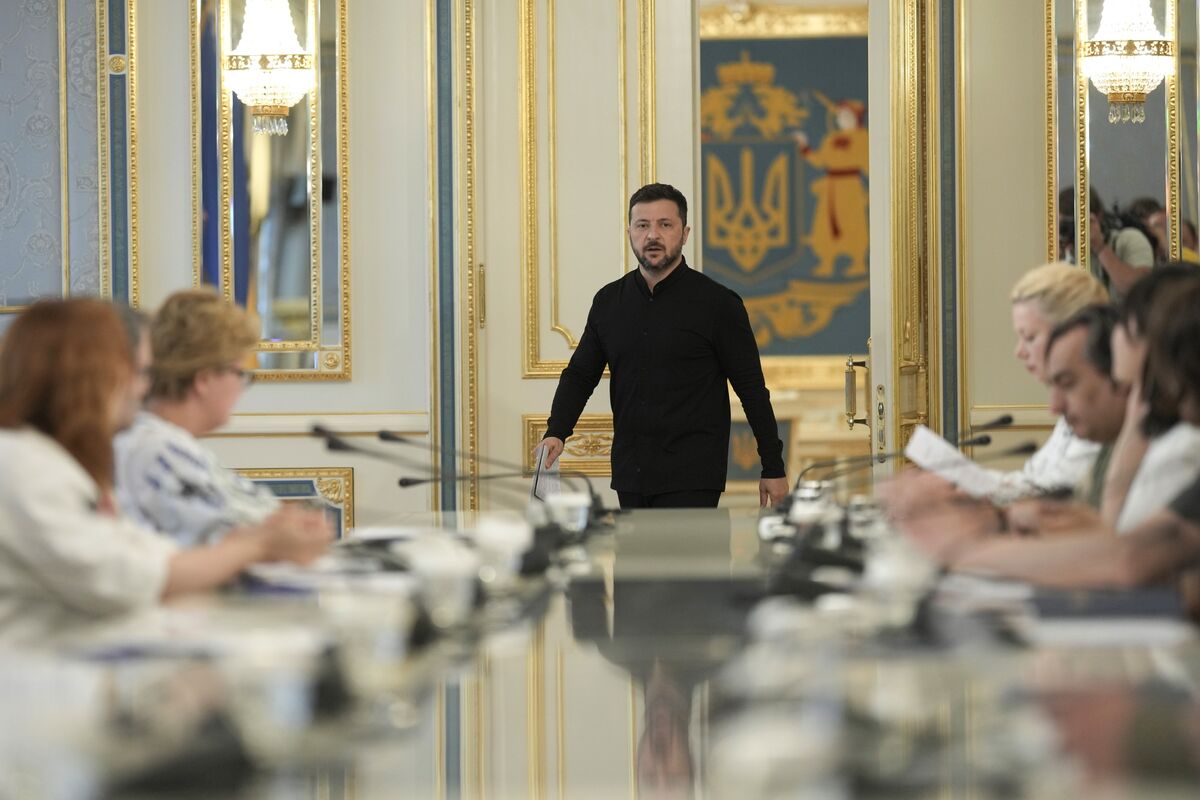
Ukrainian President Zelenskiy is initiating a cabinet overhaul, replacing Prime Minister Denys Shmyhal with Yulia Svyrydenko, to boost domestic weapons production and secure continued US support. The appointment of Svyrydenko, notable for her past coordination of a minerals deal with the Trump administration, underscores Ukraine's strategic focus on bolstering its war effort and navigating evolving international political dynamics to maintain critical foreign assistance.
Ukraine's government is undergoing a significant overhaul with President Zelenskiy replacing Prime Minister Denys Shmyhal, the country's longest-serving head of government, with Deputy Premier Yulia Svyrydenko. This strategic change is explicitly aimed at two critical objectives: boosting domestic weapons production to enhance military self-sufficiency and securing continued support from the United States amid a protracted war. The nomination of Svyrydenko is particularly noteworthy given her prior role in coordinating a landmark minerals deal with the Trump administration. This background suggests a deliberate attempt to position a leader with experience navigating potentially complex political dynamics in Washington, thereby hedging against shifts in US foreign policy and ensuring the continuity of vital aid flows. The move signals a pivot in Kyiv's wartime strategy, emphasizing internal industrial capacity and proactive diplomatic engagement to sustain its long-term defense efforts.
AI-powered research, real-time alerts, and portfolio analytics for institutional investors.
Request DemoOverall Sentiment
neutral
Sentiment Score
0.00
