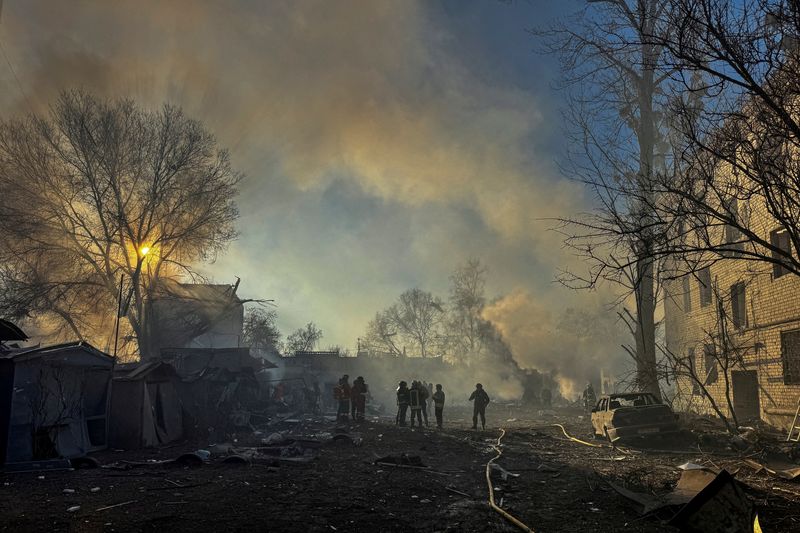
Ukraine is emerging as a strategic defense-tech provider, exporting counter-drone expertise and Delta battlefield software to Western and Gulf partners, with preliminary local investment and co-production deals under discussion. The EU finalized a $105 billion funding package to support Ukraine through next year, helping stabilize wartime supply lines. Offsetting that, intensified Gulf missile exchanges are tightening U.S. interceptor supplies and higher oil prices are easing pressure on Moscow.
NOC is the cleanest U.S. listed expression of a broader procurement shift: Ukraine’s combat feedback loop is turning battle-tested counter-UAS, command-and-control, and low-cost interception into exportable requirements language for NATO and Gulf buyers. That should incrementally support multi-year order flow not just in hardware, but in software, sustainment, training, and integration — the higher-margin mix that matters for a prime contractor. The second-order winner is anyone with existing air-defense integration exposure and classified sensor fusion capabilities; the loser is the legacy assumption that interceptor inventory can be replenished quickly at scale.
The most important near-term implication is not revenue acceleration but budget priority reallocation. If missile-defense stockpiles are being consumed faster than replenished, western ministries will shift spend toward cheaper, layered defenses and autonomous systems, which should favor firms with modular command architectures and defeat of small drones over purely exquisite missile platforms. That can create a relative valuation spread within defense: names tied to persistent systems and software should outperform those relying on a single large missile program or one-time replenishment orders.
Contrarian risk: the market may be overestimating how monetizable Ukraine’s edge is for U.S. primes in the next 1-2 quarters. A lot of the economic value may accrue to local European/Gulf co-producers and software vendors rather than NOC itself, while headline geopolitical urgency can fade quickly if a ceasefire or de-escalation reduces emergency procurement. The more durable catalyst is a sustained rearmament cycle over 12-24 months; the shorter-term trade is vulnerable to budget timing delays and political scrutiny over spending on air defense versus domestic priorities.
For NOC specifically, the setup is moderately positive but not chase-worthy after the initial headline reaction: the upside comes from backlog durability and margin mix, not a step-function in earnings. If the stock weakens on broad market risk, that is the better entry because the fundamental thesis is a slow-burn capture of allied modernization budgets rather than an immediate conflict beta pop.
AI-powered research, real-time alerts, and portfolio analytics for institutional investors.
Request DemoOverall Sentiment
mildly positive
Sentiment Score
0.15
Ticker Sentiment
