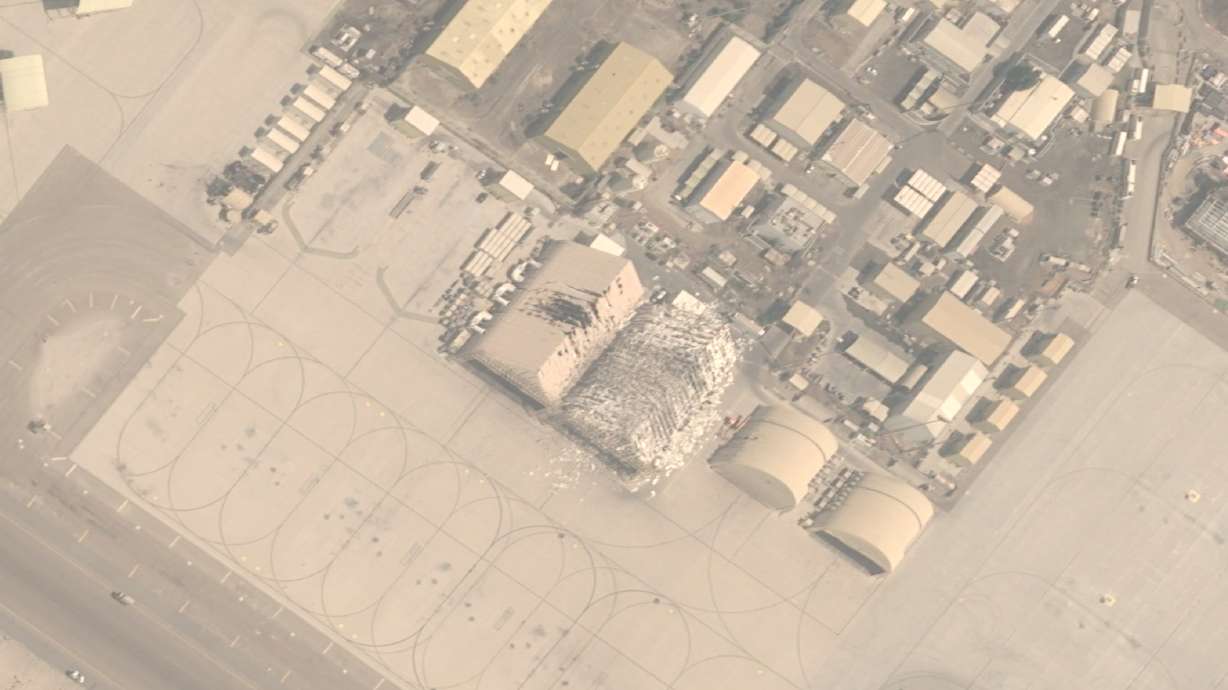
Brent crude has jumped ~47% since the war began to about $107/bbl as Iranian attacks on Gulf energy sites and threats to shipping in the Strait of Hormuz, plus damage to Kuwait's Mina Al-Ahmadi refinery (~730,000 b/d capacity), tighten global supply. The conflict has also disrupted key raw-material flows (helium, sulfur), raised food and fuel price risks worldwide, and driven heightened volatility and risk-off positioning across markets. Expect sustained sector-level stress in energy, transport/logistics, and commodity supply chains until escalation subsides or security guarantees restore flows.
The market is pricing an elevated probability of persistent disruption to Gulf energy flows, but the more durable economic impact will come from frictional cost inflation — insurance, rerouting, and higher volatility premiums — rather than a clean permanent supply shock. Expect shipping insurance and freight differentials (TSR-of-trade premiums) to widen by mid-single digits in the coming 30–90 days as owners avoid chokepoints, which mechanically raises landed cost of energy and key raw materials into Asia and Europe.
Second-order shortages in inputs with concentrated supply chains (e.g., helium, sulfur, catalyst feedstocks) will transmit into semiconductor and fertilizer push-pulls over 3–9 months, compressing margins for high-volume manufacturers and lifting pricing power for upstream producers. Inventory drawdowns will matter: sectors with <30 days of buffer are at greatest near-term risk and will show the earliest margin stress.
Tail risks are asymmetric and clustered by horizon: in days-weeks, strike-driven commodity spikes and option-vol stress are most probable; over 3–12 months, rerouting and capex delays could structurally raise energy breakevens and defense budgets; beyond a year, capital reallocation into onshore capacity and alternative supply chains becomes the dominant price setter. Key reversals would be an internationally coordinated energy release or rapid restoration of maritime security, both of which would deflate volatility and compress risk premia quickly.
AI-powered research, real-time alerts, and portfolio analytics for institutional investors.
Overall Sentiment
strongly negative
Sentiment Score
-0.75
