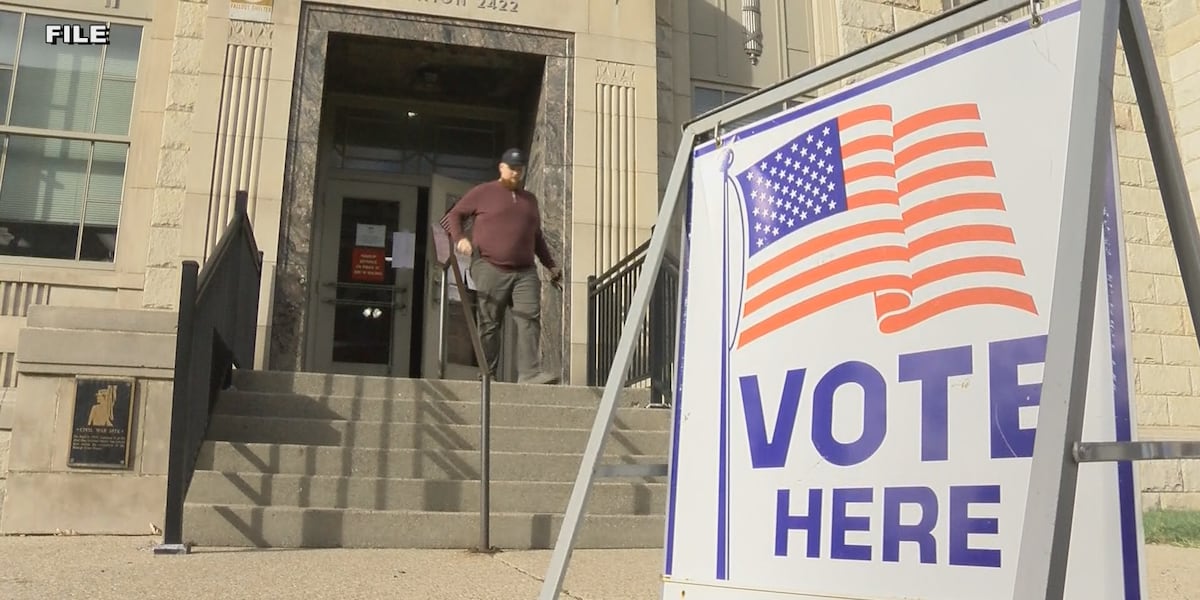
Louisiana’s new closed primary system for the U.S. Senate race caused polling-place confusion and delays, especially for unaffiliated voters who had to choose between the Democratic and Republican primaries. The article cites disruptions across Louisiana, including reports of frustrated poll workers and complaints from Sen. Bill Cassidy’s campaign about barriers for No Party voters. The piece is primarily about election administration rather than market-moving developments.
The immediate market read-through is not the Senate primary itself, but the signaling value: any administrative friction that disproportionately suppresses unaffiliated participation tends to advantage the better-organized, higher-propensity electorate. That usually helps incumbents and institutionalized campaigns, while penalizing challengers who were counting on a broader, lower-information turnout set. The second-order effect is that election-law complexity becomes a mobilization variable, not just a governance headline, which can widen the gap between field operations and media narrative over the next few voting cycles.
The key risk is that confusion today becomes litigation, recertification disputes, or rule changes tomorrow. That matters because procedural instability tends to create short-lived but tradable uncertainty around Louisiana politics, especially if either side frames the result as illegitimate or structurally biased. Over days to weeks, the main catalyst is whether campaign rhetoric hardens into formal complaints; over months, the bigger issue is whether similar closed-primary mechanics spread to other states and become a template in contested primaries.
The contrarian angle is that the headline confusion may be less important than the underlying strategic benefit to campaigns with stronger voter-files and in-person contact rates. In low-salience primaries, barriers to casual participation often compress the electorate toward older, more partisan, more predictable voters — a profile that typically raises forecast accuracy for top-tier campaigns and makes late polling less useful. If markets underappreciate that this is a turnout-quality, not just turnout-quantity, story, the first move is likely an overreaction to 'chaos' while the real winner is whoever already built the best get-out-the-vote machine.
AI-powered research, real-time alerts, and portfolio analytics for institutional investors.
Request DemoOverall Sentiment
neutral
Sentiment Score
-0.05
From a broader policy lens, this is a reminder that election administration is becoming a governance risk factor for local and state incumbents: complicated rules increase the probability of operational errors, public distrust, and post-election challenges. That can create a small but real discount on political durability for states that keep changing voting procedures mid-cycle. The tradeable implication is less about election-night outcomes than about reputational damage and the chance of follow-on administrative reform.
