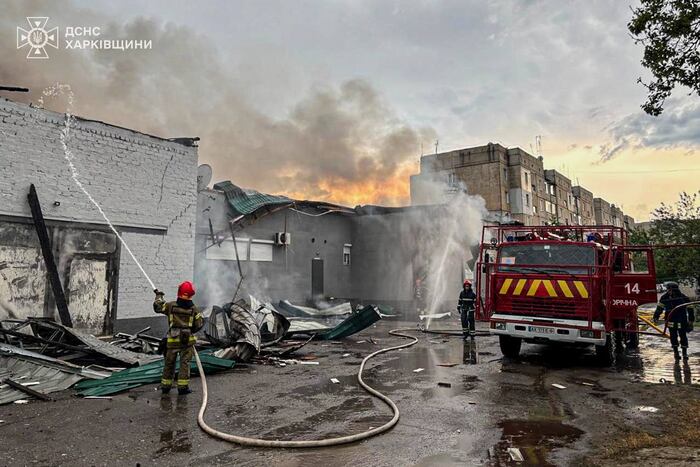
Russia launched an overnight missile-and-drone assault on Kyiv, injuring at least 10 people and damaging buildings across at least nine districts, including a school, supermarkets, warehouses, and areas near government offices. Ukrainian officials said the attack was ongoing by sunrise and warned of possible use of the hypersonic Oreshnik missile, though it was not confirmed. The incident raises immediate geopolitical risk and could pressure regional risk assets.
The market implication is less about immediate headlines and more about a widening probability distribution for European tail risk. Repeated strikes on the capital and government-adjacent infrastructure raise the odds of a miscalculation that forces a larger NATO posture, which is mildly bullish for defense supply chains but negative for cyclicals exposed to Europe risk sentiment. The first-order FX read is a safer-bid for USD and CHF, while EUR-sensitive assets should face volatility compression only if this becomes a one-off rather than a sustained escalation.
The more durable second-order effect is on infrastructure resilience spending: air defense interceptors, hardened communications, backup power, and civil-defense logistics become recurring procurement lines rather than emergency items. That favors primes with inventory depth and low political dependency, but the real winner may be component suppliers and ammunition bottlenecks with constrained capacity, where incremental demand can re-rate earnings faster than headline defense names. On the loser side, any Ukraine reconstruction basket is vulnerable to timing slippage because each escalation reduces confidence in near-term reconstruction windows and pushes capex into later phases.
The contrarian angle is that markets may overestimate the immediate strategic delta if the attack does not broaden beyond Kyiv or if the weapon system remains largely symbolic. In that case, defense stocks can give back quickly after an initial gap as investors realize the cadence of procurement, not the severity of a single strike, drives cash flow. The key catalyst to watch over the next days is whether Western partners respond with new air-defense pledges or sanctions expansion; over months, the real inflection is whether this triggers a sustained change in escalation doctrine rather than another isolated overnight event.
AI-powered research, real-time alerts, and portfolio analytics for institutional investors.
Request DemoOverall Sentiment
strongly negative
Sentiment Score
-0.85
