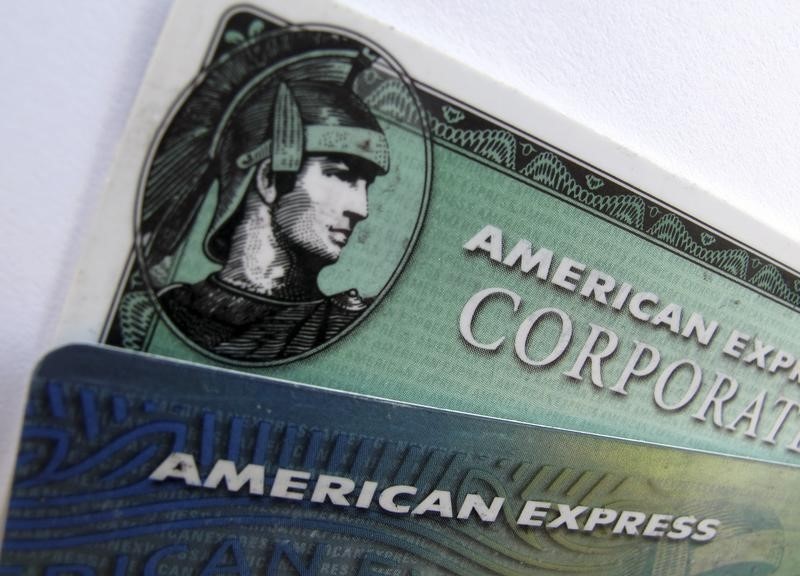
BofA set a new price target of $381 for American Express (from $382), implying ~28% upside to the current $298.39 share price; shares are down 18.7% YTD. February U.S. consumer card loans fell to $95.1B from $97.2B in January, delinquency held steady at 1.4% and net write-offs ticked up to 2.0% from 1.9%. BofA slightly tweaked EPS estimates (Q1'26 $4.00 vs $3.93 prior; FY26 $17.48 vs $17.51 prior; 2027 $20.04 vs $20.08) and applies a 19x multiple to 2027 EPS; analyst views remain mixed with RBC Outperform PT $425 and BTIG Sell PT $285.
American Express’s franchise is being underwritten by structural advantages (closed-loop data, affluent customer mix, and premium fee income) that mute cyclical credit volatility but amplify sensitivity to shifts in discretionary spend. The market often misprices that asymmetry: credit shocks bite with a lag through charge-off roll rates and seasonality, while revenue recovery from travel and corporate spend can re-accelerate within two to three quarters once consumer confidence rebounds.
Near-term catalysts are dominated by central bank action and real-time payment flows. Rate moves over days-to-weeks will mechanically reprice funding and yield on receivables, while weekly card-spend prints and payroll data over the next 4–12 weeks will reveal whether the current resilience is durable or already deteriorating into higher loss formation.
Second-order winners if AmEx outperforms include high-margin travel suppliers and loyalty/merchant partners that rely on affluent cohorts; losers include lower-card-margin fintech lenders and subprime-focused issuers whose loss rates are more elastic to an income shock. Regulatory or merchant-fee interventions remain a latent tail risk that could compress economics faster than credit deterioration in a downturn.
AI-powered research, real-time alerts, and portfolio analytics for institutional investors.
Overall Sentiment
mildly positive
Sentiment Score
0.12
Ticker Sentiment
