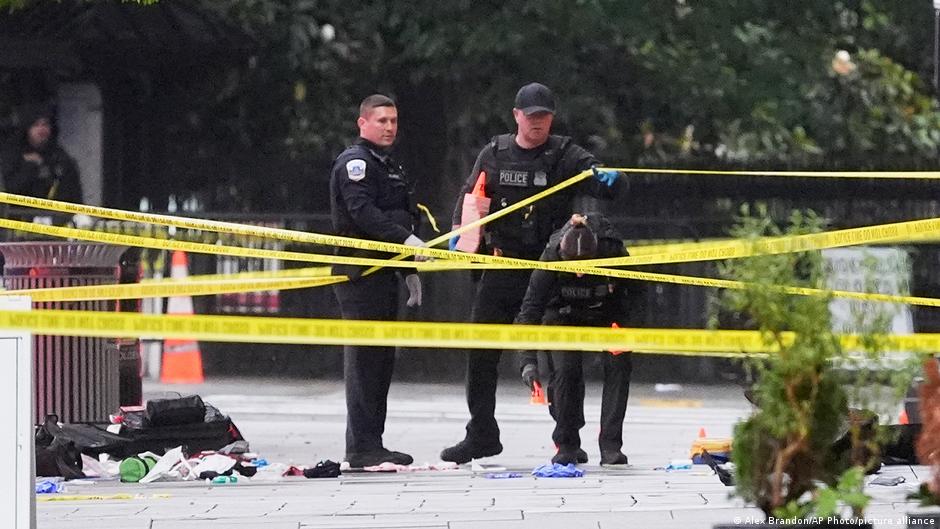
A suspect died after opening fire near the White House on Saturday evening, prompting a lockdown and a heavy Secret Service, police, and National Guard response. One bystander was shot, while no White House protectees or operations were impacted. The incident adds to recent security concerns around the White House and Trump, but is unlikely to have direct market-moving implications.
This is not an equity-specific event, but it is a measurable risk-premium shock for DC-facing assets. The market should treat it as a near-term volatility catalyst for firms with federal contract exposure, courthouse/security infrastructure, and urban retail footprints in the capital corridor; the first-order move is usually in headline-sensitive defense primes is muted, while the second-order move shows up in local transit, hospitality, and office occupancy expectations if the incident reinforces a persistent safety overhang.
The more important implication is policy optionality: any escalation in protectee-security posture tends to translate into incremental federal spending on perimeter systems, surveillance, armored transport, and guard support, which is a delayed but durable tailwind for defense electronics and physical-security vendors. That demand is lumpy and unlikely to appear in current-quarter numbers, but it can surface in procurement commentary over the next 1-3 quarters if agencies respond by hardening high-value sites.
From a risk lens, the key issue is whether this becomes part of a broader pattern rather than a one-off. If further attempts or copycat incidents occur over the next 2-6 weeks, implied volatility in event-driven names and DC-exposed REITs should reprice higher; if there is no follow-through, the market likely fades the event quickly and the trade becomes a classic sell-the-headline fade. The contrarian take is that the larger impact may be on public-sector budget priorities, not immediate security firms: elevated threat perception can crowd out discretionary spending and delay approval cycles for nonessential federal projects.
AI-powered research, real-time alerts, and portfolio analytics for institutional investors.
Request DemoOverall Sentiment
moderately negative
Sentiment Score
-0.45
