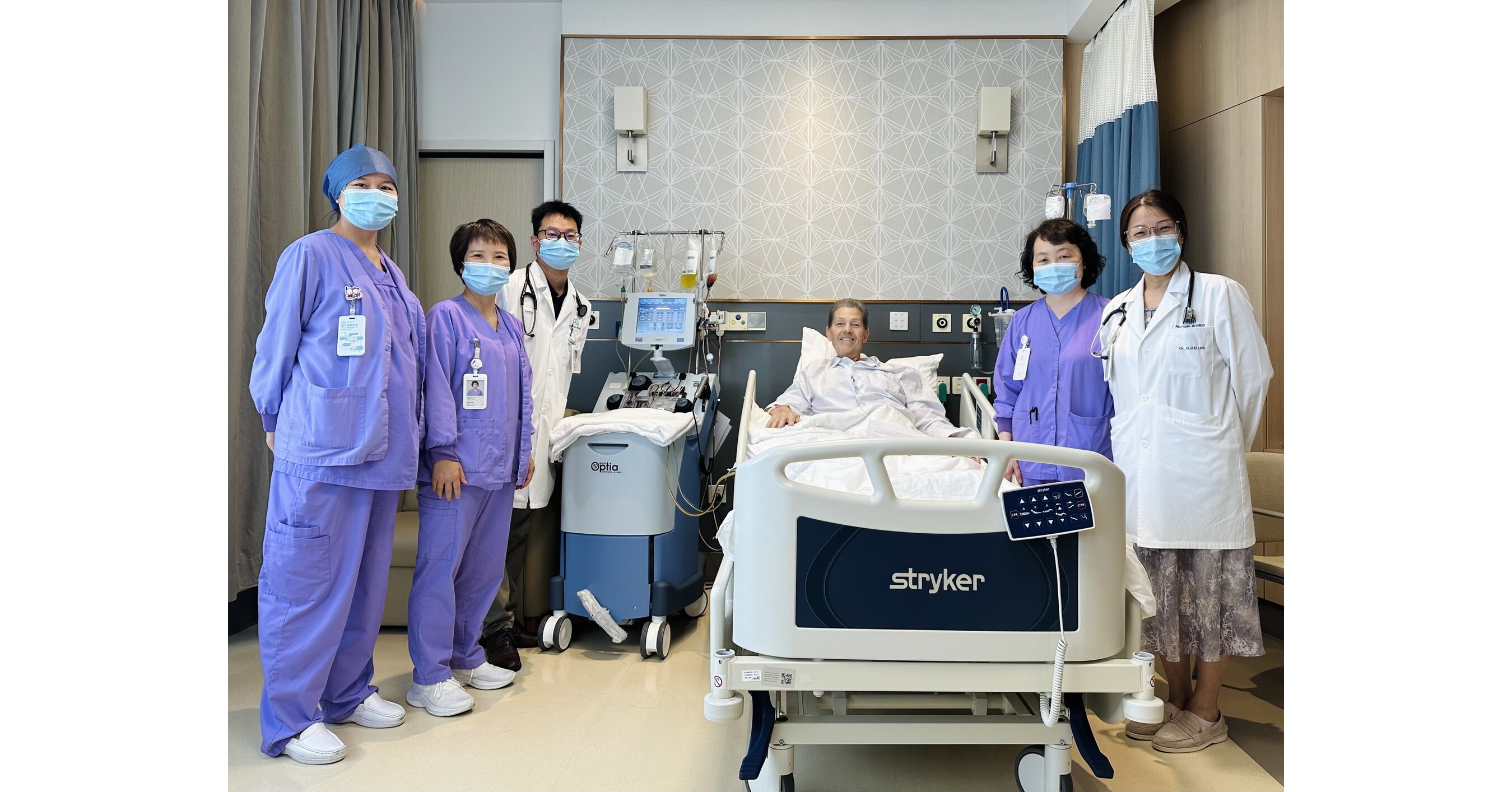
Jiahui International Cancer Center in Shanghai has begun treatment of the world’s first international patient (a 59-year-old from New Zealand with advanced gastroduodenal cancer) with Satri-cel, after Claudin 18.2+ / HER2- biomarker eligibility and successful leukapheresis. Reinfusion is scheduled in the coming weeks, following China’s just-recent approval of Satri-cel as the first globally approved CAR-T therapy for solid tumors. The article frames this as a milestone expanding international access to China-developed oncology innovation, though it does not quantify financial or market impacts.
This is more a validation event than a near-term earnings event. The investable read-through is not the therapy itself, but the infrastructure around it: precision diagnostics for Claudin 18.2, cellular-manufacturing capacity, and premium oncology centers that can capture medical-tourism demand. The first meaningful winners over the next 6-18 months are likely Chinese oncology platform names with a funnel into biomarker testing and cell-therapy logistics, plus service providers that can scale leukapheresis, cold-chain, and cross-border patient coordination.
The competitive implication is subtler: this raises the bar for Western oncology franchises that have been relying on solid-tumor CAR-T skepticism to defend timelines. If follow-on patients accumulate, the second-order effect is pressure on global pharma to accelerate solid-tumor cell therapy partnerships in Asia and to invest in companion diagnostics earlier. That said, the immediate market impact should be small unless the program shows reproducible response rates, manageable toxicity, and throughput that can support real commercial volume.
The contrarian risk is that investors will confuse a symbolic first-mover milestone with a scalable business. The bottlenecks are manufacturing cycle time, patient selection, and reimbursement; if any of those fail, the story remains a scientific headline rather than a profit pool. Near term, the catalyst path is data-driven over the next 1-3 months; over 6-18 months, the thesis only works if broader uptake proves this is not a one-off medical tourism case.
AI-powered research, real-time alerts, and portfolio analytics for institutional investors.
Overall Sentiment
moderately positive
Sentiment Score
0.45
Ticker Sentiment
