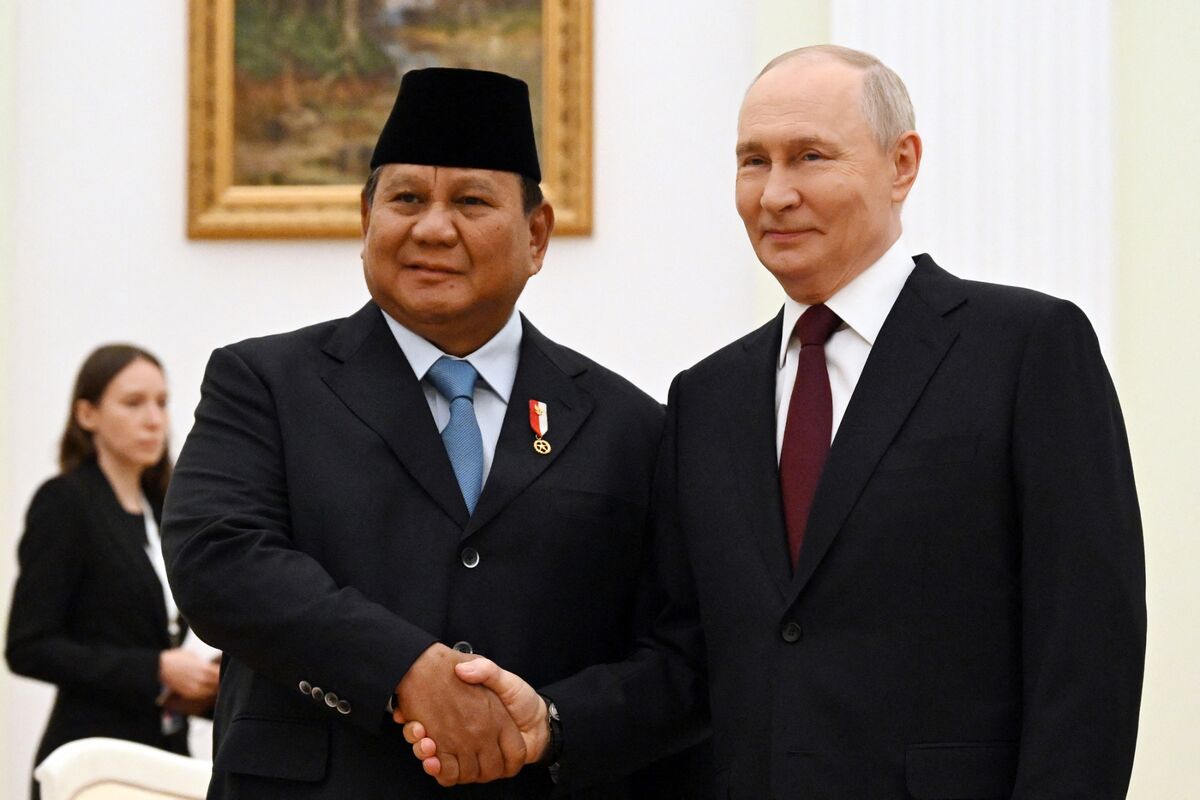
Putin said Russia's trade turnover with Indonesia rose 12.5% last year, though he noted an adjustment in trade at the start of this year. The Kremlin talks with President Prabowo centered on preserving stable bilateral economic ties and restoring growth. The remarks are broadly diplomatic and factual, with limited immediate market impact.
The key market implication is not bilateral trade volume per se, but the signal that both sides want to insulate flows from sanctions, payment frictions, and shipping constraints. That tends to push commerce toward intermediated channels, local-currency settlement, and less transparent logistics, which can benefit regional commodity handlers, commodity-linked EM FX, and any third-country middlemen with spare balance-sheet capacity. The biggest second-order effect is a gradual rerouting of procurement and financing rather than a clean step-up in headline trade. The near-term risk is that any apparent stabilization is vulnerable to policy discontinuities: additional sanctions enforcement, banks tightening correspondent exposure, or a sudden deterioration in freight insurance and settlement availability. Those headwinds typically show up first in trade finance costs and delivery times, then in volumes with a 1-3 quarter lag. If the relationship becomes more operationally important, the market should expect more sensitivity in Indonesian import baskets, especially energy, fertilizers, and industrial inputs that rely on external financing. The contrarian view is that the market may be underestimating how much of this is defensive diplomacy rather than incremental economic integration. A public push to “stabilize” trade often indicates the existing channel is already leaking, so the upside to volumes may be capped unless there is a concrete payments or logistics workaround. If that workaround emerges, the winners are likely not the obvious national champions but rather niche shipping, commodity brokerage, and EM credit names positioned to intermediate sanctioned or semi-sanctioned flows. For asset allocation, this is more a relative-value and catalyst-tracking setup than a direct macro trade. The tradeable expression is to favor assets tied to commodity throughput and trade facilitation over broad Indonesia beta until evidence of actual volume recovery appears. The main catalyst to watch over the next 30-90 days is whether the visit produces any explicit settlement, financing, or logistics agreement; without that, the move should fade into headline noise.
AI-powered research, real-time alerts, and portfolio analytics for institutional investors.
Request DemoOverall Sentiment
neutral
Sentiment Score
0.05
