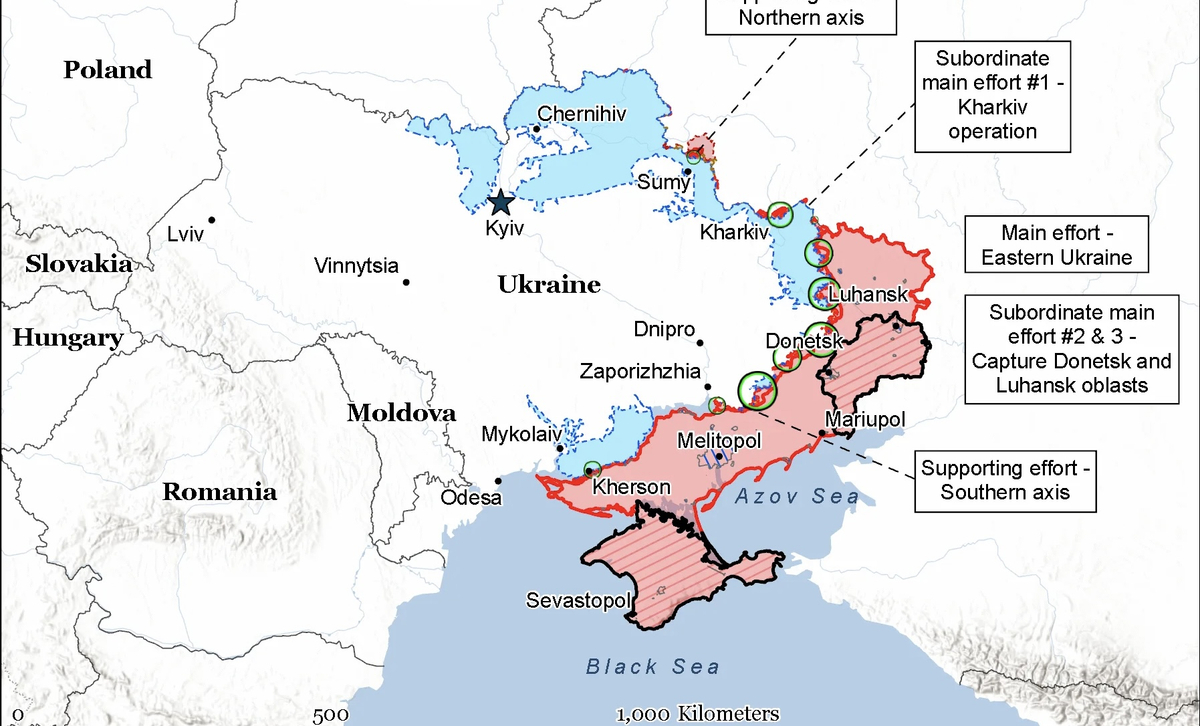
Russian Central Bank cut its key rate by 50 bps to 15% on March 20 (the seventh cut since June 2025). Russian forces have escalated mechanized assaults and launched 156 drones — signaling possible preparations for a Spring–Summer 2026 offensive — while Ukrainian troops reported localized advances near Slovyansk, Hulyaipole, and the Kostyantynivka‑Druzhkivka area. The Kremlin’s refusal to commit to a ceasefire imperils safe national elections in Ukraine; added risks include France/UK seizure of a Russian shadow-fleet oil tanker (March 20) and Moscow’s intelligence ties with Iran (including reported visits), heightening regional geopolitical and energy-market uncertainty.
The Kremlin’s shift toward higher-intensity mechanized assaults plus the reported intelligence-for-bargaining with Iran increases the probability curve for a materially larger Russian offensive in Spring–Summer 2026. Operationally that implies a step‑up in ammunition and heavy-equipment consumption: Western stocks of artillery rounds and precision munitions could be drawn down meaningfully within 3–9 months unless replenishment is accelerated, creating a supply‑shock window for defense suppliers and specialized ordnance subcontractors.
Sanctions-evasion friction is rising on two fronts — targeted seizures of shadow-fleet tankers and deeper Russia–Iran–Belarus security-economic ties — which together tighten logistics for Russian hydrocarbon exports and raise transportation, insurance, and counterparty risk. Expect episodic spike-ups in tanker rates and insurance premia over the coming quarters if seizures continue or insurers declare higher risk zones; this is a supply-chain shock that transmits to Brent/Urals differentials and seaborne freight markets rather than immediate refinery outages.
The Russian Central Bank’s rate cut is a subtle sign: domestically it signals an attempt to shore up credit conditions and support tactical war‑economy needs while preserving FX reserves. That reduces short-term tail risk of a systemic rouble collapse but increases the chance Moscow leans harder on non-price measures (drones, proxies, intelligence-sharing) to conserve conventional stockpiles — a strategic substitution that elevates asymmetric escalation risk over months rather than days.
AI-powered research, real-time alerts, and portfolio analytics for institutional investors.
Request DemoOverall Sentiment
moderately negative
Sentiment Score
-0.60
