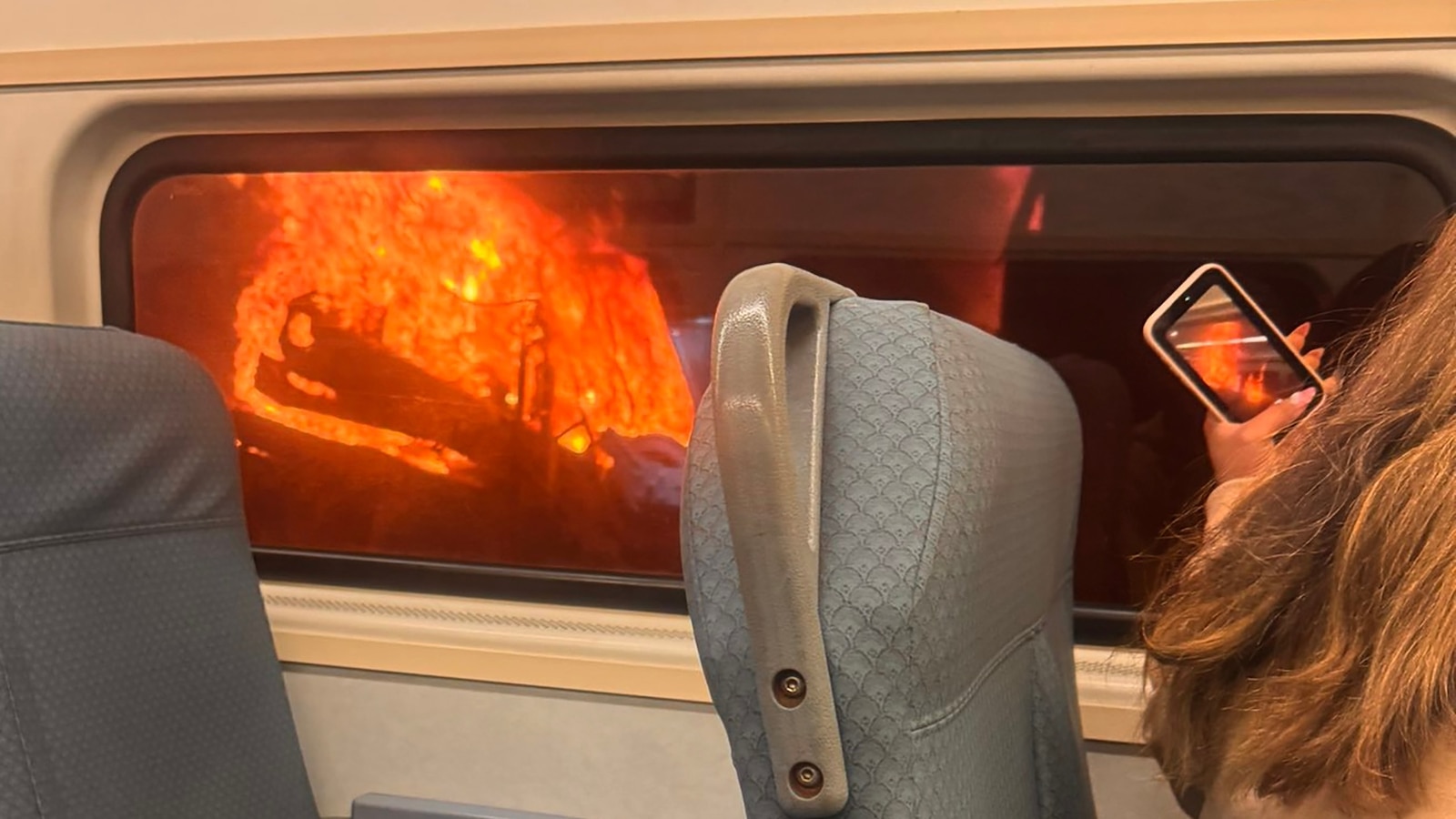
A fire from two Amtrak work trains colliding in the Hudson River tunnel around 1:25 a.m. suspended Penn Station service for NJ Transit commuters through midday Friday and disrupted Amtrak and LIRR operations. Several workers were injured, and passengers reported a loud explosion, power loss, and delays lasting 8 to 10 minutes while trains were held. Service later resumed, but Amtrak and NJ Transit warned of residual delays and cancellations.
This is a classic reliability shock in a highly concentrated transit node, and the first-order pain is operational, but the second-order effect is political: every incident at a chokepoint like this hardens the case for accelerated capital spending on tunnel redundancy, signal modernization, and rolling stock/electrical resiliency. The market usually underestimates how quickly a “one-off” becomes a budget line item when commuters are visibly disrupted, which can pull forward procurement cycles for contractors tied to rail electrification, tunnel systems, and MEP infrastructure over the next 6-18 months.
The immediate losers are not just the operators; it is the entire commuter ecosystem that depends on predictable arrival windows. In the near term, any prolonged reliability degradation raises absenteeism and lowers office attendance confidence in Manhattan, which is a subtle negative for transit-adjacent real estate and daytime retail demand. The greater the perception that the system is fragile, the more optionality shifts to ride-hailing and private car usage for the marginal commuter, creating a small but persistent share shift that can last beyond the event itself.
The setup is more bullish for infrastructure/defense-style contractors than for pure transportation operators because this kind of failure is exactly what triggers emergency remediation budgets rather than discretionary growth spend. The key catalyst window is days-to-weeks for investigative headlines and weeks-to-months for procurement announcements; the reversal case is if authorities quickly frame this as isolated and the repair work is limited. But if there are repeat incidents or evidence of systemic maintenance underinvestment, the narrative can compound into a multi-quarter capex cycle.
Consensus may be too focused on the commuter inconvenience and not enough on the policy reflex. These events often lead to higher spending, not lower, especially in politically sensitive corridors serving New York and New Jersey. That makes the dislocation potentially constructive for contractors with tunnel, rail signaling, or grid-hardening exposure, while any knee-jerk short in transit-equity names is likely low-conviction unless service disruptions become persistent rather than episodic.
AI-powered research, real-time alerts, and portfolio analytics for institutional investors.
Request DemoOverall Sentiment
strongly negative
Sentiment Score
-0.55
