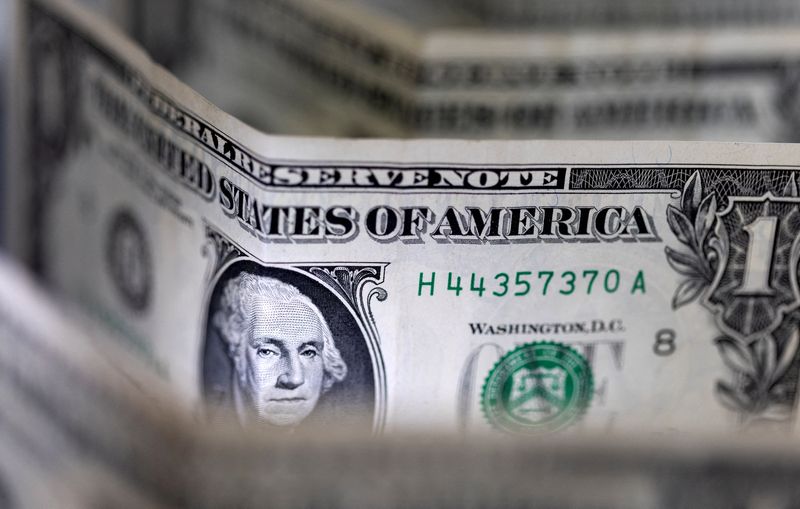
Bank of America kept a bullish U.S. dollar view, calling for three Fed rate hikes this year and forecasting EUR/USD at 1.12 in Q3 before 1.15 by end-2026. It now favors short EUR/USD and select carry trades, while shifting to a more constructive stance on CHF/JPY and retaining year-end targets of GBP/USD 1.37, USD/JPY 152, AUD/USD 0.71, and NZD/USD 0.59. The bank also expects AI-driven investment and stronger U.S. growth to support the dollar and keep FX volatility elevated into the U.S. midterm elections.
This is less a pure dollar call than a regime call on U.S. rate differentials staying structurally wide while the rest of DM remains growth-constrained. The important second-order effect is that a stronger dollar becomes self-reinforcing through tighter global financial conditions: it pressures EM balance sheets, suppresses imported inflation abroad, and keeps foreign central banks from tightening into weakness. That dynamic tends to favor U.S. financials and domestically leveraged cyclicals versus multinational revenue-heavy names over the next 1-3 quarters.
The updated yen view matters because it signals the market may be underestimating Asia capital flow shifts from AI capex and inward investment. If Japanese policy remains slow to normalize, the yen can weaken even when U.S. rates stop repricing, which supports carry but also raises the risk of a disorderly volatility event if positioning becomes crowded. The more asymmetric expression is not simply long USD/JPY, but being short low-yield funders against higher beta safe havens where implied vol still looks too cheap.
A key contrarian point: the consensus is likely overweighting U.S. macro strength and underpricing how much of it is fiscal/seasonal and potentially transient. If those supports roll off into late summer, the dollar could stall even without a hard economic downturn, especially if markets start to price the Fed closer to a pause than the street expects. That makes short-dated FX options more attractive than outright spot, because the catalyst window is narrow while the volatility pickup into the election period is likely to be persistent.
The best near-term edge is in relative-value expressions that monetize vol pickup rather than directional conviction. GBP/USD looks mispriced for event risk, and CHF/JPY offers a cleaner carry-plus-flow story than chasing yen weakness versus the dollar alone. For equity portfolios, this dollar regime is a headwind to firms with large foreign revenue translation but a tailwind for U.S. banks and AI infrastructure spenders that benefit from sustained capex and financing demand.
AI-powered research, real-time alerts, and portfolio analytics for institutional investors.
Request DemoOverall Sentiment
mildly positive
Sentiment Score
0.15
Ticker Sentiment
