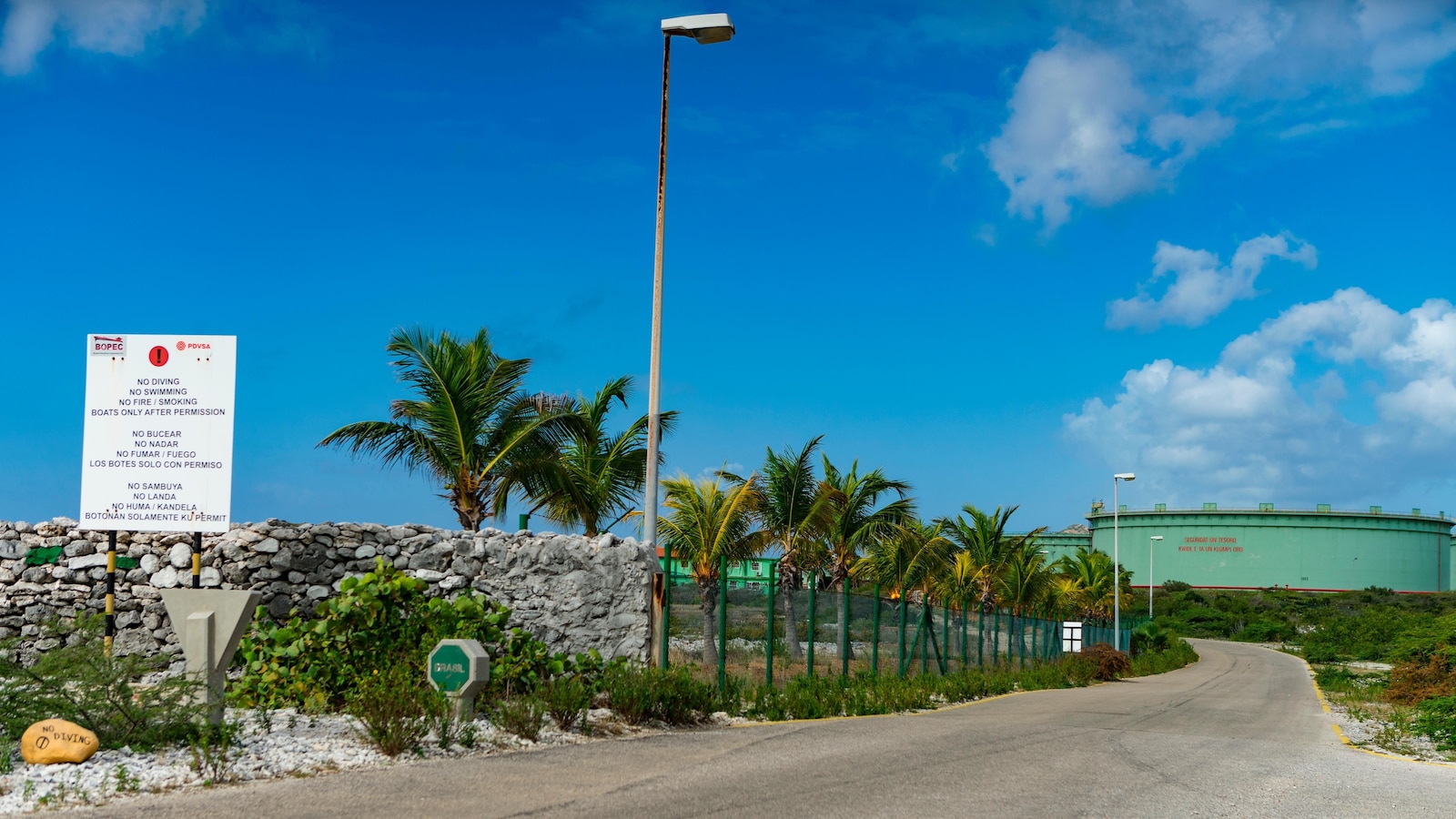
A Dutch district court is hearing a case from eight residents of Bonaire—now a special Dutch municipality with about 20,000 residents—who allege the Netherlands has failed to protect them from climate change, seeking court-ordered government measures; the suit is backed by Greenpeace and could set a precedent similar to the Urgenda ruling. Government lawyers argue policy, mitigation and emissions reductions are already underway and that such matters belong to political branches, while activists warn rising sea levels (global average ~4.3 cm in the decade to 2023) and 1.3°C of warming since preindustrial times create urgent legal and policy obligations.
Market structure: A precedent forcing state-led coastal protection would directly benefit engineering/contractors and renewable/infrastructure suppliers and compress returns for fossil-energy incumbents and insurers exposed to coastal losses. Expect concentrated demand for Dutch/European dredging & sea-defence firms (e.g., BOKA.AS, BAM.AS) and for long-dated green infrastructure financing; incremental public capex could be €0.5–2.0bn/year to start in 1–3 years, shifting pricing power toward specialist contractors and bond issuers that finance them. Cross-asset, anticipate modest upward pressure on long-dated Dutch sovereign issuance, higher ILW/ILS spreads, and FX resilience in EUR if Netherlands assumes liabilities.
Risk assessment: Tail risks include a court-mandated multi-year budget reallocation (high-impact, low-probability) or a broad legal contagion creating corporate liability claims against multinationals; both would raise fiscal deficits and reprice sovereign and insurance credit curves. Immediate market effects are likely muted (days), with policy and capex signals emerging over 3–12 months as a new coalition forms; multi-year effects (3–7 years) could materially raise demand for coastal defence and renewable capex. Hidden dependencies: EU funding rules, Dutch fiscal capacity, and reinsurer capacity constraints could amplify or mute outcomes.
Trade implications: Take concentrated, time-bound exposure: small-to-medium long positions in coastal engineering (BOKA.AS, 1–3% NAV) and high-quality renewable/OSM names (ORSTED.CO, VWS.CO, 2–4% NAV) with 6–24 month horizons; offset with modest short exposure to integrated oil majors (SHEL on NYSE, 1% NAV) to hedge policy risk. Options: buy 9–18 month call spreads on ORSTED/ICLN to lever upside if policy accelerates; deploy protection via buying 6–12 month puts on coastal real-estate REITs with >20% portfolio concentration in flood zones. Time entries around ruling and Dutch cabinet formation (30–90 days).
Contrarian angles: Markets often underprice legal tail risk but overprice immediate policy certainty—the Urgenda precedent shows court wins can take years to translate into capital flows, so front-loaded tactical long in contractors may be underdone. Beware that governments may favor gray infrastructure and incumbents, benefiting domestic contractors more than pure-play renewables; mispriced ILS spreads and catastrophe bonds could widen sharply, creating buying opportunities when yields exceed historical norms by >200bp.
AI-powered research, real-time alerts, and portfolio analytics for institutional investors.
Request DemoOverall Sentiment
neutral
Sentiment Score
0.00
