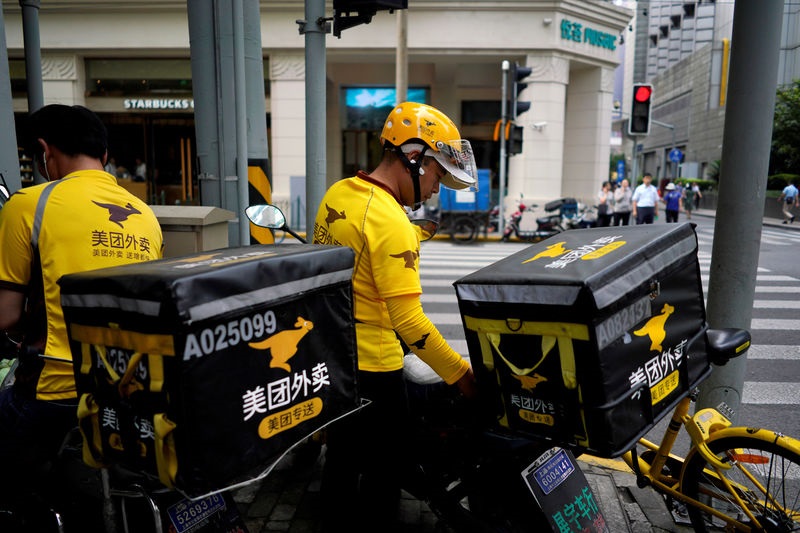
China’s market regulator proposed 10 draft rules to curb prolonged, large-scale subsidies in food delivery, targeting the industry’s recent price war. Meituan fell 2.2%, while Alibaba and JD.com declined 3.2% and 2.3%, respectively, as investors weighed lower near-term subsidy intensity against improved long-term economics. The move should ease margin pressure across the sector and is broadly seen as positive for Meituan’s unit economics.
This is less about an immediate earnings hit and more about a regime shift in how China wants to allocate competitive capital in local commerce. If subsidy intensity is capped, the market should start rewarding operating leverage and traffic quality over raw discounting, which is structurally supportive for the category leader with the best last-mile density and merchant coverage. The near-term pressure is that all large platforms lose a lever for share capture, so you can get a brief multiple de-rating before the fundamental benefit shows up in margins.
The second-order loser is any business model that used delivery as a customer-acquisition funnel rather than a profit center. For JD, the risk is not just lower order growth in food delivery adjacent activity; it's that a weaker promotion environment reduces ecosystem cross-sell into higher-margin retail and local services. That matters because subsidy-heavy traffic is often low-quality traffic: when the promo fades, retention can fall faster than headline GMV implies, especially over the next 1-2 quarters.
Consensus likely underestimates how quickly this can re-rate the sector from growth-at-any-cost to contribution-margin discipline. In that setup, the trade becomes a relative one: the player with the highest repeat frequency and the lowest incremental fulfillment cost should outperform even if absolute order growth slows. The main reversal risk is enforcement slippage or a renewed macro push to stimulate consumption, which would re-open the subsidy valve and push the pain window out by 6-12 months.
The move looks mildly overdone for the strongest operator and not punitive enough for weaker ecosystem players exposed to traffic monetization deterioration. If the regulator truly limits sustained subsidies, the next leg should be a narrowing of promo intensity across the sector, better unit economics, and eventually higher free cash flow conversion. The market may be pricing the short-term share-loss risk more than the medium-term margin expansion, which creates a favorable setup for relative longs against lower-quality names.
AI-powered research, real-time alerts, and portfolio analytics for institutional investors.
Request DemoOverall Sentiment
mildly positive
Sentiment Score
0.15
Ticker Sentiment
