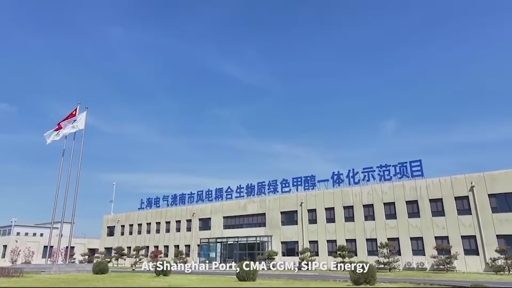
Shanghai Electric announced an 8,000 metric ton biomethanol bunkering operation at Shanghai Yangshan Port—described as the largest single biomethanol bunkering on record—supported by its Taonan green methanol project. The company positions the Taonan-to-Dalian-to-Shanghai corridor as operational proof of stable large-scale deliveries, tied to its green fuel supply chain and dual-carbon agenda. While primarily strategic/ESG in nature, the scale and execution suggest incremental upside to Shanghai Electric’s renewable fuels capacity narrative.
This is better read as a bankability signal than an earnings event. The important mechanism is that a real, repeatable logistics chain has now been demonstrated from inland feedstock to port storage to bunkering, which lowers the perceived execution risk for phase-two financing and for similar projects elsewhere. In the near term, the equity value capture is mostly through multiple support and access to cheaper capital, not through material 2026 EPS.
The competitive implication is that green methanol is trying to win on retrofit simplicity and regulatory optics before it wins on pure economics. That matters because shipowners are buying compliance optionality: if a fuel can be delivered reliably at scale, it can take share from higher-friction alternatives even when it is not the cheapest molecule on day one. The true bottleneck is feedstock/power cost and certification integrity; if those slip, the adoption curve flattens quickly.
Over 1-3 months, the market will care less about the ceremony and more about repeat tons, contract duration, and whether this becomes a monthly cadence rather than a one-off headline. Over 6-18 months, the second-order winners are the financing ecosystem, port storage/logistics, and shipowners that can lock advantaged bunker access; the losers are incumbent bunker suppliers only if green-methanol premiums narrow enough to change fleet procurement behavior. Falsifiers: no follow-on bunkering, delayed phase-two capex, or disclosed utilization that looks de minimis versus the headline capacity.
AI-powered research, real-time alerts, and portfolio analytics for institutional investors.
Overall Sentiment
moderately positive
Sentiment Score
0.35
Ticker Sentiment
