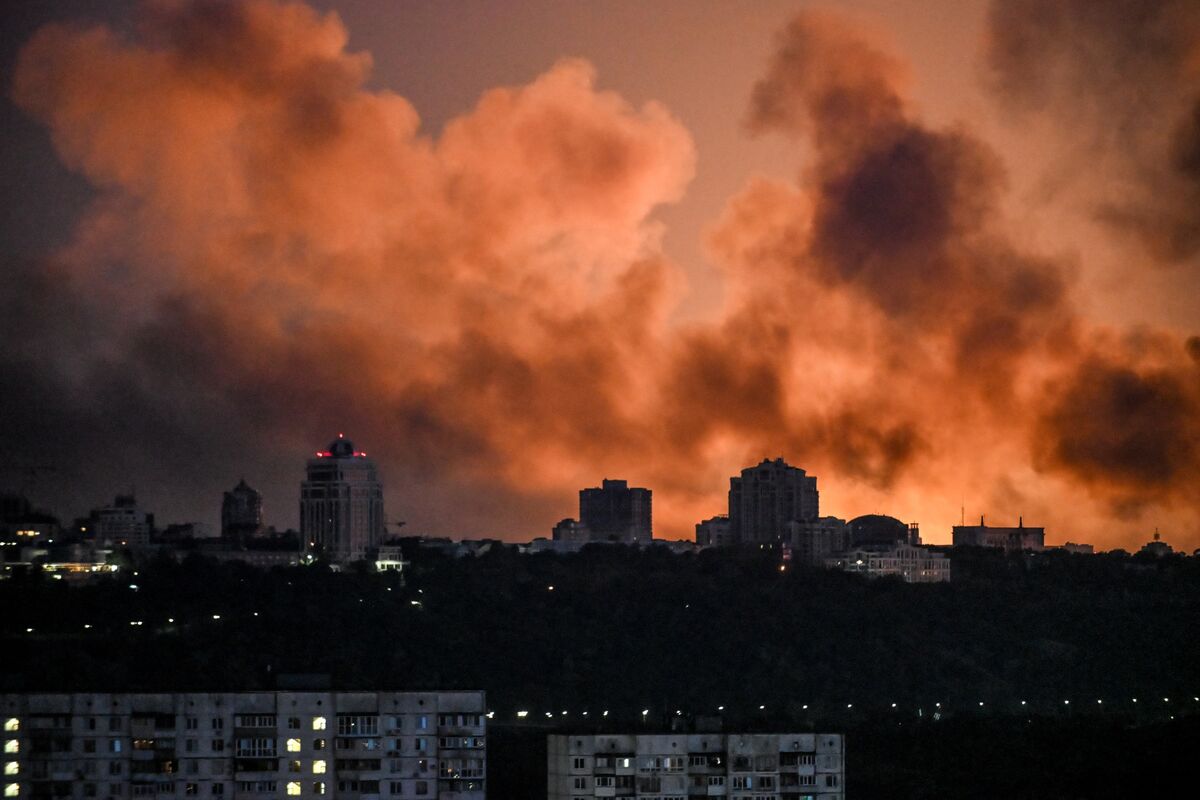
Russia is stepping up ballistic missile strikes on Kyiv to try to regain the strategic initiative, signaling a likely escalation in the war with sustained pressure on Ukraine's air defenses and population. The article also highlights an intensifying drone campaign against Moscow and attacks on Russian oil refineries, raising the risk of broader disruptions to energy infrastructure and defense spending. The geopolitical backdrop remains highly adverse and could keep regional risk premiums elevated.
The market implication is less about the headline escalation itself and more about the forced reallocation of scarce interceptors, power, and logistics capacity. A sustained missile tempo pressures Ukraine to preserve air-defense stocks for fixed-value targets, which raises the odds of intermittent hits on transmission nodes, rail chokepoints, and depot infrastructure rather than purely civilian damage. That shifts the war from a “frontline stalemate” to a rear-area attrition game, which is harder to hedge and tends to widen risk premia in European defense and power markets before it shows up in economic data.
The second-order winner is the defense supply chain, not the battlefield contractors alone. Interceptor inventory depletion is a multi-quarter problem, so the beneficiaries are layered: missile-defense primes, radar/electronics suppliers, and higher-margin components producers that backfill the bottlenecked subassemblies. On the energy side, the more Ukraine is forced to defend cities and grids, the more Russia has incentive to target fuel and power logistics; that keeps a bid under refined products and European gas power spreads even if outright crude does not move dramatically.
The key risk is escalation asymmetry over the next 2-8 weeks: a single successful strike on critical infrastructure can trigger political pressure for faster Western aid, but the more likely near-term catalyst is a replenishment cycle in which governments expedite orders and stretch already tight munitions capacity. If air-defense stocks prove more elastic than expected, the trade can fade; if not, the conflict likely grinds into a longer-duration procurement supercycle. Consensus may be underpricing how quickly persistent strikes convert into budget revisions for NATO members, especially in Germany, Poland, and the Nordics.
The contrarian angle is that this is not automatically bullish for every defense name: the market often overcrowds into mega-cap primes, while the real scarcity value can sit in narrower electronic warfare, radar, and propulsion suppliers with faster order conversion and less headline sensitivity. Another underappreciated angle is energy infrastructure resilience: utilities and grid-hardening contractors can benefit if attacks persist, but only if governments move from emergency repair to capex acceleration.
AI-powered research, real-time alerts, and portfolio analytics for institutional investors.
Request DemoOverall Sentiment
strongly negative
Sentiment Score
-0.65
