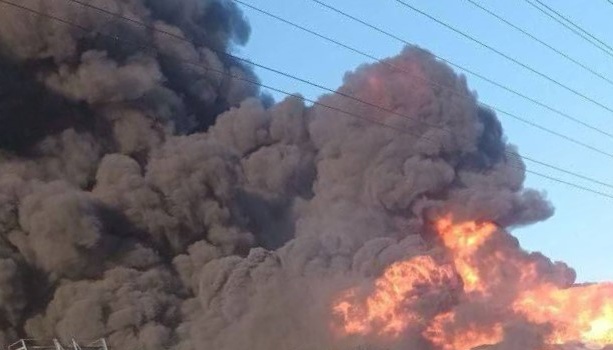
Ukraine said its forces struck targets in the Moscow region on May 16-17 using Ukrainian-developed systems, including the Angstrom enterprise in Zelenograd and the Solnechnogorskaya pumping station, with fires reported at both sites. The attacks also reportedly hit Russian command posts, UAV centers, and troop concentrations across multiple regions, underscoring continued escalation in the conflict. The strikes highlight exposure of military-industrial and energy infrastructure, which can raise regional security and supply-chain risks.
This is less about battlefield optics and more about the escalation of Ukraine’s domestic strike capability into Russia’s industrial and logistics backbone. The market implication is a higher perceived probability of recurring disruption to military-adjacent infrastructure, which raises the option value of hardening, dispersal, and redundancy across Russian supply chains rather than any one-off damage estimate.
The most important second-order effect is on logistics and energy-product circulation around Moscow. Even limited interruptions to fuel handling near the capital can force precautionary rerouting, inventory hoarding, and higher security spend, which is inefficient but sticky; that tends to widen internal transport spreads and raise delivered fuel costs over weeks, not days. The microelectronics angle matters even more structurally: repeated strikes on precision-input capacity can slow replacement rates for guided munitions and UAV components, increasing Russia’s reliance on lower-quality substitutes and imported gray-market parts.
For markets, the direct beta is to European risk premia and to select defense and cybersecurity names rather than broad energy. The key contrarian risk is that the physical damage may be modest relative to the messaging value, which can create an overreaction in oil-product and shipping-related names if traders extrapolate supply disruption that never materializes. The main catalyst to watch over the next 1-3 months is whether these strikes become systematic enough to force Russia into a more expensive air-defense posture around critical infrastructure, compressing available military resources elsewhere.
AI-powered research, real-time alerts, and portfolio analytics for institutional investors.
Overall Sentiment
strongly negative
Sentiment Score
-0.60
