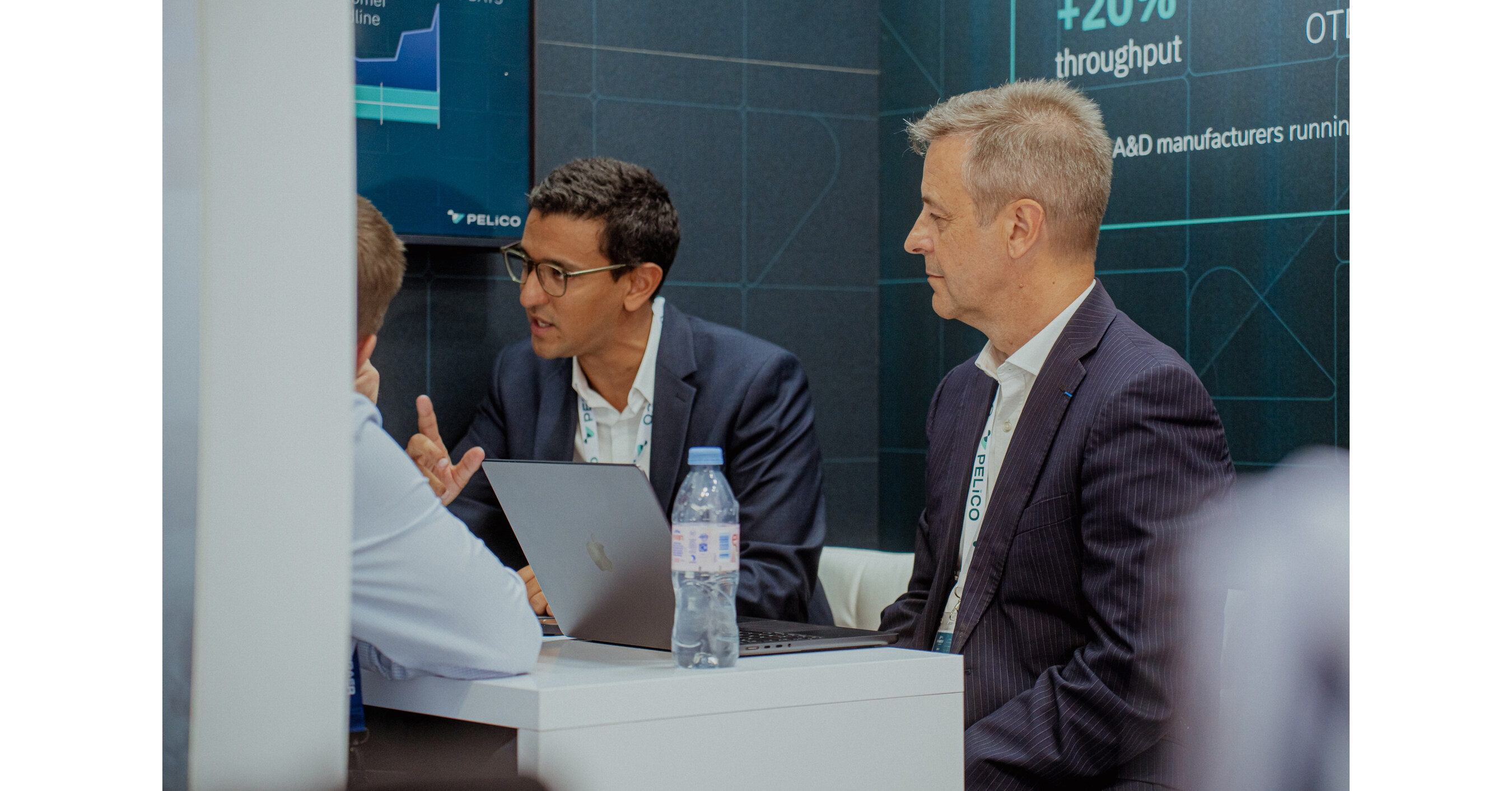
Pelico announced a strategic investment from AE Ventures (AE Industrial Partners) at the Farnborough Airshow, with no disclosed financial terms. Pelico claims its AI-powered factory orchestration platform has delivered average improvements for manufacturers: ~40% fewer parts shortages, ~15% better on-time delivery, and ~40% lower cycle times, with Boeing Global Services using it to connect planning, supply, and execution. The disclosed investment and reported operational metrics suggest supportive momentum, though the lack of deal size limits direct financial impact.
This is more a validation of an execution workflow than a fundamental catalyst for the listed names. The economic value, if real, accrues where backlog is already stranded by factory coordination problems: BA on delivery conversion and SAFRY on engine/system throughput. Even a low-single-digit improvement in schedule reliability can matter, but only if the tool is embedded across tier-2/3 suppliers; otherwise the benefit is mostly expediting-cost reduction, not durable margin expansion.
The second-order winner is likely sustainment rather than new-build: if shop-floor orchestration lowers parts shortages in MRO, fleet availability improves and airlines need less buffer inventory. That can compress pricing power for OEM and aftermarket services over 6-18 months, but it is too slow to move the shares today. Near term, the market should treat this as a signal that industrial AI is being pulled into mission-critical workflows, not as proof of a step-change in EBITDA.
Contrarian risk: investors may overvalue the strategic relationship and underweight integration friction. Aerospace systems are sticky, data messy, and implementation success is measured in quarters, not press releases; the move would be falsified if BA delivery cadence and SAFRY shipment/aftermarket metrics do not improve over the next 1-3 quarters. The real moat is distribution inside a closed industry network, but that still needs measurable adoption, not just capital and branding.
AI-powered research, real-time alerts, and portfolio analytics for institutional investors.
Overall Sentiment
mildly positive
Sentiment Score
0.40
Ticker Sentiment
