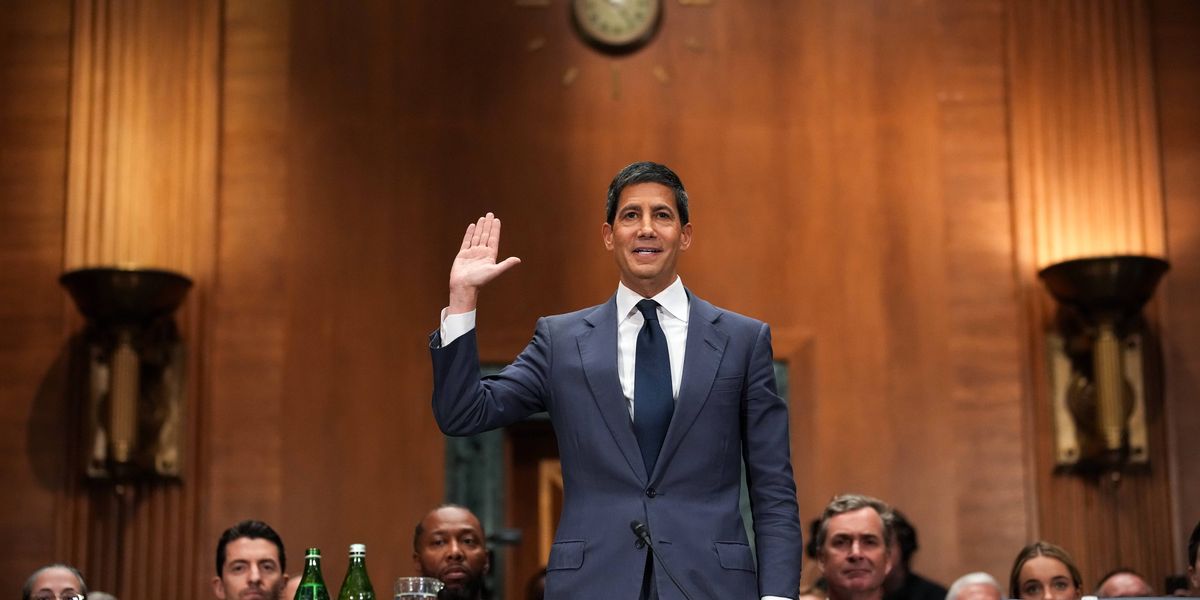
Senate Republicans scheduled an April 29 vote to advance Kevin Warsh’s Fed nomination, putting him on track for confirmation by May 15 as Jerome Powell’s term ends. The move comes amid DOJ scrutiny that was dropped against Powell for now, which critics say was politically motivated and intended to clear the path for Warsh. Elizabeth Warren and other opponents are raising concerns about Fed independence, Warsh’s disclosures on $100M+ of undisclosed holdings, and possible conflicts tied to the Epstein files.
The market implication is not the personnel change itself; it is the institutional regime shift. A Fed chair viewed as politically legible to the administration raises the probability of a steeper policy-path distribution, not necessarily a single hawkish outcome: term premium can lift even if near-term cuts are still delivered, because investors will demand compensation for governance risk and for a higher chance of reaction-function error. That tends to hurt duration first, then long-end credit and rate-sensitive equities as the curve reprices a more volatile policy regime.
Second-order beneficiaries are not the obvious “higher rates” trades but institutions with pricing power and short asset duration. Banks can benefit if the curve steepens and deposit betas lag, but only if credit stays contained; regional lenders with commercial real estate exposure are the vulnerable cohort if higher-for-longer tightens refinancing conditions into 2H. The cleaner winners are value/cyclicals with minimal duration dependence, while the most exposed are unprofitable growth, REITs, and utilities that rely on a falling discount rate to support multiples.
The litigation/governance angle matters more than the nomination calendar. If the appearance of politically motivated investigations becomes normalized, the market will increasingly price “central bank risk premium” into breakevens, swaps, and USD assets, which could keep real yields elevated even during risk-off periods. The main reversal catalyst is a credible Senate delay or a public signal that the new chair will preserve operational independence; absent that, the trade works on a 1-3 month horizon as the confirmation window tightens and positioning adjusts.
The contrarian read is that the market may be underestimating how much of this is already discounted in the USD and front-end rates. If the nominee is forced to moderate publicly to win confirmation, the actual policy outcome could be less extreme than the headline suggests, producing a buy-the-dip setup in long-duration assets after an initial spike in volatility. That argues for using options rather than outright directional shorts, because the path dependency around Senate action is high and the headline risk is binary.
AI-powered research, real-time alerts, and portfolio analytics for institutional investors.
Request DemoOverall Sentiment
moderately negative
Sentiment Score
-0.45
