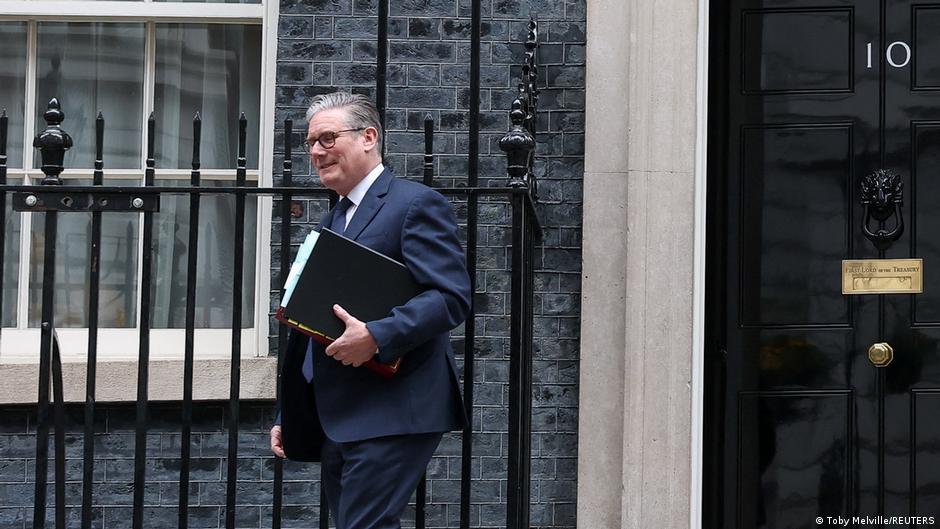
UK Prime Minister Keir Starmer is under intensifying pressure over the appointment and later firing of Peter Mandelson, after revelations that Mandelson failed security vetting and had extensive ties to Jeffrey Epstein. Starmer says he was not informed of the failed background check and will go to Parliament on Monday to disclose the facts, while opposition leaders are calling the explanation "completely preposterous" and demanding his resignation. The scandal has already forced the departure of the Foreign Office's top civil servant and is now a significant political governance issue.
This is less a single personnel scandal than a live stress test of Labour’s governing credibility. The immediate market read should be that policy execution risk in the UK has risen: when a prime minister looks either uninformed or evasive on vetting, it increases the probability of ministerial churn, delayed decisions, and a louder backbencher rebellion into the next few weeks. That matters for domestically exposed UK equities because the first-order hit is not macro growth, but a higher discount rate on any name reliant on stable regulation, procurement, or Whitehall continuity.
The second-order effect is on sterling and the UK political-risk premium. If this drags into Parliament and then into a broader ethics/investigation cycle, gilts can outperform on a risk-off impulse while GBP underperforms versus USD and EUR, especially if investors begin pricing a shorter effective horizon for the current government. The more interesting spillover is into UK-facing banks, recruiters, defense contractors, and infrastructure names, where management teams depend on predictable ministerial counterparties; even a small increase in administrative friction can delay awards and approvals by one to two quarters.
The contrarian view is that the market may overestimate the probability of an actual leadership collapse in the near term. UK politics can absorb ugly headlines for months, and unless this widens into documentary evidence of intentional deception, the base case is prolonged damage rather than immediate regime change. That makes the better expression a volatility/event-risk trade rather than a directional “government falls” bet: the catalyst window is days to weeks, while the economic damage, if any, is a slower burn over 1-2 quarters.
AI-powered research, real-time alerts, and portfolio analytics for institutional investors.
Request TrialOverall Sentiment
strongly negative
Sentiment Score
-0.55
