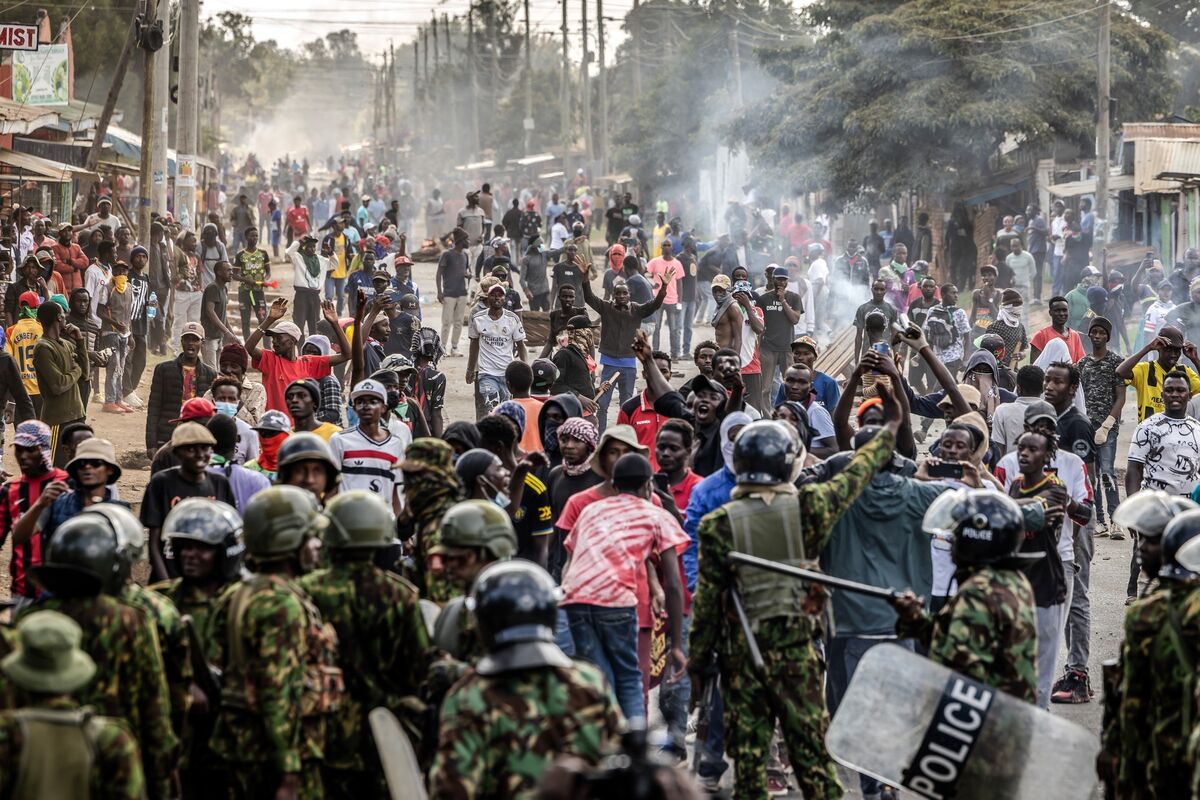
Police in Kenya fired teargas at protesters opposing a planned quarantine facility for U.S. servicemen and citizens exposed to Ebola, with at least one reported killed in the violence. The incident highlights local unrest tied to a health-security deployment involving U.S. personnel in an emerging market. Market impact is likely limited, but the event is negative for near-term political and operational stability.
This is less a single incident than an early warning that any foreign-run health/security footprint in Kenya can become a focal point for broader anti-sovereignty sentiment. The immediate market impact is small, but the second-order risk is that local opposition slows or blocks logistics, approvals, and staffing for externally supported containment sites, raising the odds that a contained health event becomes a regional operational problem. For any multinational with personnel transit through East Africa, the relevant variable is not the facility itself but the precedent it sets for mob-driven disruption of “temporary” infrastructure.
The market should focus on duration and imitation risk. If the issue fades in days, it is noise; if it persists for weeks, it can force rerouting of medical, defense, and NGO supply chains through alternative hubs, increasing costs and execution risk for firms with Africa exposure. The tail risk is political contagion: domestic actors can reframe an imported public-health response as a sovereignty issue, which can spill into election rhetoric and complicate future approvals for military support, ports, and logistics nodes.
Contrary to the headline, the bigger loser may be the credibility of rapid-deployment containment architecture, which matters for governments and contractors that rely on prepositioned facilities during outbreaks. The consensus may underprice how quickly localized unrest can become a procurement and insurance problem: if underwriters reprice civil disturbance and force majeure risk, project timelines can slip by a quarter or more even without further violence. That makes this more relevant to defense/logistics operators than to the specific health event itself.
AI-powered research, real-time alerts, and portfolio analytics for institutional investors.
Overall Sentiment
moderately negative
Sentiment Score
-0.40
