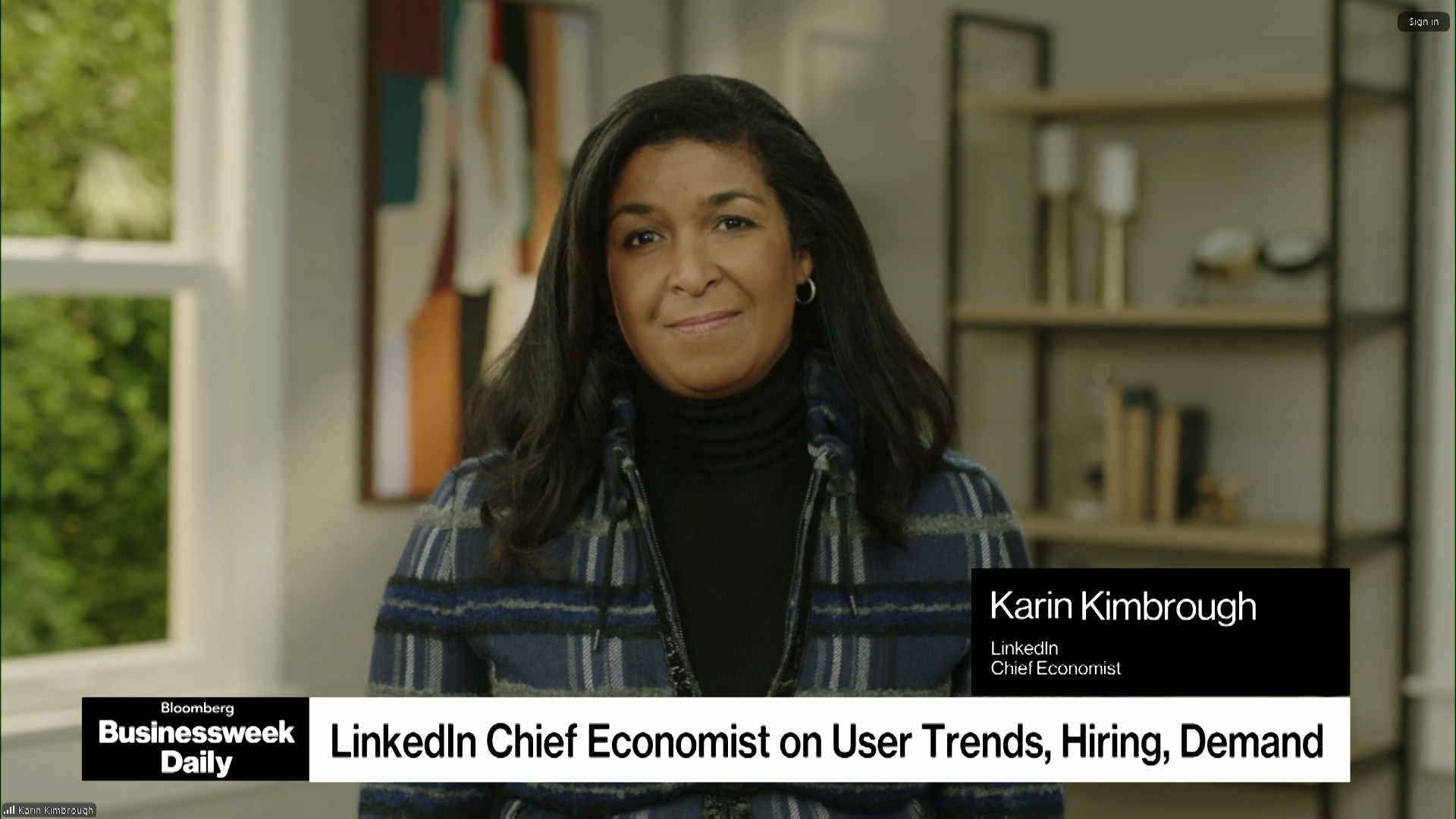
LinkedIn data indicate a U.S. labor market that is softening but not collapsing: a 20% year‑over‑year increase in members tagging themselves 'open to work', historically low job‑finding confidence, and longer job searches with elevated applications per applicant. Hiring is uneven — tech hiring is positive (~6%), media, healthcare and primary/secondary education show strength, while manufacturing, construction, retail and accommodation lag — and small businesses are hiring more actively than large employers, which remain cautious. The picture implies fragile labor market momentum that could amplify shocks and warrants sector‑specific positioning (benefiting tech, healthcare, small‑cap/SMB‑exposed plays and negative for cyclical, manufacturing and consumer discretionary exposure).
Market Structure: LinkedIn’s data implies a bifurcated labor market — small-business hiring and selective tech/healthcare demand (tech hiring ~6%) vs. weak manufacturing, construction and retail. Winners: SMB-exposed small caps, healthcare services (staffing-heavy providers), and AI/cloud software vendors; losers: retail, discretionary, industrial cyclicals and commodity-sensitive manufacturers. Slower aggregate wage growth reduces cyclical pricing power for suppliers and caps commodity demand growth over 6–12 months.
Risk Assessment: Near-term (days–weeks) watch payrolls/CPI; soft prints will compress front-end yields and steepen duration performance. Tail risks include a credit shock to small banks or a geopolitically-driven energy spike; both could flip small-cap strength to a broad risk-off quickly. Hidden dependency: tech hiring may be concentrated in a handful of large cloud/AI firms, masking broader employment weakness.
Trade Implications: Position for a mild disinflation / Fed easing priced into 3–12 months: overweight long-duration fixed income and small-cap/healthcare equities, underweight retail and industrials. Use relative-value pair trades (small-cap growth vs. retail discretionary) and option structures to express directional views while capping downside. Key catalysts: next 3 US payroll prints, CPI in 30–60 days, Fed dot revisions.
Contrarian Angles: Consensus treats “open-to-work” rise as uniform weakness; instead, it signals higher labor supply and longer search friction — bullish for long-duration bonds but selective for equities. Markets may underprice persistence of SMB hiring; a sustained small-business hiring runway could mean IWM outperformance even if headline employment lags. Watch for dispersion: single-name tech winners (AI leaders) could decouple from sector weakness.
AI-powered research, real-time alerts, and portfolio analytics for institutional investors.
Request DemoOverall Sentiment
moderately negative
Sentiment Score
-0.35
