
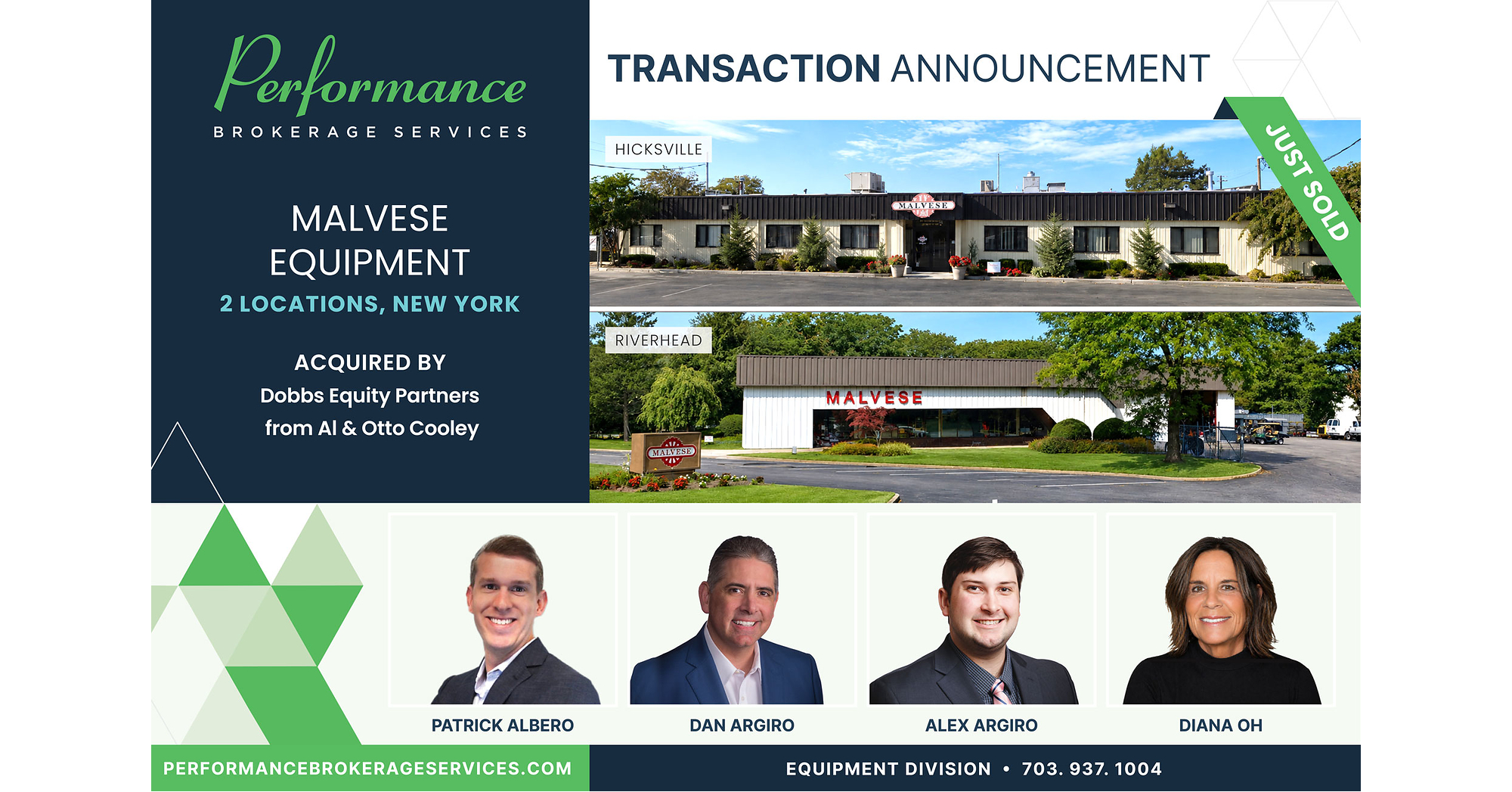
Performance Brokerage Services announced the sale of Malvese Equipment (heavy construction and agriculture equipment) in Hicksville & Riverhead, NY, from Al Cooley & Otto Cooley to Dobbs Equity Partners (deal to close with existing dealership names retained). The article emphasizes a long-term, legacy-focused transition with continued leadership by Otto Cooley, and frames Dobbs’ operational resources as supportive of future expansion.
This is more a signal about capital allocation in fragmented distribution than about near-term end-market demand. The underlying mechanism is succession-driven consolidation: as private owners exit, better-capitalized buyers can extract procurement, inventory, and back-office synergies, which tends to compress standalone dealer margins but improve OEM channel quality. That is constructive for manufacturers that care about service coverage and inventory discipline, but it is not automatically bullish for the end-demand cycle.
For public names, the read-through is weak and mostly indirect. F can benefit at the margin if stronger operators consolidate more locations and keep franchise networks healthier, but the revenue impact is second-order and spread over months, not days. CRMT is even less directly exposed; if anything, a tighter, more professional dealer landscape can intensify competition for local used-vehicle share without meaningfully changing its funding or sourcing backdrop. The more important watch item is whether higher rates still allow PE buyers to finance these acquisitions—if the market for dealer assets stays liquid, that supports continued M&A volume; if spreads widen or floorplan costs rise, transaction activity could stall within 1-3 quarters.
Contrarian take: the market may be too quick to read every dealership sale as a growth signal. In reality, this is often a low-signal, owner-transition event with limited public-market alpha unless it points to a broader wave of consolidation or credit availability. The thesis would be falsified if dealer M&A volumes cool, financing terms tighten, or OEM commentary on inventory turns and same-store service economics deteriorates over the next 1-2 quarters.
AI-powered research, real-time alerts, and portfolio analytics for institutional investors.
Request TrialOverall Sentiment
mildly positive
Sentiment Score
0.15
Ticker Sentiment
