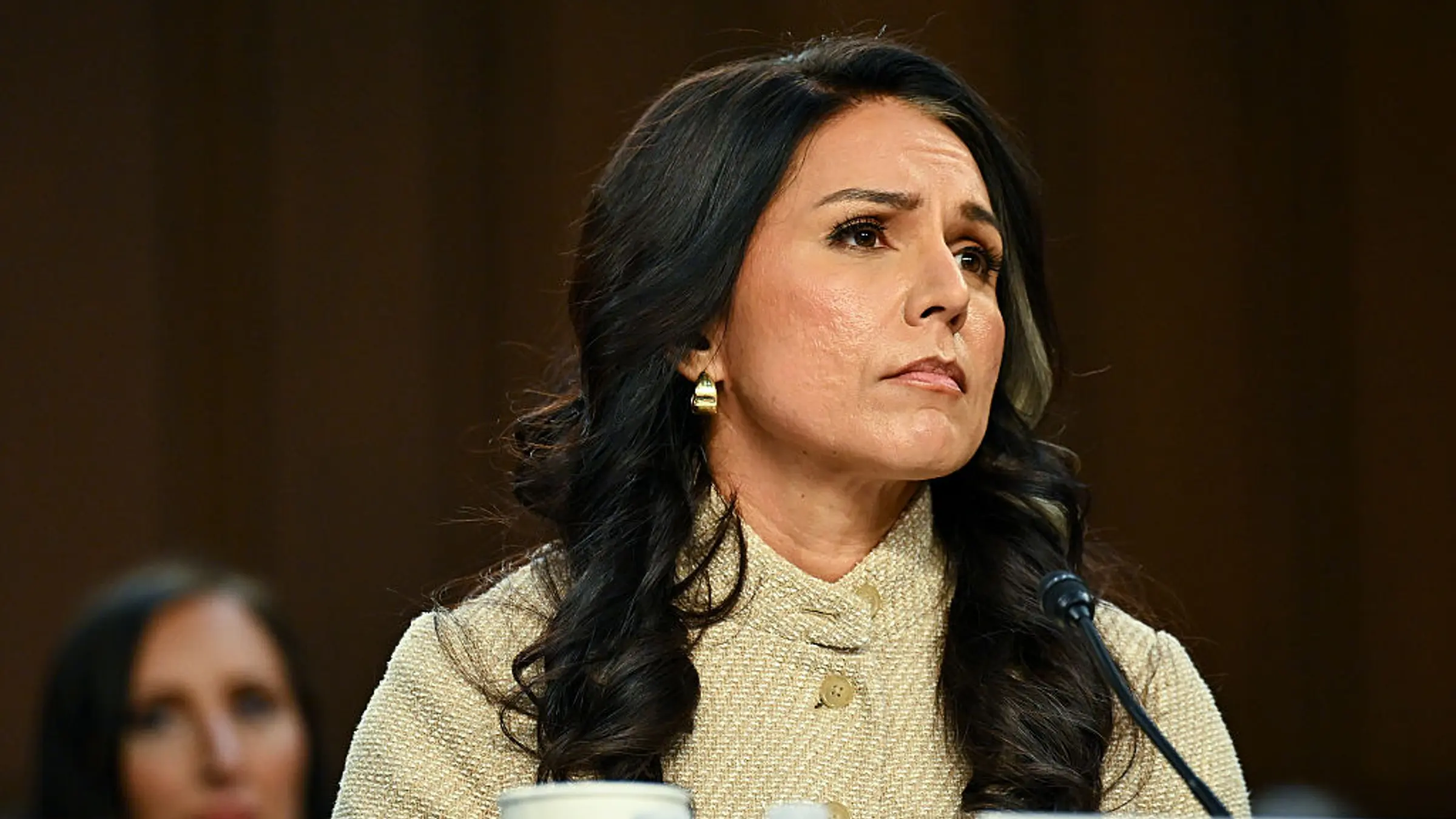
Tulsi Gabbard will resign as Director of National Intelligence on June 30, with Aaron Lukas set to serve as acting director. The move is driven by her husband's rare bone cancer diagnosis rather than a policy or market event. The article also highlights prior controversy around her Iran views and limited intelligence background, but it does not present a direct market-moving development.
This is less a personnel story than a marginal shift in how the administration will process escalation risk. Removing a politically idiosyncratic DNI reduces the probability of public friction between the White House and the intelligence community, which tends to compress internal dissent and make the policy apparatus more coherent in the near term. That is supportive for defense primes and cyber names if it translates into cleaner budget execution and less headline-driven hesitation around surveillance, munitions, and readiness spending.
The more important second-order effect is on Middle East policy optionality. A more pliable acting DNI can make it easier for the administration to sustain a harder Iran posture without the drag of visible intelligence disagreement, which raises the tail risk of additional strikes, sanctions escalation, or regional retaliation over the next 1-3 months. That tends to benefit energy volatility hedges, missile-defense exposure, and contractors with direct incremental demand from replenishment cycles, while pressuring airlines, industrials, and select EM sovereigns exposed to Persian Gulf routing.
The market may underprice the governance angle: leadership churn at the top of intelligence often matters less for data flow than for decision latency. If the acting leadership is viewed internally as more aligned, the administration may act faster, not slower, on security directives, which is a catalyst for event-driven moves rather than a slow-burn valuation rerate. The contrarian view is that the resignation could actually reduce the odds of further escalation if it signals a cooling-off period and removes a political loyalist whose hawkish credentials were not fully trusted by either side of the debate.
If that reading is right, the most attractive setup is not a directional bet on one-off headlines, but a convex hedge around a 30-90 day policy window. A quick normalization of rhetoric would fade the trade, but absent that, the risk asymmetry still tilts toward higher defense spending visibility and more geopolitical volatility than the market is currently pricing.
AI-powered research, real-time alerts, and portfolio analytics for institutional investors.
Request DemoOverall Sentiment
neutral
Sentiment Score
-0.05
