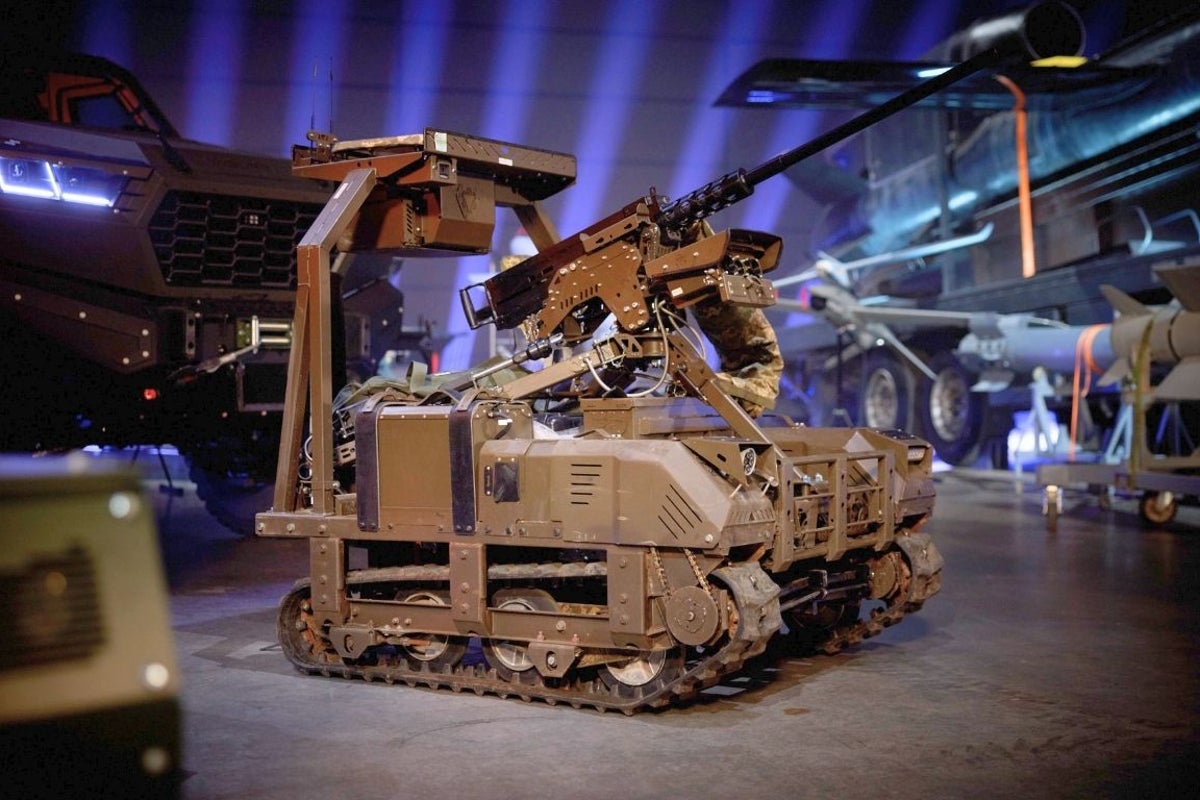
Ukraine says unmanned ground vehicles are taking on a larger battlefield role, with the 3rd Separate Assault Brigade aiming to replace about 30% of its infantry with UGVs for high-risk tasks. DevDroid says its average UGV costs $30,000, or $50,000 with a Browning machine gun, and estimates 10-15% of units are lost in battle but many are repaired and returned. The article highlights rapid market growth in Ukrainian UGV production and a potential export opportunity, though the immediate market impact is limited to defense technology and suppliers.
The investable takeaway is not the battlefield headline itself, but the industrialization of attritable robotics in a live combat environment. That tends to benefit a layered supply chain: low-cost autonomy, ruggedized sensors, secure comms, power systems, and field-service networks outperform “big platform” primes because the key constraint is iteration speed, not unit size. The most important second-order effect is procurement pull-through: once militaries prove a robot can replace a soldier in the highest-risk logistics and assault roles, the addressable market expands from niche UGV prototypes to standardized fleet purchases, spares, software, and maintenance contracts.
The near-term catalyst is budget reallocation inside defense ministries, not a massive new topline immediately. Expect funding to shift away from manned vehicle upgrades and some artillery-support logistics toward robotics, EW-hardened autonomy, and counter-UGV systems over the next 6-18 months; the winners are firms that can deliver in short cycles and integrate with existing command-and-control. A less obvious beneficiary is the countermeasure stack: as UGV deployment rises, so do demand signals for jamming-resistant radios, thermal imaging, perimeter detection, and inexpensive interceptors.
The contrarian risk is that the current enthusiasm may overstate how quickly robots scale outside a permissive environment. Frontline UGVs are highly exposed to electronic warfare, terrain limits, and repair bottlenecks; if loss rates stay elevated, procurement can shift from offensive systems to cheaper logistics-only platforms, compressing the upgrade cycle. In that scenario, the market for bespoke combat UGVs is smaller than the headline suggests, while the more durable opportunity sits in dual-use autonomy, industrial robotics, and defense electronics rather than weaponized vehicles alone.
AI-powered research, real-time alerts, and portfolio analytics for institutional investors.
Request DemoOverall Sentiment
mildly positive
Sentiment Score
0.15
