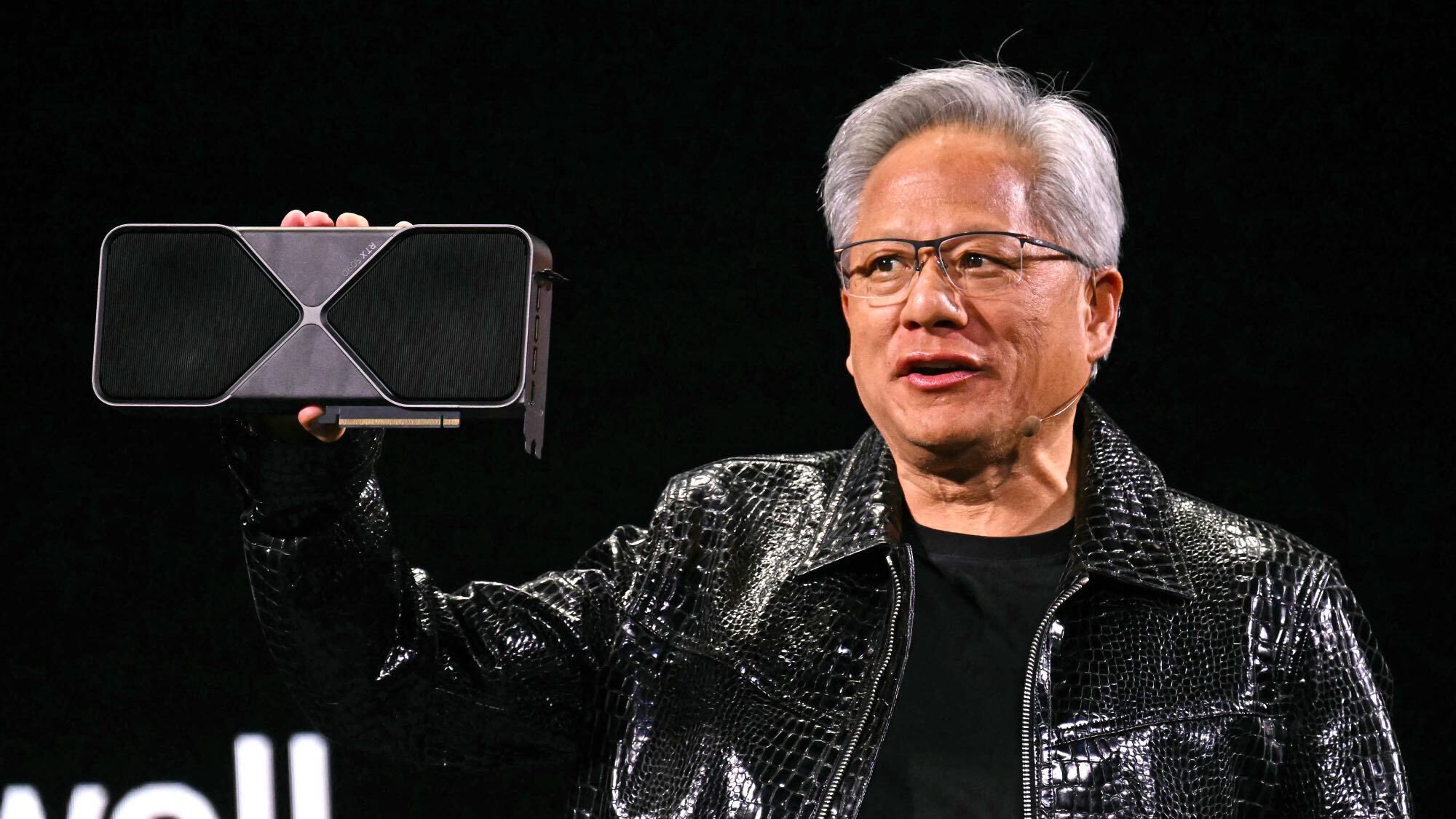
Nvidia has indefinitely delayed its incremental RTX 50-series refresh (codename 'Kicker') and is cutting production of current RTX 50 GPUs due to a severe global memory shortage driven by AI data-center demand, causing retail scarcity and price spikes for mid-range cards. The company has also pushed mass production of the next-generation 'Rubin' (RTX 60-series) to the end of 2027, creating a near three-year gap between major gaming-GPU generations; the shift signals Nvidia is prioritizing memory supply for AI chips over the consumer gaming segment, pressuring PC/gaming demand while potentially reallocating capacity toward higher-value data-center products.
Market structure: Memory suppliers (Micron MU, SK Hynix, Samsung) and semiconductor-equipment vendors (ASML, LRCX) are near-term beneficiaries as constrained DRAM/HBM supply gives pricing power; consumer GPU sellers, mid-range GPU demand and OEM PC makers (Dell, HP) are losers as gaming SKU availability and margins compress. Nvidia faces asymmetric revenue mix risk — data center demand justifies memory allocation to AI, shrinking gaming SKU supply and pushing retail RTX 50 prices +20–40% in pockets, which will suppress new-build PC demand over 6–12 months.
Risk assessment: Tail risks include accelerated capex adding >20% DRAM capacity within 12–24 months driving a steep price collapse (repeat of 2018), new export controls limiting memory flows to China, or an AI demand slowdown reducing cloud memory absorption. Immediate (days) — GPU retail volatility and NVDA options IV spikes; short-term (weeks–months) — earnings guidance revisions and DRAM spot-price moves; long-term (quarters–years) — capex cycles and fab ramp timelines will reprice winners/losers.
Trade implications: Direct plays favor long exposure to MU and ASML/LRCX for 6–18 months to capture sustained ASP inflation; hedge NVDA gaming risk with short-dated puts or by reducing directional NVDA size until guidance clarifies inventory allocation. Pair trades (long MU, short NVDA gaming exposure) and options (buy MU 9–12 month calls; buy NVDA 3-month 10–15% OTM puts or bear-call spreads) are viable, with actionable triggers tied to DRAM spot indices and NVDA guidance.
Contrarian angles: Consensus assumes permanent bifurcation that hurts Nvidia — but NVDA’s data-center pricing power could offset gaming losses, making shorting NVDA outright risky; the market may be underpricing the eventual DRAM capex response (12–24 month lead time) which historically causes >30% downside to memory stocks once new capacity hits. Look for mean-reversion in equipment names and option trades sized for a 12–24 month capex cycle; unintended consequence: higher GPU retail prices could accelerate console/cloud gaming adoption, muting long-term PC GPU demand decline.
AI-powered research, real-time alerts, and portfolio analytics for institutional investors.
Request DemoOverall Sentiment
moderately negative
Sentiment Score
-0.45
Ticker Sentiment
