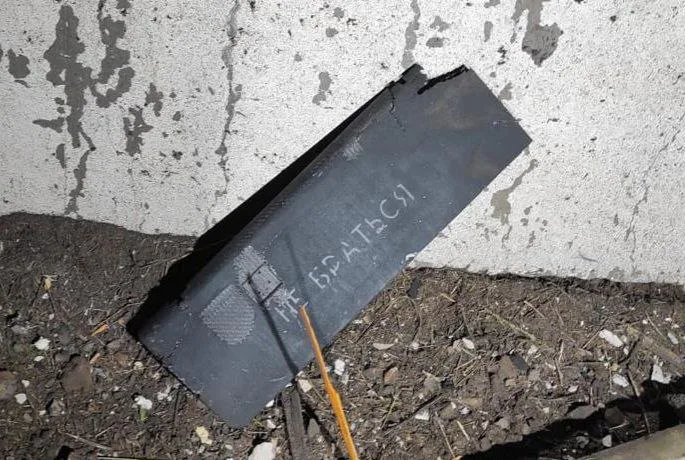
Russian drones hit infrastructure in Sumy, damaging a gas station's garage and sales area and injuring two female employees with acute stress reactions. Over the past 24 hours, 10 people were injured across the Sumy region from shelling, with more than 90 strikes recorded across 41 settlements in 21 communities. The attack underscores ongoing wartime damage to civilian infrastructure and raises regional security risk.
This is not a local headline; it is another data point that the southern/central Ukrainian logistics grid is being forced to absorb repeated micro-disruptions. The second-order effect is that seemingly small strikes on fuel retail, garages, and adjacent civilian infrastructure create cumulative friction in last-mile distribution, emergency services, and regional mobility, which tends to show up first in higher operating costs rather than immediate volume loss. That matters most for any business model with thin margins and just-in-time routing, where even brief fuel-station outages can cascade into missed deliveries and higher security spend.
The market implication is a slow-burn risk premium in all assets tied to Eastern European physical connectivity: insurers, transport, local utilities, and construction/input providers facing replacement demand. Defense-adjacent names can benefit on a months-long horizon because these kinds of attacks reinforce procurement urgency around point defenses, drones, electronic warfare, and critical-infrastructure hardening rather than large-ticket platforms alone. The non-obvious winner is often the companies selling low-cost, rapidly deployable systems; the losers are operators that rely on dense, vulnerable civilian infrastructure and have limited redundancy.
The near-term catalyst path is escalation clustering: if these strikes remain frequent over the next 2-6 weeks, expect tighter regional risk controls, higher insurance exclusions, and incremental capex diversion toward repair and hardening. The main contrarian view is that the market may already be discounting a high baseline of conflict damage, so the incremental trade is not directional geopolitics but the dispersion between underprotected civilian assets and the vendors enabling resilience. If there is any de-escalation or air-defense improvement, the premium compresses quickly, so timing matters more than conviction.
AI-powered research, real-time alerts, and portfolio analytics for institutional investors.
Request TrialOverall Sentiment
strongly negative
Sentiment Score
-0.55
