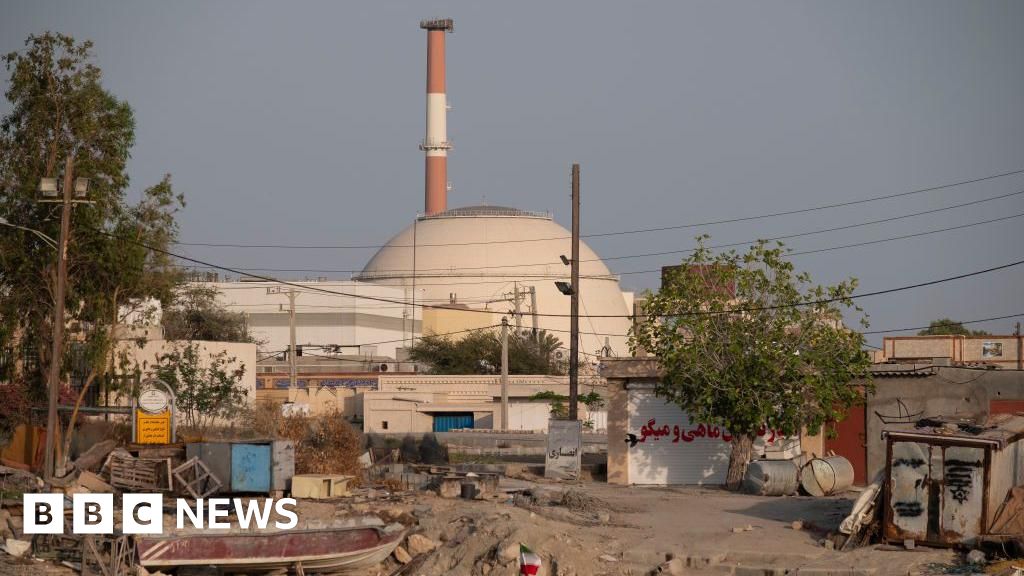
Israel has conducted strikes against Iranian nuclear facilities, including Natanz and Fordo, citing intelligence suggesting Iran was close to producing a nuclear weapon, a claim disputed by some experts who note that while Iran has enriched uranium at unprecedented levels, U.S. intelligence assesses that Iran is not currently building a nuclear weapon. The IAEA has confirmed damage to Iranian infrastructure and expressed concern over Iran's non-compliance with investigations and its accumulation of uranium enriched up to 60%, while Iran has retaliated with air strikes on Israel and announced plans to expand its enrichment capabilities.
The recent Israeli military strikes on Iranian nuclear facilities at Natanz, Fordo, and Isfahan represent a significant escalation in regional hostilities, carrying substantial geopolitical risk as indicated by a strongly negative sentiment score (-0.75) and a high market impact score (0.85). Israel justified the attacks by citing intelligence of Iran's "concrete progress" towards nuclear weapon components and a potential breakout time of mere months, a perspective that contrasts with assessments from some non-proliferation experts and U.S. intelligence; while these sources acknowledge Iran's possession of uranium enriched to 60% purity—enough for potentially nine bombs according to the IAEA—and "unprecedented" stockpile levels for a non-nuclear state, they also maintain that Iran is not currently assessed to be actively building a nuclear weapon nor has its Supreme Leader authorized such a program. The International Atomic Energy Agency (IAEA) has confirmed damage to critical infrastructure, including the Natanz pilot fuel enrichment plant vital for 60% enrichment and advanced centrifuge development, and its board recently declared Iran in breach of its non-proliferation obligations for the first time in two decades due to non-compliance with investigations. Iran's retaliatory air strikes on Israel and stated plans to enhance its enrichment capabilities, including a new facility and advanced centrifuges, signal a dangerous escalatory spiral with potential repercussions for energy markets and global security. While the Israeli strikes may temporarily extend Iran's nuclear "breakout time," experts caution that nuclear knowledge is indelible, allowing for reconstruction and persistent proliferation concerns.
AI-powered research, real-time alerts, and portfolio analytics for institutional investors.
Request DemoOverall Sentiment
strongly negative
Sentiment Score
-0.75
