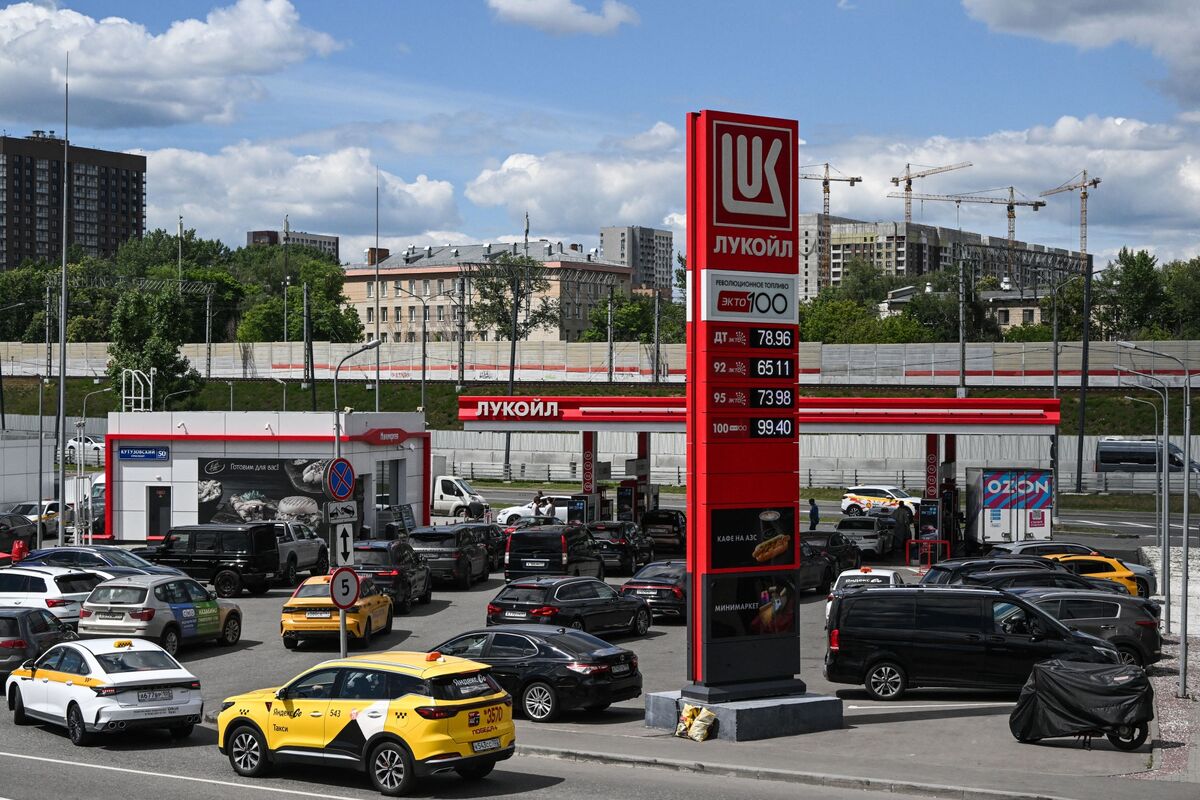
Russian gasoline prices jumped 3% week over week to 71.20 rubles per liter in June 16-22, the biggest weekly increase in at least 20 years. The surge follows Ukrainian strikes on refineries, which are reducing output and adding a new inflation risk for Russia. The data supports a more cautious central bank stance as energy-price pressures intensify.
This is less about the consumer line item and more about a policy trap: supply damage from refinery strikes is turning a war shock into a persistent inflation impulse, which forces the central bank to keep real rates restrictive for longer. The second-order effect is that higher fuel prices hit logistics, agriculture, and regional distribution costs simultaneously, so the inflation pass-through should be broader than the headline move implies and may show up with a 1-2 month lag in food and core services.
The market underappreciates how asymmetric this is for domestic demand. Households will not cut gasoline use much in the short run, so the near-term burden falls on discretionary spending and small business margins rather than volumes, while industrial producers face margin compression through transport and input costs. That argues for slower consumption growth, weaker credit demand, and a higher probability that policymakers choose disinflation credibility over growth support.
The key catalyst is whether refinery outages persist into the next reporting cycle; if they do, the inflation narrative becomes self-reinforcing because higher fuel prices also increase nominal expectations and wage demands. The reverse case is a rapid repair/offset through imports or strategic stock adjustments, but that would likely cap the move rather than unwind the broader policy tightening bias. In other words, the immediate price spike may fade, but the policy premium for inflation risk should remain elevated for months.
The contrarian angle is that this is not automatically bullish for upstream energy economics because the bottleneck is refining, not crude. That creates a scarcity rent for downstream fuel, while crude-linked assets may see less benefit than expected unless the disruption broadens into supply chain constraints or export policy changes.
AI-powered research, real-time alerts, and portfolio analytics for institutional investors.
Request DemoOverall Sentiment
moderately negative
Sentiment Score
-0.35
