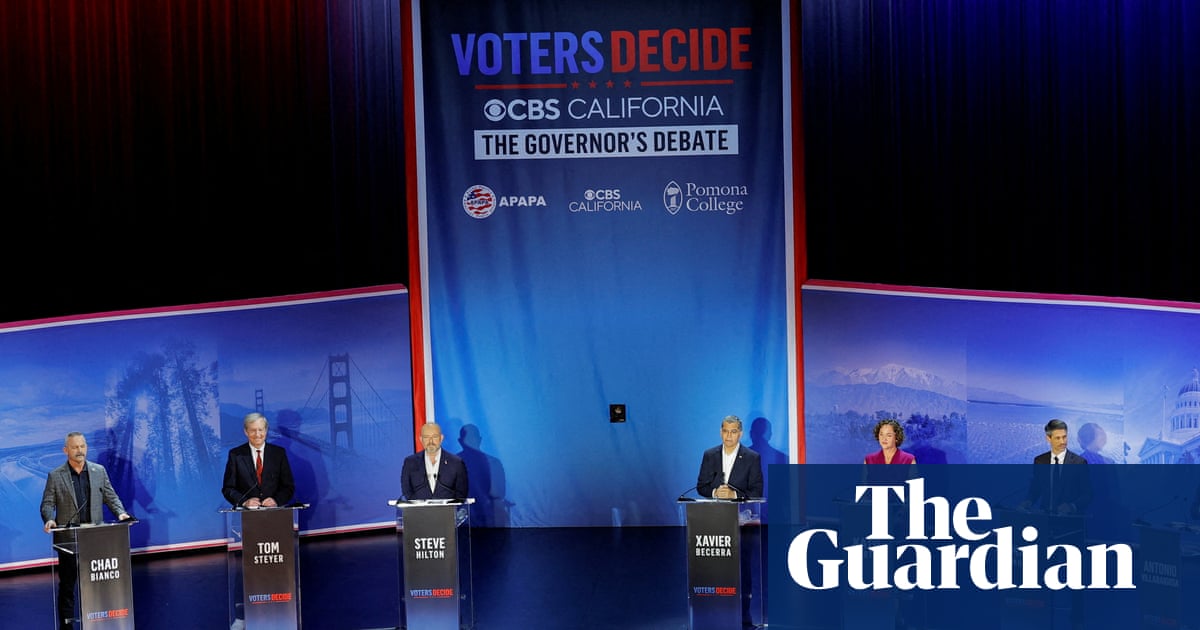
California’s gubernatorial race is tightening ahead of the 2 June primary, with Xavier Becerra tied at 18% in a recent California Democratic Party survey alongside Steve Hilton. Undecided voters fell to 14% from 24% in March, while key endorsements have shifted to Becerra and Tom Steyer, both of whom remain under debate-stage scrutiny on immigration, homelessness, affordability and a projected state budget shortfall. The article is primarily a political update with limited direct market-moving implications.
The immediate market read is not about California politics per se, but about the probability distribution for November. A narrowing field and falling undecided share raise the odds that the eventual top-two slate becomes more legible earlier than usual, which matters for any assets levered to California policy visibility: utilities, insurers, housing, and municipal credit. The deeper signal is that the race is being driven by affordability, insurance availability, and budget stress — a mix that increases the chance of policy rhetoric turning more interventionist, even if implementation is constrained.
Becerra’s rise is tactically important because it reduces the tail risk of a Republican sweep into the runoff, but it also increases the odds of a centrist-on-paper, institutionally familiar Democrat winning. That is usually bearish for near-term policy volatility because it can compress the range of fiscal surprises, yet it does not eliminate pressure for regulatory responses on insurance pricing, homelessness spending, and housing supply. For markets, the second-order effect is that California-specific policy risk may shift from election-day binary to post-election legislative friction, which is slower-moving but harder to price.
The contrarian angle is that the debate itself may matter less than investor positioning assumes: with ballots already out, the event is likely a sentiment check rather than a true catalyst. If the market is leaning too hard on the idea that one candidate’s momentum is durable, a single weak debate or scandal headline could produce a fast reversal in polling, but the more likely outcome is a gradual reconvergence as late voters prioritize name recognition and anti-incumbent sentiment. That argues for trading volatility around media cycles rather than making outright directional bets on any single candidate.
AI-powered research, real-time alerts, and portfolio analytics for institutional investors.
Request DemoOverall Sentiment
neutral
Sentiment Score
0.05
