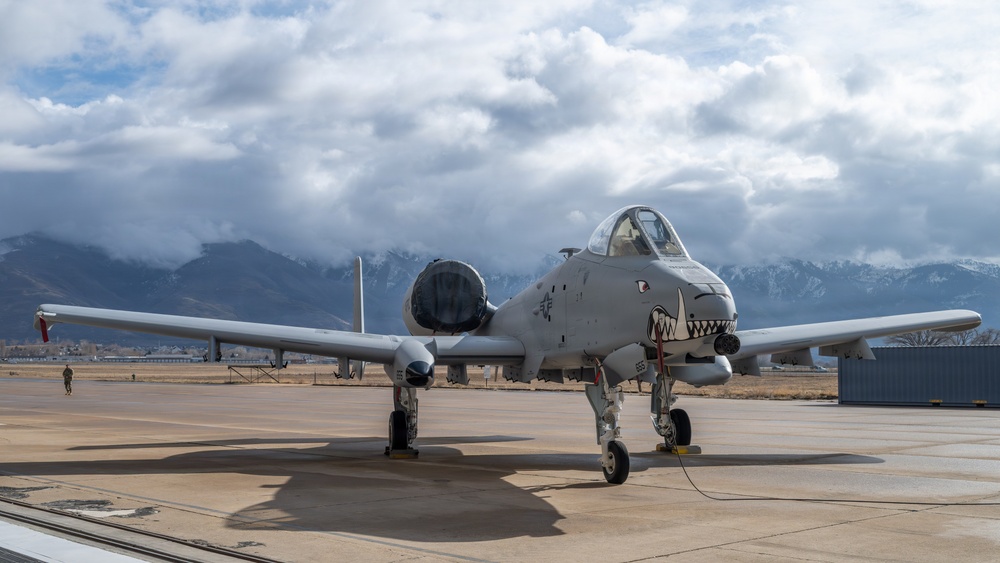
Ogden Air Logistics Complex at Hill AFB will send its final A‑10 Thunderbolt II out of depot-level maintenance at the end of February 2026, triggering deactivation of the 571st Aircraft Maintenance Squadron after decades of structural repair, re‑winging and major overhauls (depot work began at Hill in 1998). The Air Force is phasing out the A‑10 as part of a modernization push toward F‑35A and next‑generation air dominance systems; most A‑10 maintainers are slated to transition into sustainment lines for the F‑35, F‑16 and C‑130, preserving skilled labor and limiting workforce disruption while changing the focus of sustainment activity at Hill.
Market structure: The A‑10 depot exit accelerates a structural shift from legacy airframe MRO to high‑end sustainment (F‑35, NGAD programs). Winners are large primes with scale in lifecycle services (Lockheed Martin LMT, Raytheon RTX, Boeing BA) who gain redeployed skilled labor and incremental aftermarket share; losers are small, legacy‑part suppliers and niche MROs with >25% revenue tied to A‑10‑class work. Expect primes’ aftermarket gross margins to expand by ~150–300bps over 12–24 months as fixed depot capacity is repurposed and bargaining power consolidates.
Risk assessment: Tail risks include a Congressional reversal forcing A‑10 life‑extension (policy shock), a sudden CAS demand spike from a regional conflict, or mass attrition of depot talent if retraining fails — each could flip revenue/margin assumptions within 3–12 months. Immediate market impact (days) is negligible; material contract/risk realization clusters around FY2027 NDAA decisions and sustainment RFPs in the next 3–12 months. Hidden dependency: F‑35 sustainment requires different supply chains (composites, avionics) so redeployed labor only partially substitutes — expect 6–18 month integration friction.
Trade implications: Tactical: allocate 2–3% long LMT (scale in over 4–8 weeks) to capture sustainment upside, and deploy 0.5–1% into a 9–12 month call‑spread on RTX (buy 20% OTM, sell 40% OTM) to play sensors/avionics exposure with defined cost. Pair trade: long LMT vs short small/Mid‑cap MROs (trim AIR by 50% if >25% legacy revenue) — redeploy proceeds into 3–7yr investment‑grade bonds of LMT/RTX expecting 20–50bp spread compression over 6–18 months.
Contrarian angle: The market underestimates near‑term operational drag — retraining and tooling for F‑35 sustainment will create 6–12 month margin headwinds for suppliers, producing mispricings. If primes report a 1–2% hit to near‑term margins on sustainment transitions, this is a buying window; conversely, if DoD awards >$500m in sustainment contracts in a single tranche (next 90 days), reallocate +1–2% into LMT/RTX immediately.
AI-powered research, real-time alerts, and portfolio analytics for institutional investors.
Request DemoOverall Sentiment
mildly positive
Sentiment Score
0.25
