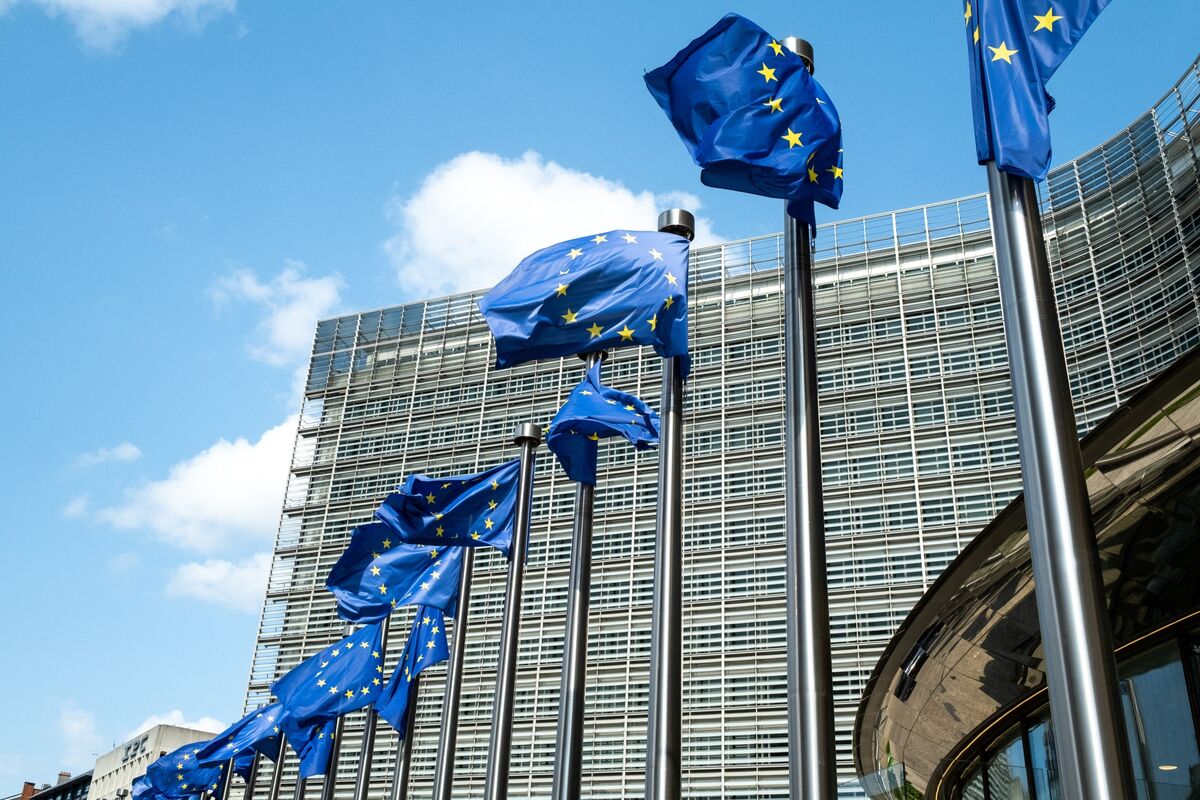
European Commission officials are set to meet with Anthropic in San Francisco to learn more about its Mythos AI model and request access for the bloc. The development is regulatory and exploratory rather than financial, with no disclosed deal terms, revenue impact, or launch timeline. Market impact should be limited unless the talks lead to broader EU access or compliance requirements.
This is less about near-term revenue for Anthropic and more about the EU signaling that frontier-model access is becoming a geopolitical bargaining chip, not just a commercial distribution question. If Brussels pushes for local availability or special access terms, the second-order winner is likely hyperscalers and EU infra providers that can host compliant inference layers, while pure model vendors face lower pricing power and more disclosure pressure. The likely loser is any AI firm relying on scarcity plus opaque capability differentiation; once regulators start asking for access and technical briefings, the moat shifts toward deployment, compliance, and enterprise integration.
The market may be underestimating the regulatory spillover into the broader AI stack. If one frontier model gets pulled into a quasi-review process, competitors with EU exposure can expect similar scrutiny, which raises sales-cycle friction and legal overhead across the sector for the next 3-6 months. That tends to favor larger platform players with existing compliance machinery and penalize smaller model specialists whose go-to-market depends on fast enterprise expansion.
Contrarian read: this is not automatically bearish for AI adoption. In the medium term, EU engagement can legitimize frontier AI and accelerate public-sector procurement, especially if the outcome is a sandboxed access framework rather than a prohibition. The real tail risk is that Brussels extracts model transparency commitments that become precedent-setting; if that happens, the valuation gap between open, commoditized models and closed premium models could compress faster than the market expects. A reversal would require the EU to settle for documentation rather than access, turning this into a one-off dialogue rather than a regulatory template.
AI-powered research, real-time alerts, and portfolio analytics for institutional investors.
Overall Sentiment
neutral
Sentiment Score
0.05
