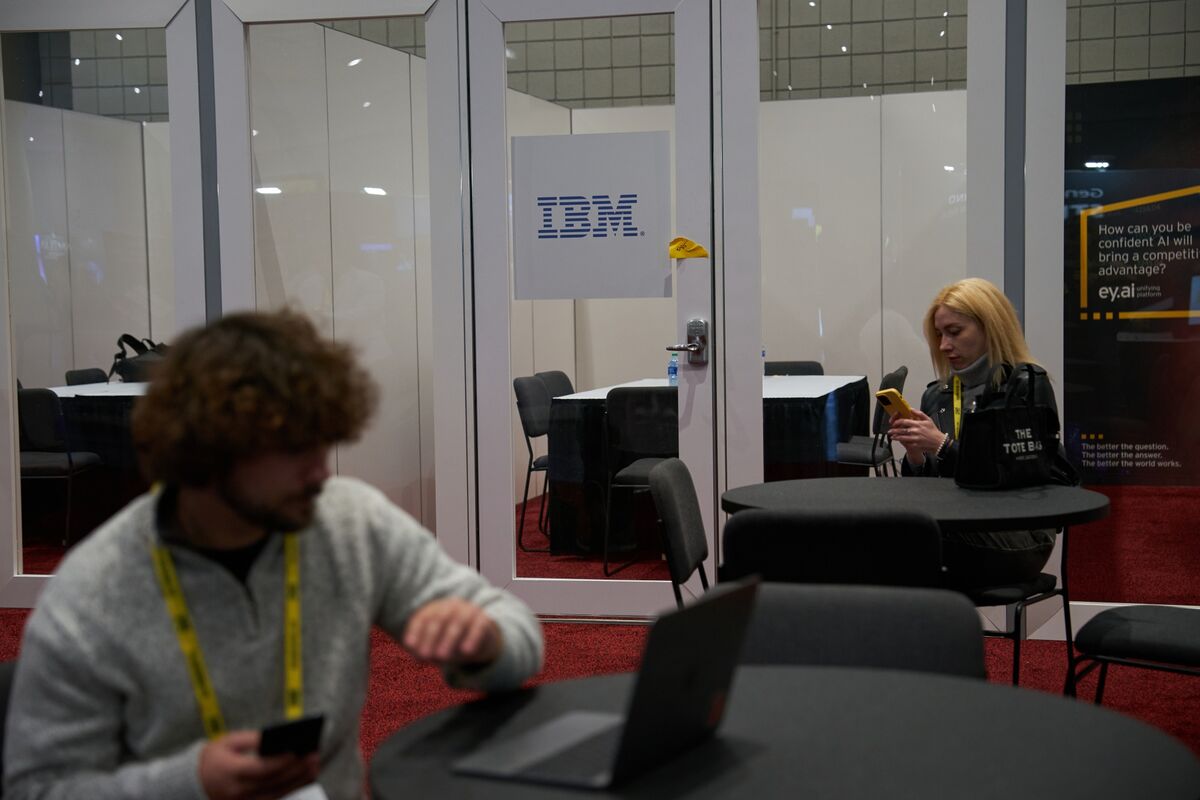
IBM plans to add 750 jobs over the next five years at Chicago's Illinois Quantum and Microelectronics Park, with hiring focused on AI, quantum computing, cybersecurity and data science. The company will also receive $19 million from an Illinois state tax-credit program and open the FutureNow Chicago center at the tech hub. The announcement is positive for IBM's innovation footprint, but the direct market impact is likely limited.
This is less a near-term earnings event than a strategic option on IBM’s right to remain relevant in the next compute cycle. The incremental hires matter because they concentrate on high-switching-cost capabilities—AI integration, security, and quantum-adjacent work—that can deepen enterprise relationships and raise the value of IBM’s consulting/software stack, not just create headcount. The bigger second-order benefit may be political: state-backed industrial policy can lower IBM’s effective cost of talent and help it preempt competitors in a region trying to become a national compute cluster.
For competitors, the pressure is more on talent and ecosystem than on direct revenue. Cloud hyperscalers and AI infrastructure vendors will likely face higher local wage inflation and a stronger narrative that “trusted enterprise AI” belongs with incumbents that can bundle governance and security. The supply-chain angle is subtle: if the tech hub succeeds, it could pull enterprise workloads, research grants, and public-sector procurement toward IBM-partnered stacks, incrementally disadvantaging pure-play software names that lack regulated-industry credibility.
The main risk is that this looks good on slides before it shows up in margins. These programs typically take 12-24 months to translate into billable work, while the public subsidy and hiring costs are immediate; if utilization lags, investors may eventually treat the announcement as diluted return on capital rather than growth. A more contrarian read is that the market may be underpricing the optionality: quantum is unlikely to move P&L in the next 2-3 years, but it can materially improve enterprise retention and pricing power if IBM becomes the default “safe pair” for AI + cybersecurity deployments.
Catalyst path: near term, the stock can grind on sentiment and policy support; medium term, the real check is whether this hub produces measurable software/services bookings and not just press releases. If broader AI infrastructure spending rotates away from experimental tools toward governed enterprise deployments, IBM should benefit disproportionately. If not, this becomes a slow-burn capital allocation story with limited multiple expansion.
AI-powered research, real-time alerts, and portfolio analytics for institutional investors.
Request DemoOverall Sentiment
mildly positive
Sentiment Score
0.34
Ticker Sentiment
