




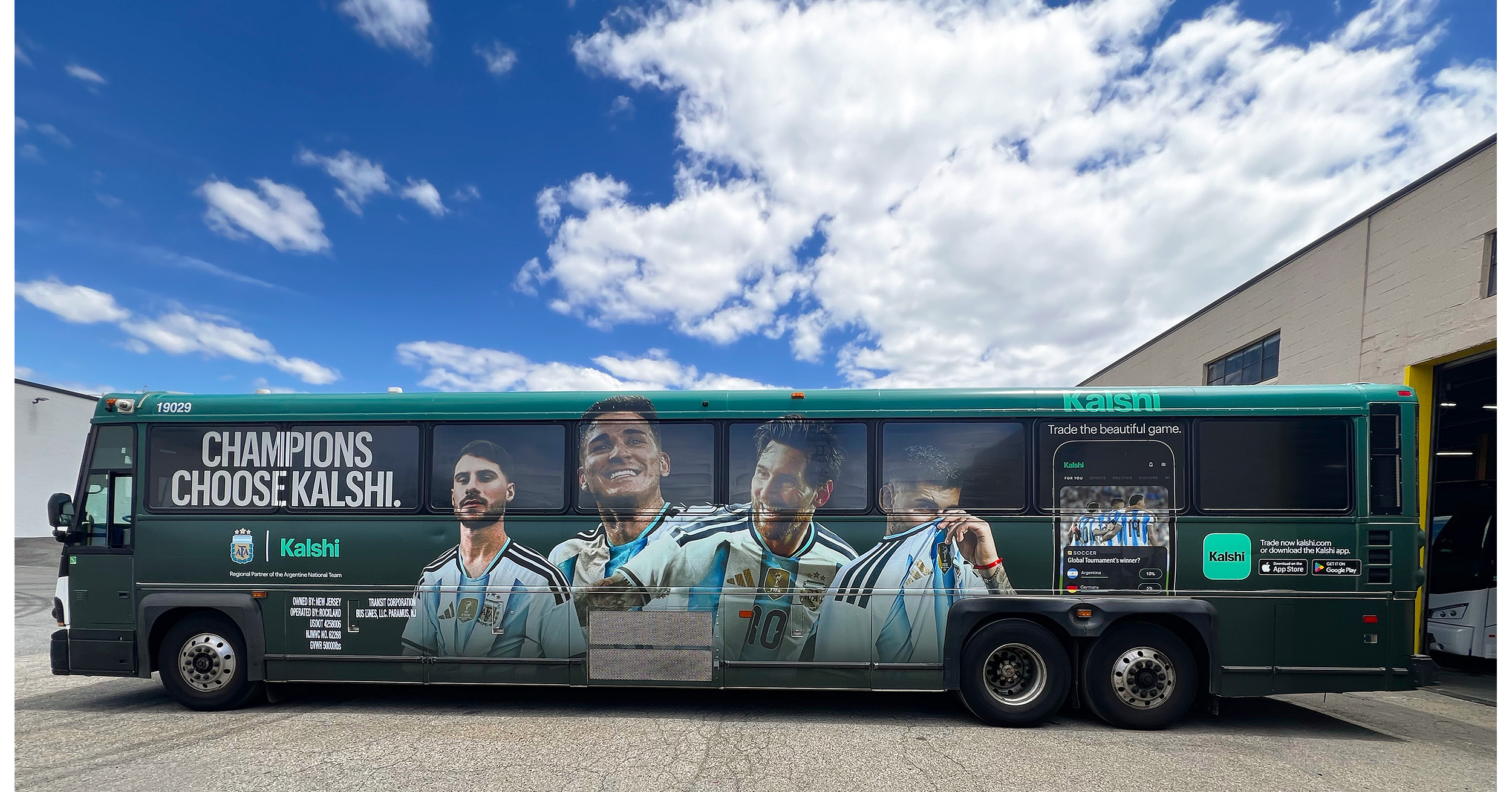
Coach USA/Perfect Body in New Jersey completed 25 World Cup-themed bus wrap installs for brands including Lay’s Bandwagon and Kalshi, using two Roland DG TrueVis XP-640 printers running up to 16 hours/day for eight weeks. The in-house digital printing setup—plus ink/material support from supplier Letra Sign—enabled faster turnaround and color matching, with 10 Lay’s buses and 15 WorldCupAct.org/Kalshi/VisitNJ/Buchanan’s Deluxe buses wrapped to date. The article suggests strong short-term demand tied to MetLife Stadium events, with a transition back to a more normal schedule after wrap removal and rewrapping.
This reads more like a proof-of-concept for operational monetization than a market-moving demand signal. The real economic lever is not the buses or the event itself; it is the ability to internalize a high-turnaround print workflow and capture margin on consumables, labor, and installation rather than paying a third party. That favors integrated service providers and wide-format equipment/ink ecosystems, but the revenue base is still too small to matter for large public comps unless management can show repeatable utilization after the tournament.
Second-order, the more interesting effect is competitive: once a fleet operator can print and install in-house, local wrap shops and outsourced graphics bureaus lose urgent, high-margin work. That can pressure pricing in a segment where speed and proximity matter more than scale. The near-term winner is whoever supplies ink/media and service uptime; the loser is the outsourced middle layer that previously captured the rush premium.
The contrarian read is that investors may overinterpret event-driven ad activity as structural. This is likely a short-duration utilization spike with a post-event fade, and the main risk is inventory/contractor unwind: if the facility stocked too aggressively or overhired, margins can normalize down quickly once the venue schedule clears. The thesis would be falsified if management later reports sustained non-event demand, recurring sponsorship wrap backlog, or materially better gross margins from the print business outside the World Cup window.
AI-powered research, real-time alerts, and portfolio analytics for institutional investors.
Overall Sentiment
mildly positive
Sentiment Score
0.20
Ticker Sentiment
