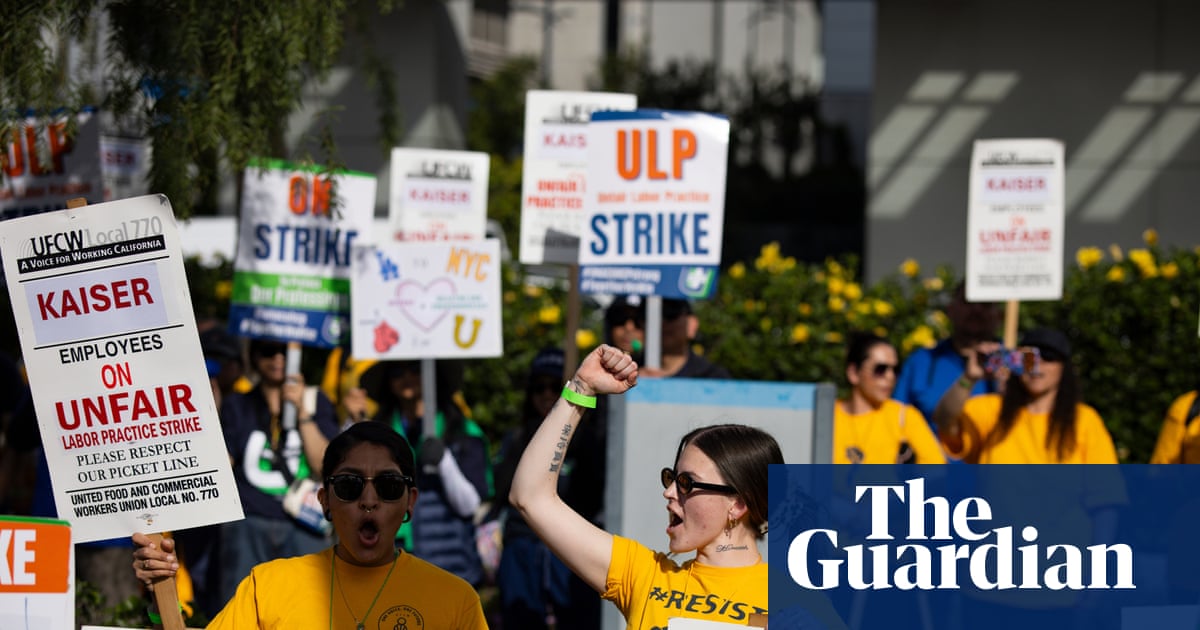
2,400 northern California Kaiser mental-health workers (NUHW) staged a one-day strike over new screening processes and fears that clerical staff and AI could replace licensed clinicians. NUHW filed administrative complaints in northern and southern California alleging algorithmic/clerical triage has caused care delays and reported >70 negative care examples since January 2025. Kaiser denies clerical staff or AI are making clinical determinations and points to prior regulatory settlements — $200M with California (2023) and a $31M U.S. Department of Labor settlement announced last month — while the dispute raises ongoing regulatory and reputational risks for the company.
Shifting first-contact work from licensed clinicians to scripted clerical intake and algorithmic screening creates a structural bifurcation in downstream utilization: low-acuity volume becomes routinized and routable to telehealth/automated channels, while high-acuity cases that are mis-triaged compress into emergency care and crisis teams. That mix change is profit-negative for an integrated outpatient model (loss of efficient, billable outpatient continuity) but profit-positive for acute care providers and on-demand virtual platforms that can capture routinized encounters at lower cost. Expect this rebalancing to manifest within 3–12 months as measurable moves in outpatient appointment yields, ED visit rates, and telehealth utilization metrics.
Regulatory and litigation risk is the primary latent hazard. Historical precedents in healthcare show enforcement and settlement cycles unfold over quarters-to-years, with remediation costs and operational mandates that can require rehiring or retraining staff — an opaque but meaningful P&L hit that can outsize initial savings. Conversely, if a vendor-grade, auditable AI/triage stack passes independent validation and regulators permit limited use, adoption could accelerate rapidly across health systems, consolidating vendor economics for a small set of compliant tech providers within 12–36 months.
The real alpha is in positioning around the bifurcation: own durable cloud/AWS/MSFT-like platforms that can provide HIPAA-compliant, auditable tooling; own telehealth and urgent-care chains that monetize routinized demand; and consider selective exposure to hospital operators that benefit from higher ED throughput. Hedge regulatory tail risk with short-duration options or event hedges tied to enforcement catalysts (state agency rulings, large class settlements) expected within the next 6–18 months.
AI-powered research, real-time alerts, and portfolio analytics for institutional investors.
Request DemoOverall Sentiment
strongly negative
Sentiment Score
-0.60
