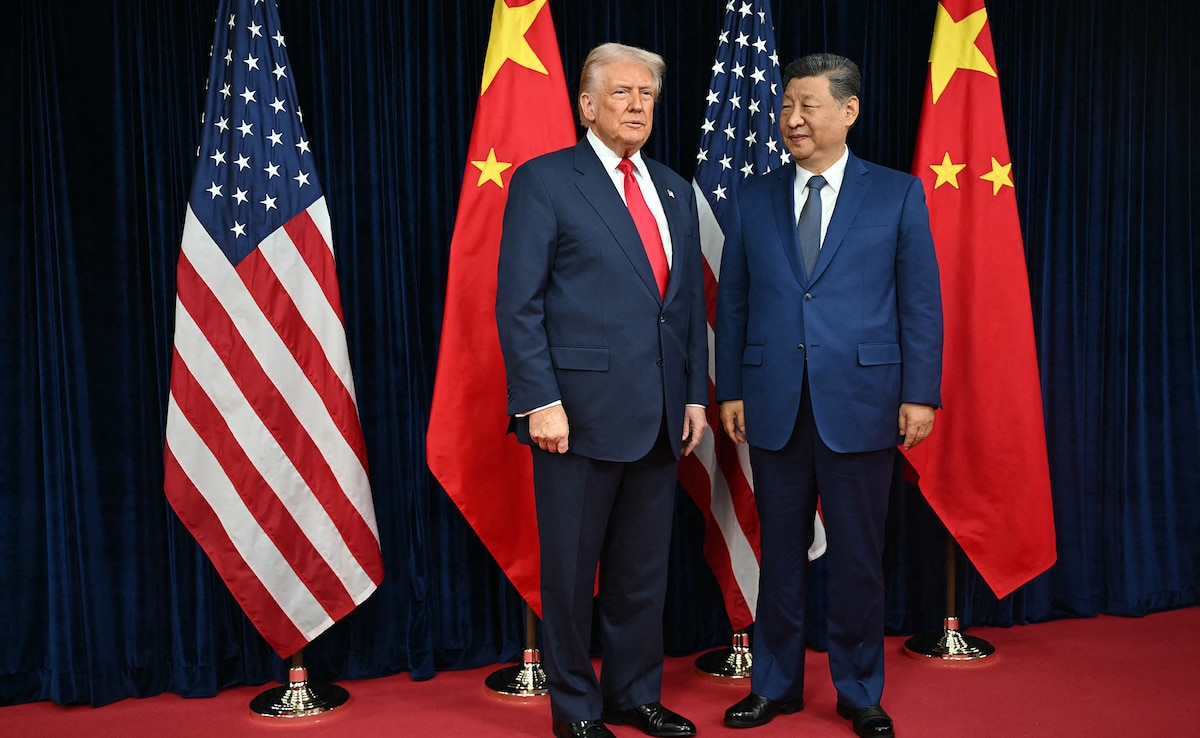
Beijing set out four 'red lines' for Trump’s visit: Taiwan, democracy and human rights, political systems, and China’s development rights, sharpening the risk of conflict at the summit. China also reiterated firm opposition to US arms sales to Taiwan, underscoring tensions over a potential $11 billion weapons package and broader US-China trade and tech frictions. The meeting is likely to focus on sensitive geopolitical issues alongside trade deals on beans, beef and Boeing jets.
This setup is less about a headline breakthrough and more about constraining the menu of acceptable outcomes. Beijing is signaling that any optics-heavy deal that touches Taiwan or ideological issues will be punished domestically, which raises the probability of a narrow, transactional summit and lowers the odds of a durable de-escalation. In markets, that usually means the first move is relief, but the second-order effect is renewed skepticism once the limited scope of any agreement becomes clear.
The most actionable read-through is on industrial and aerospace supply chains rather than broad equities. Boeing is the cleanest direct beneficiary if even a small aircraft package is announced, but the bigger implication is that China is preserving leverage over future commercial-aircraft and aerospace content decisions; that makes any rally in BA vulnerable if the meeting ends without concrete delivery timelines. Separate from BA, rare-earth and export-control friction remains the higher-beta medium-term channel: China can selectively tighten enforcement or slow-walk approvals without triggering a full trade-war headline, which is more damaging for downstream manufacturers than for the headline index.
The contrarian point is that the market may be underpricing how much both sides need a face-saving trade truce. Because tariffs are partly boxed in by court rulings and China wants to avoid broader sanction escalation, the base case may be a modest but real easing in near-term trade noise, especially on ag exports and aircraft. The risk is that this calm is temporary: if Taiwan language hardens in the post-summit press cycle, the issue reverts to sanctions/export-controls within days to weeks, not months.
For defense and aerospace, the tail risk is not an immediate budget shift but a slower repricing of procurement security assumptions. If Beijing couples rhetoric with selective retaliation, Western firms exposed to China sourcing could see margin pressure over 1-2 quarters. That is where the trade has the best asymmetry: not on the summit itself, but on the follow-through in supply-chain policy and licensing behavior.
AI-powered research, real-time alerts, and portfolio analytics for institutional investors.
Request DemoOverall Sentiment
mildly negative
Sentiment Score
-0.25
Ticker Sentiment
