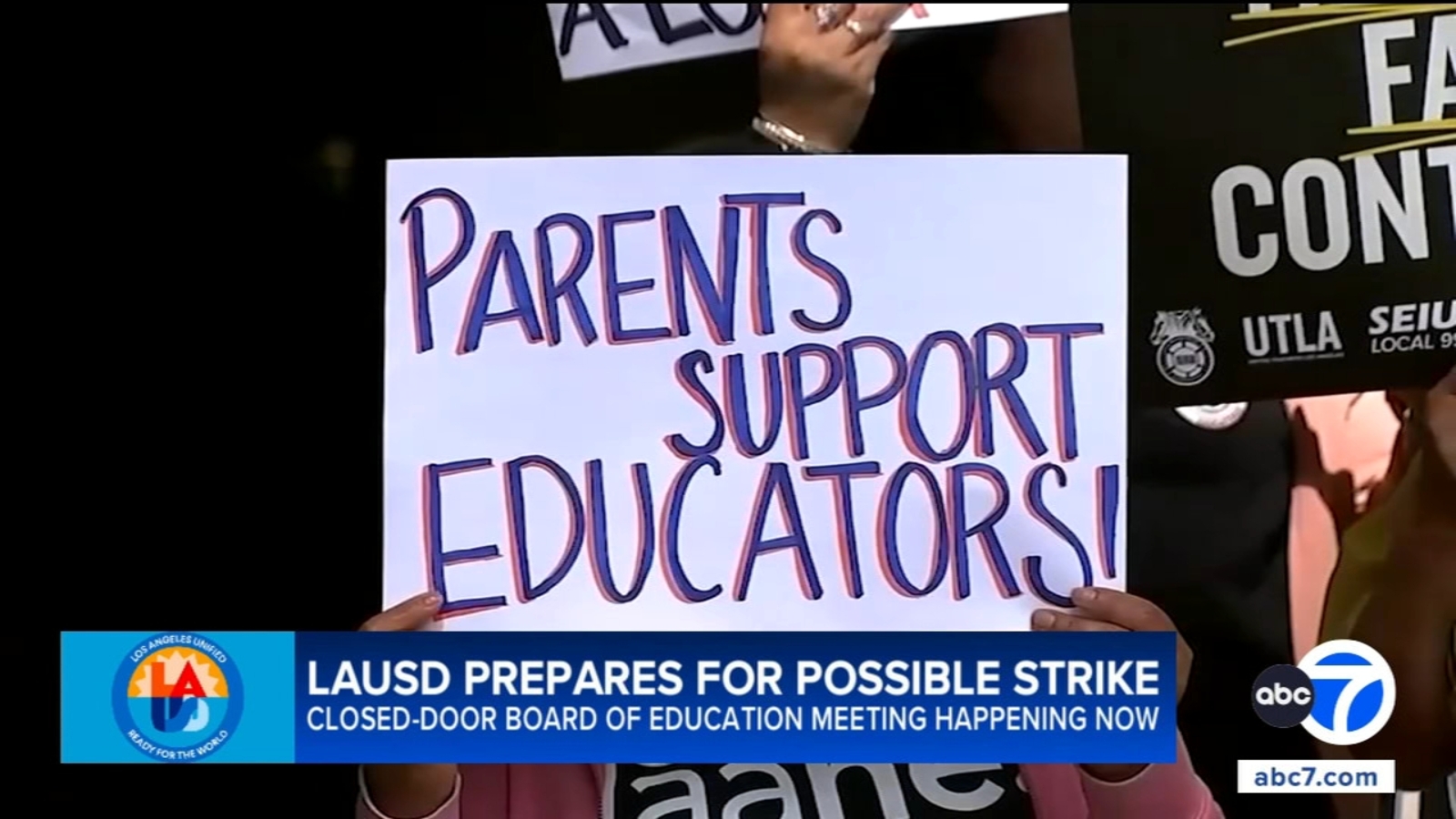
LAUSD is negotiating a last-minute deal to avoid a strike that could shut schools serving roughly 400,000 students starting Tuesday. Two unions, including teachers and administrators, have tentative agreements with 11.65% salary increases over two years, but SEIU Local 99 is still seeking higher wages and more staffing. If no agreement is reached, tens of thousands of workers would strike in sympathy, disrupting education, meals and child care across the district.
The immediate market read is less about LAUSD itself and more about the labor-spiral signal it sends to municipal and state budget setters: once the “essential but underpaid” worker cohort gets repriced, adjacent public-sector contracts tend to rebase upward in the next negotiation cycle. That creates a second-order fiscal squeeze for California districts already balancing declining enrollment, higher pension costs, and sticky wage expectations; the risk is that one settlement becomes the reference point for a broader regional wage reset over the next 6-12 months. For UBER, the path is more nuanced than a simple labor-cost headwind. A prolonged school shutdown can temporarily lift local rideshare/trip demand from parents and workers who need to replace school transport and childcare logistics, but that effect is usually short-lived and operationally messy. The bigger issue is that sympathy-strike dynamics reinforce the political narrative around “gig versus protected labor,” which can feed back into regulatory scrutiny and pricing pressure in California over a multi-quarter horizon. The contrarian view is that the market may overestimate the direct economic drag from a short strike while underestimating the policy follow-through if negotiations drag on. A 2-5 day disruption is manageable for households and likely a transient demand blip for consumer discretionary, but a repeat of the 2023 playbook would strengthen union leverage and could widen the fiscal hole for LAUSD, pushing more austerity or tax advocacy into the 2026 budget cycle. That makes this a better political-risk trade than a pure earnings event. From a trading perspective, the cleanest expression is to fade any knee-jerk UBER strength on local demand optics if the strike becomes headline-grabbing, because the regulatory overhang is the more durable channel. If the district announces a deal before the deadline, that’s a fast mean-reversion setup for any labor-sensitive volatility names; if not, the better medium-term expression is to position for California public-sector labor contagion rather than school-operator equity weakness.
AI-powered research, real-time alerts, and portfolio analytics for institutional investors.
Request DemoOverall Sentiment
mildly negative
Sentiment Score
-0.20
Ticker Sentiment
