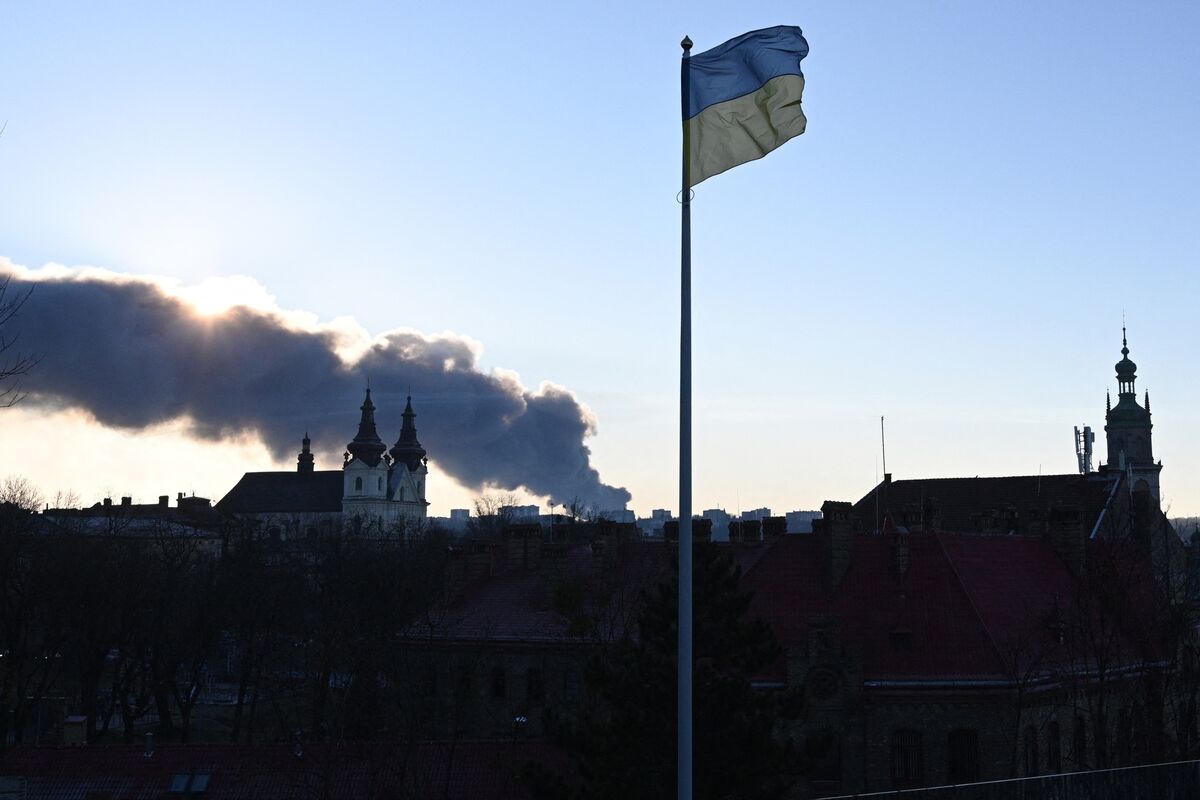
Western governments and institutions are accelerating efforts to find legal, fiscal and operational mechanisms to deploy frozen Russian central-bank assets held in Western banks to support Ukraine and reconstruction needs, producing a scramble among policy makers to design special vehicles, guarantees and legislative frameworks. The initiative raises complex legal and sovereign-debt questions, risks of retaliatory measures, and potential implications for bank counterparty exposure and FX dynamics, creating policy-driven uncertainty for investors assessing sovereign and banking-sector risk in Europe and emerging markets.
Market structure: Rapid deployment of frozen Russian assets (estimated to be in the low-to-mid hundreds of billions under various proposals) reallocates capital toward defense spending, reconstruction and sovereign backstops. Clear winners: defense primes (Lockheed Martin LMT, RTX, NOC) and EU sovereigns seeking bridge financing; losers: Russian sovereign and corporate creditors, commodity exporters tied to Russia, and banks bearing sanctions compliance costs. This shifts pricing power toward governments and large defense suppliers over 6–36 months as procurement budgets firm up.
Risk assessment: Key tail risks include legal reversals (court injunctions returning assets), Russian retaliation (energy cutoff or cyber attacks) and secondary sanctions on counterparties; any of these could produce >20% moves in FX/commodity markets within days. Time horizons split: immediate volatility (days–weeks) around legislative votes, short-term (1–6 months) for FX and CDS repricing, longer-term (12–36 months) for defense capex flows. Hidden dependency: deployment effectiveness hinges on legal clarity and escrow vehicle design — ambiguity raises counterparty credit and operational risk.
Trade implications: Expect EUR and safe-haven yields to react to asset allocation decisions; peripheral yields may compress if assets backstop EU debt, while Russian CDS/spreads widen if assets are liquidated. Volatility in oil/NG should be treated as convex risk: a Russian retaliation scenario can spike prices >15% in 1–2 weeks. Use relative-value plays (defense long vs Russian exposure short) and volatility-aware option structures to capture asymmetric payoffs.
Contrarian angles: Consensus may underprice the probability that assets are ring-fenced for multi-year reconstruction funds, which would institutionalize large fiscal flows into Europe and compress peripheral credit spreads by 50–150bp over 12–24 months. Conversely, markets may be overpricing immediate confiscation — if legal challenges delay deployment >6–12 months, short-term FX/risk assets could snap back. Historical parallels (post-2014 sanctions cycles) show multi-month lags between policy announcements and effective capital flows, creating exploitable timing mismatches.
AI-powered research, real-time alerts, and portfolio analytics for institutional investors.
Request DemoOverall Sentiment
moderately negative
Sentiment Score
-0.30
